Putin Envoy Declares US Increasingly Acknowledges Critical Role of Russian Oil in Global Energy Markets
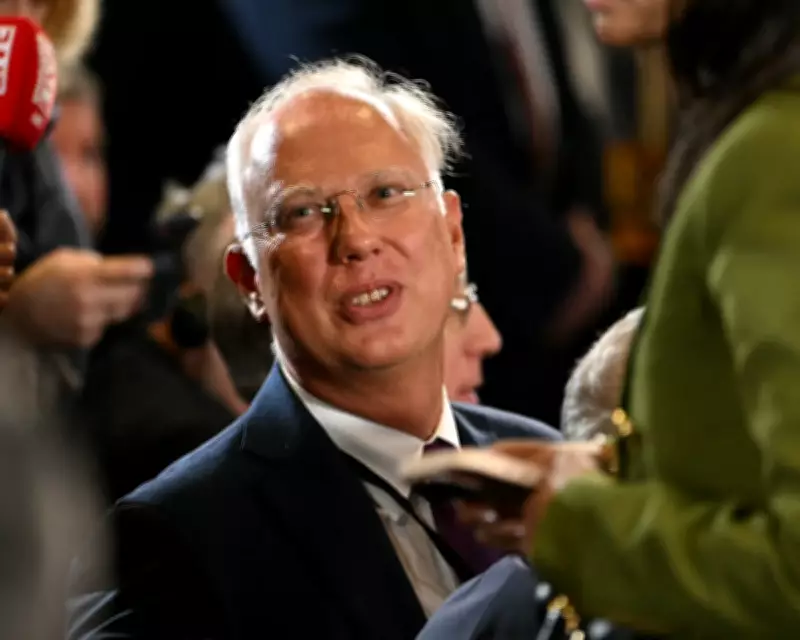
Russian negotiator Kirill Dmitriev has asserted that Washington is "beginning to better understand" the importance of Russian oil, citing the "current crisis on global energy markets" stemming from the conflict involving Iran. This statement follows what Dmitriev described as a "productive meeting" with US negotiators, including Steve Witkoff and Jared Kushner, regarding the ongoing Ukraine invasion.
Discussions and Diplomatic Moves Amidst Energy Turmoil
In a Telegram post, Dmitriev elaborated that the talks, held in Florida on Thursday, focused on "promising projects that could contribute to the restoration of Russian-American relations and the current crisis on global energy markets." Notably, these discussions did not include representatives from Ukraine. Hours later, the US issued a 30-day licence permitting countries to purchase Russian oil and petroleum products currently stranded at sea, a measure aimed at stabilising global energy markets disrupted by the Iran war. This move comes after the US lifted some sanctions on Russian oil earlier in the week, a decision criticised for potentially bolstering Russia's war finances.
Former US President Donald Trump added to the discourse this week, stating that Vladimir Putin, with whom he spoke on Monday, desires to be "helpful" in relation to the Middle East war. Data indicates that Russia has garnered approximately €6 billion (£5 billion) from fossil fuel sales in the fortnight since the onset of the US-Israel conflict with Iran, with an estimated extra €672 million in oil, gas, and coal revenues during March.

Regional Tensions and Energy Infrastructure Disputes
Meanwhile, Hungary returned two seized armoured bank vehicles to Ukraine on Thursday but withheld cash and gold worth millions, citing an investigation into alleged money laundering—a action Kyiv has denounced as theft. Relations between Hungary and Ukraine have deteriorated further, following Hungary's detention of seven Ukrainians transporting cash and gold last week. Kyiv accused Budapest of taking these bank employees hostage to pressure Ukraine into resuming suspended oil shipments. The detained individuals were expelled by Hungary and crossed into Ukraine on Friday.
The European Union has proposed a mission to inspect the Druzhba oil pipeline in Ukraine, awaiting a response from Kyiv. Russian oil flows through this pipeline to Hungary and Slovakia have been halted since late January due to damage. While Kyiv attributes the damage to a Russian strike, Slovakia and Hungary blame Ukraine for the prolonged outage. Hungarian Prime Minister Viktor Orbán has escalated tensions by accusing Ukrainians of plotting to attack his family, amid a bitter standoff that appears to be leveraged for political gain ahead of next month's election, with polling showing Orbán trailing challenger Péter Magyar by up to 20 points.
Military and Cultural Developments in the Conflict
In military advancements, Ukraine announced on Thursday that it is opening access to its battlefield data for allies to train drone AI software, aiming to harness experience from fending off Russia's invasion. This initiative aligns with global militaries adopting automated systems for drone guidance and data analysis. Foreign allies and companies have sought these datasets to train models in recognising battlefield patterns and behaviours.
On the cultural front, the European Commission has warned of cutting funding for the Venice Biennale if organisers proceed with plans to include Russia, citing ethical standards breaches. Organisers' decision to allow Russian participation has drawn accusations from Ukraine of offering "a stage ... for whitewashing war crimes." Additionally, Romania and Ukraine have signed a statement of intent to produce Ukrainian defence systems, including drones, in Romania, strengthening ties amid shared border security concerns.
The Kremlin accused Ukraine on Thursday of targeting a major gas pipeline in southern Russia that leads to Turkey with "reckless" drone strikes, describing the pipeline as an "international facility" crucial for Turkey's energy security. Kremlin spokesperson Dmitry Peskov condemned these actions as part of the ongoing conflict dynamics.