UK Government Commits £600 Million to Rolls-Royce for Mini Nuclear Reactor Development
Chancellor Rachel Reeves has announced a significant £600 million investment in Rolls-Royce to accelerate the development of the United Kingdom's first small modular nuclear reactors (SMRs). The funding comes through the government-owned entity Great British Energy – Nuclear (GBE-N), with work commencing immediately on creating three compact nuclear power stations.
Energy Sovereignty Amid Global Volatility
Speaking at the Treasury on Monday, Chancellor Reeves emphasized that advancing nuclear power has become "more important than ever" given the ongoing Middle East crisis and its impact on global fossil fuel prices. "If we can produce more homegrown electricity here in the UK, that takes us off the rollercoaster of global oil and gas prices," she stated. "This deal makes us less vulnerable to external shocks and enhances our energy security in an increasingly volatile world."
The ceremonial signing involved Simon Roddy, Chief Executive of GBE-N, and Chris Cholerton, Chief Executive of Rolls-Royce SMR. Additionally, Oliver Holbourn, Chief Executive of the National Wealth Fund, formalized the investment commitment of up to £599 million to support the design phases of these innovative reactors.
Project Scope and Economic Impact
The three small modular reactors are projected to generate sufficient low-carbon electricity to power approximately three million homes, with operational targets set for the mid-2030s. These prefabricated modules are designed for faster construction compared to traditional nuclear plants like Hinkley Point C.
Government ministers highlight that the initiative will support around 3,000 jobs during peak construction periods, with thousands more positions created across the supply chain. This represents a substantial shift from decades of underinvestment in the UK's nuclear sector, which has led to ageing infrastructure as older plants approach decommissioning.
Political Consensus on Clean Energy
Energy Secretary Ed Miliband, who attended the signing ceremony alongside Chancellor Reeves, described reducing dependence on volatile fossil fuel markets as "the unavoidable lesson of this war." He affirmed the government's commitment to "doubling down, not backing down, on our clean power mission," referencing both renewable energy expansion and nuclear development.
"We're ending years of delay with the biggest nuclear building programme in half a century," Miliband declared, noting projects ranging from Sizewell C to this pioneering fleet of small modular reactors. He also expressed optimism about the project's broader impact, stating it "brings hope to communities" and demonstrates commitment to future generations.
Strategic Selection and Implementation Timeline
The government designated Rolls-Royce SMR as the preferred partner for delivering modular reactor technology in June 2025 following a competitive selection process. Ministers have allocated £2.6 billion for the overall programme, with the first SMR nuclear power station planned for construction at Wylfa in North Wales by GBE-N.
Since the initial selection, Rolls-Royce has collaborated with GBE-N to finalize contractual details, establishing key milestones for project delivery. The initial phase will focus on site-specific design, regulatory engagement, and planning processes before a final decision authorizes capital investment for full-scale construction.
Addressing Historical Concerns
This nuclear push comes despite longstanding criticisms regarding nuclear energy's high costs, extended construction timelines, and challenges associated with radioactive waste disposal. The government maintains that small modular reactors offer a more efficient and scalable solution to these traditional drawbacks while supporting the UK's transition to cleaner energy sources.
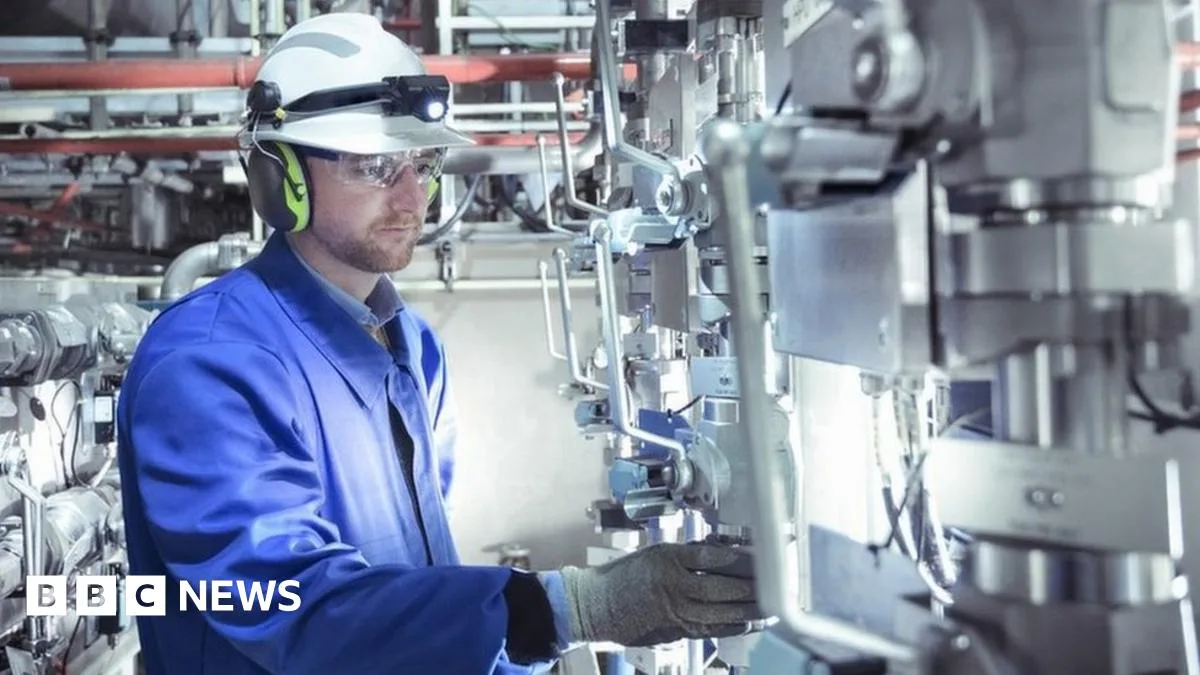
The Chancellor and Energy Secretary also met with apprentices from both GBE-N and Rolls-Royce SMR during the event, highlighting the project's role in developing future talent for the UK's energy sector.