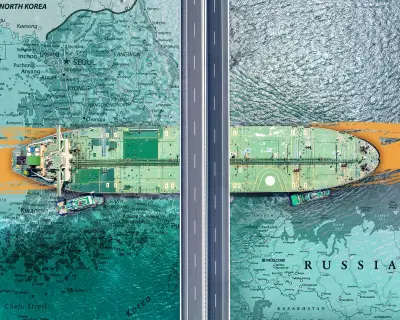
UK households could see a £92 reduction in their annual energy bills this October, as a potential US-Iran peace agreement eases fears of a winter price surge.
Improved Outlook for Winter Bills
Millions may be spared another round of painful energy bill increases this winter. Just weeks ago, analysts feared the conflict involving Iran could trigger a fresh surge in household energy costs, with disruption to gas shipments through the Strait of Hormuz threatening supplies of liquefied natural gas (LNG) to global markets. These fears drove wholesale gas prices sharply higher and contributed to Ofgem's energy price cap rising by 13% from July to October.
However, the outlook for winter bills has improved dramatically following reports of a US-Iran peace agreement and expectations that shipping through the Strait of Hormuz will return to normal in the coming weeks. This development has fuelled hopes that October's Ofgem price cap could fall rather than rise, potentially bringing welcome relief to millions of households.
Deutsche Bank Economist Comments
Sanjay Raja, chief UK economist at Deutsche Bank, said: "It's looking increasingly likely that the Ofgem Price Cap could be lower as opposed to higher come October 2026, bringing some much-needed relief for UK households and businesses." His comments came after inflation remained at 2.8% in May, lower than many economists had expected. The turnaround has been driven by a sharp fall in wholesale energy markets.
Wholesale Gas Prices Drop
European benchmark gas prices have dropped below €42 per megawatt hour after falling more than 9% on news of a proposed peace deal between the US and Iran and plans to reopen the Strait of Hormuz. Around a fifth of the world's LNG supplies pass through this narrow shipping route, making it one of the most strategically important energy corridors globally.
When the conflict escalated earlier this year and traffic through the strait was severely disrupted, European gas prices surged by around 31%, according to Reuters, while Europe's overall gas bill jumped by almost 50% during the crisis. The recent fall in prices suggests traders increasingly believe the worst-case scenario has been avoided.
Oil Prices Also Retreat
Oil prices have also retreated sharply. Deutsche Bank notes that crude prices are now around 10% below market assumptions from last month, a move which should gradually feed through to inflation and household energy costs later this year. For consumers, the key point is that while a rise in bills from July is already largely baked in, fears of a further increase this winter have eased considerably.
Potential Savings for Households
If the ceasefire holds and gas exports through the Strait of Hormuz return to normal, households could find that October brings an energy bill reduction rather than the further increase many feared at the height of the conflict. The current price cap for a typical household is expected to stand at around £1,849 a year from July. A 2% reduction in October would cut around £37 from the annual bill, while a 5% fall would save about £92 a year.
Although no formal forecasts have yet been published for October, analysts say falling wholesale prices have significantly reduced the likelihood of another increase. However, consumers should not expect a return to the lower energy bills seen before the Middle East crisis.
Longer-Term Outlook
Even if the October price cap falls, households are still likely to be paying more than they were last winter because wholesale gas prices remain above levels seen a year ago. European gas prices are currently around 25% higher than they were 12 months ago despite the recent retreat, reflecting ongoing concerns about global supplies and damage to export facilities in Qatar during the conflict.
Nevertheless, there may be grounds for longer-term optimism. Analysis highlighted by Reuters suggests Europe could eventually enter a period of substantially lower wholesale gas prices if a wave of new LNG export projects comes on stream while demand for gas gradually declines.
Researchers at the Centre for the Study of Democracy and the Regional Centre for Energy Policy Research modelled a scenario in which abundant global LNG supplies help push European wholesale gas prices down to around €25 per megawatt hour over the next decade - roughly half the level seen during the recent Iran-related energy shock.
The researchers stress that this is only one possible scenario rather than a forecast. Their analysis also examined higher-price outcomes driven by geopolitical tensions, tighter LNG markets and Europe's increasing dependence on imported gas. But the findings suggest that if global LNG supplies expand as expected and European demand continues to weaken as homes and businesses switch to cleaner technologies and electrification, wholesale gas prices could eventually settle well below today's levels.