UK's Giant Gas Field to Mine Bitcoin Instead of Boosting National Energy Supply
A massive untapped natural gas field in East Yorkshire, capable of supplying approximately ten percent of the United Kingdom's annual demand, is set to be utilised for Bitcoin mining operations rather than fortifying the nation's energy security. The West Newton field, situated near Hull, contains an estimated eight billion cubic metres of natural gas, a resource that could significantly enhance the country's energy independence and stability.
Reabold Resources' Controversial Plan
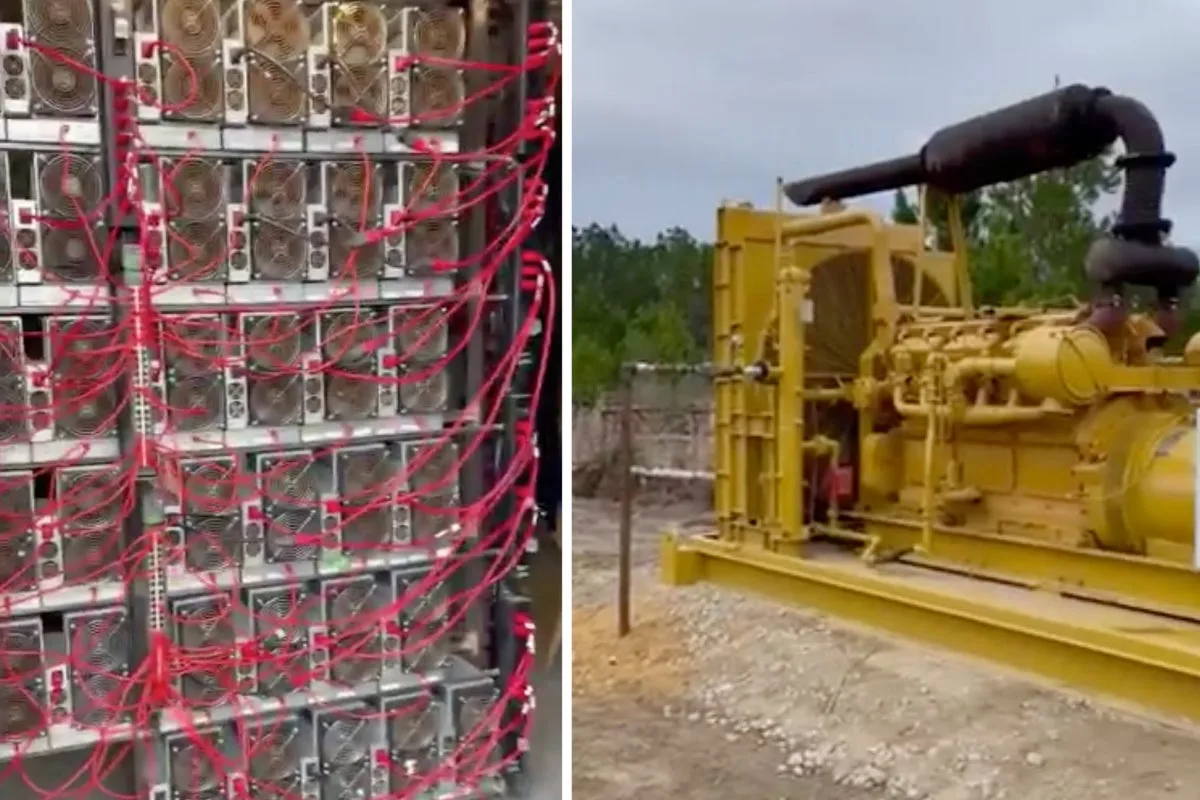
Reabold Resources, the company granted a licence for 'gentle' fracking at the site, intends to construct a small gas-fired power station specifically to mine cryptocurrency. This process, known as Bitcoin mining, involves using powerful computers to solve complex mathematical puzzles, thereby generating new Bitcoins and adding blocks to the blockchain. It is widely recognised as one of the most energy-intensive digital activities globally.
The company's scheme has provoked fierce opposition from environmental organisations and local councillors, who strongly oppose the development of new gas fields, particularly those involving fracking techniques. Critics argue that this move exacerbates concerns about the UK's energy and fuel security, especially amid ongoing geopolitical tensions such as those seen during the Iran conflict.
The Scale and Potential of West Newton
The West Newton gas field is so substantial that, theoretically, it could produce around 50,000 Bitcoins. Executives at Reabold Resources view this as a prime opportunity to extract a private gas supply from the field and channel it into running a data centre dedicated to cryptocurrency mining. Drilling operations have already commenced at West Newton Site B, with plans for a data centre at West Newton Site A.
Alternatively, this vast gas reserve could be harnessed to provide natural gas for the entire country, offering a more traditional and potentially secure energy solution. However, Reabold Resources insists that the Bitcoin mining proposal will ultimately benefit UK energy security by demonstrating the capability to use West Newton gas to fuel data centre developments, which they claim are crucial for the future UK economy.
Fracking Regulations and Environmental Concerns
The drilling licence issued by the Environment Agency does not permit Reabold to employ full-scale fracking, which involves injecting pressurised water and chemicals into rock formations to create cracks for gas extraction. This method was banned last year by Energy Secretary Ed Miliband following a series of minor earthquakes triggered by a fracking operation near Blackpool.
Lower-pressure fracking, such as the 'well stimulation' or 'proppant squeeze' planned at West Newton, remains permissible. Green Party Councillor Andy Walker criticised this allowance, stating, 'It may be called a well stimulation or a proppant squeeze. But if it walks like a duck and it quacks like a duck, … this is fracking.'
Future Possibilities and Company Statements
Stephen Williams, one of the co-chief executives at Reabold, indicated that while Bitcoin mining will be the initial use of the gas, it could pave the way for developing a larger data centre. Another potential outcome is that Reabold may sell the site to another company once the necessary permissions are secured.
In a statement, Reabold explained, 'The Company is exploring the potential to deploy a small-scale power generation facility at the West Newton A well site to mine bitcoin from initial flows of gas following the upcoming well workover, to demonstrate the ability to use West Newton gas to fuel datacentre developments that will be crucial to the future UK economy.'
The statement continued, 'Successful implementation of such a project could allow for the development of a larger scale data centre at site, which would not preclude the potential for gas to grid, or gas to industrial consumption development options. Reabold believes that the natural gas resources at West Newton and further prospective resources on the PEDL 183 licence can be used for the benefit of all stakeholders and is committed to facilitating this outcome.'