UK Fuel Stocks Drop to 36% as Iran Conflict Triggers Demand Spike
Stocks of petrol and diesel at filling stations across the United Kingdom have experienced a significant decline since the onset of the Iran conflict, with official figures revealing a notable drop to levels not seen since late 2022. The Department for Energy & Net Zero released data on Thursday indicating that while the overall supply chain remains resilient, heightened consumer demand has led to reduced inventories at garages nationwide.
Sharp Decline in Early March
In the four weeks preceding the war's start on February 28, petrol stock levels at UK filling stations averaged between 44% and 47%. However, in the subsequent four weeks beginning March 1, these levels fell to an average range of 36% to 43%. Notably, on three specific days—March 4, 6, and 7, all during the early stages of the conflict—petrol stocks plummeted to 36%, marking the lowest point since December 2022. A slight recovery to around 40% was observed in the latter half of March, but stocks remained well below pre-conflict averages.
Demand-Driven Reduction, Not Supply Issues
The data strongly suggests that the decline in petrol stocks is primarily driven by increased consumer demand rather than any disruption in supply. Petrol deliveries to UK filling stations averaged 7,333 litres per day in the four weeks from March 1, which is higher than the average of 7,071 litres per day in the previous four weeks up to February 28. Concurrently, petrol sales surged, averaging 7,615 litres per day in the same post-conflict period, up from 7,139 litres in the preceding four weeks.
A spokesperson for the Department of Energy emphasised the stability of the supply chain, stating: “Petrol stations in the UK are being supplied as normal and we have a diverse and resilient supply. Both the AA and Fuels Industry UK have been clear that fuel production and imports are continuing across the UK as usual with no issues being reported.”
Regional Variations Highlight Disparities
The figures uncover sharp regional disparities in petrol stock levels across the UK. Northern Ireland recorded a particularly low average of 26% on March 28, while South West England hit 31% on the same day. In contrast, London and North West England saw more moderate dips, with stocks falling only to 38% and 37%, respectively, during the first four weeks of the war.
Diesel stocks followed a similar pattern, remaining stable between 47% and 52% in the four weeks up to February 28 before dropping rapidly from 49% on March 1 to 37% on March 6. A partial recovery to around 42% occurred in the second half of March. Regional lows for diesel were as severe as 35% in areas including the East Midlands, Northern Ireland, South West England, and the West Midlands, while North East England and Scotland experienced milder lows of 41%.
Rising Fuel Prices Compound Concerns
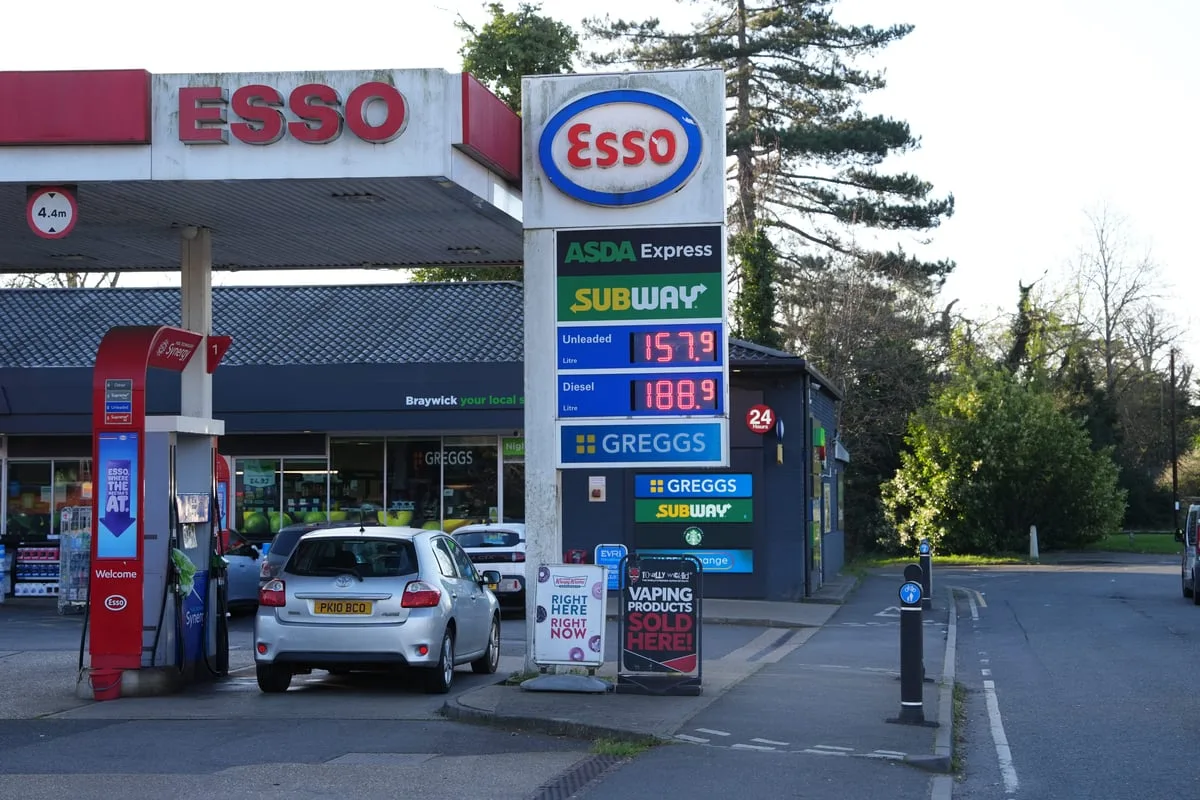
Separate data published by the RAC on Thursday adds to the growing concerns, showing that average petrol and diesel prices in the UK continue to climb. The average price for a litre of unleaded petrol reached 158.0p, representing an increase of 25.2p or 19% since the conflict began. Diesel prices have risen even more sharply, now averaging 191.1p per litre, up 48.7p or 34% since the start of the war.
The Department of Energy figures are derived from snapshots of petrol and diesel levels at a sample of approximately 4,900 filling stations across the UK, covering over four-fifths of typical sales. This comprehensive data underscores the broader impact of geopolitical tensions on domestic fuel markets, with consumers facing both reduced availability and higher costs at the pump.