

Southeast Asia's Energy Crisis: Nations Scramble as Oil Prices Soar
Across Southeast Asia, governments are urgently implementing measures to conserve energy and shield citizens from skyrocketing costs, as the war in the Middle East triggers what the International Energy Agency calls the largest oil supply disruption in global history. Countries heavily reliant on imported energy, particularly from the Gulf region, are facing acute instability, leading to emergency actions from fuel rations to altered work schedules.
Philippines Declares Emergency Powers
In the Philippines, where 90% of oil requirements depend on the Gulf, President Ferdinand Marcos Jr. has been granted emergency powers by the senate to temporarily suspend or reduce excise taxes on oil. The government has introduced cash handouts for public transport drivers and mandated a 10-20% cut in electricity and fuel use by agencies. Many government workers now operate on a four-day week to reduce energy consumption.
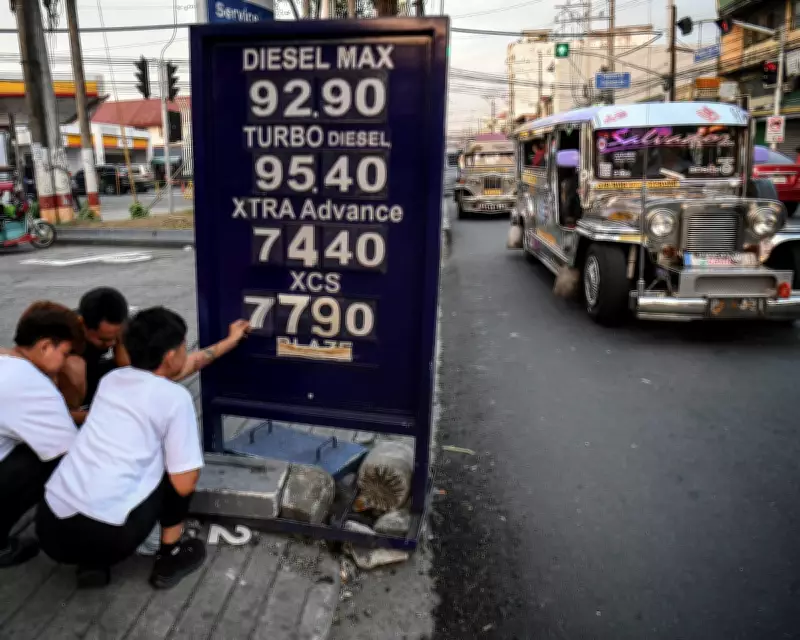
Elmer Carrascal, a 58-year-old jeepney driver in Mandaluyong City, exemplifies the crisis's impact. His daily income has plummeted by more than half since the war began, from 1,000 pesos to just 400 pesos, insufficient for basic needs like food. "How far can your 400 go? Rice alone is 65 per kg," he lamented. Diesel prices have surged from 52-53 pesos per litre to over 100 pesos in some stations, with daily increases worsening the situation.

Thailand and Vietnam Introduce Drastic Measures
In Thailand, the government has called on the public to reduce air conditioning use, with news anchors ditching jackets on air and officials wearing short-sleeved shirts without ties to cut cooling needs. Offices are urged to set air conditioning at 26-27°C, promote carpooling, and suspend most overseas trips for bureaucrats. If the crisis escalates, measures like dimming billboards after 10pm and closing petrol stations may follow.
Panic buying has hit Thai petrol stations, leading to rationing and "out of stock" signs. In a stark example, a temple in north-eastern Thailand suspended cremation services after gas stations refused to fill jerry cans, while an elephant camp in Ayutthaya now has elephants walking 5km to work due to fuel shortages.
Vietnam has urged employers to allow work-from-home policies and sought assistance from Japan and South Korea to increase crude oil access. Both nations, along with the Philippines, are large net importers of oil and gas, making them especially vulnerable to price rises, according to Eurasia Group analysis.
Regional Responses and Financial Strain
Governments are racing to find alternative supplies and implement conservation strategies. Thailand is increasing biofuel blends from 5% to 7% and suspending most oil exports, while Indonesia accelerates a biodiesel programme using 50% palm-oil-based fuel. However, temporary subsidies and price caps are straining budgets; diesel subsidies alone cost Thailand over 1 billion baht (£22 million) daily, with Eurasia Group warning such support is unsustainable beyond one to two months.
In the Philippines, tricycle drivers line up for cash aid, but Carrascal notes that a 5,000-peso handout offers little long-term relief. "It will only last for days and it's gone," he said, calling for more sustained support. Jeepney fares are rising, but higher prices risk deterring passengers already reduced by work-from-home policies, creating a "double blow" for drivers.
As President Marcos stated, "We are victims of a war that is not of our choosing. But we control how we will protect the Filipino." With the crisis's duration uncertain, Southeast Asian nations continue to adapt, balancing immediate relief with long-term energy security in a volatile global market.






