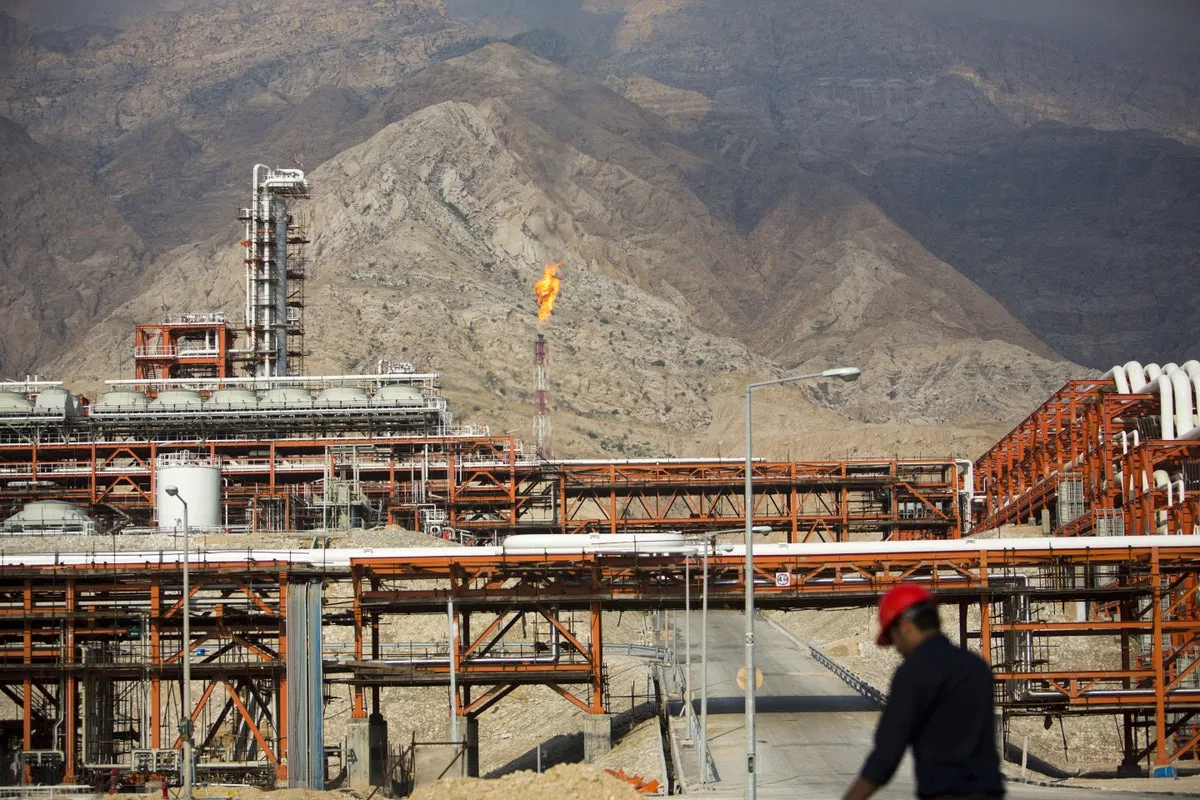
South Pars: The Massive Gas Field Intensifying Middle East Tensions
South Pars Gas Field Raises Middle East Conflict Stakes

The Geological Giant Fueling Global Energy Markets

The Middle East maintains a pivotal position within global energy systems and international markets. As regional tensions intensify and the Strait of Hormuz—a critical maritime trade corridor—faces potential disruption, analysis of the Iranian conflict frequently focuses on oil and gas supplies. A fundamental geological reality underpins this focus: an exceptional concentration of hydrocarbon resources.

A Region of Extraordinary Resource Wealth

The deadly conflict in Ukraine during 2022 demonstrated how regional supply dominance can legitimately spark fears of disruption. A significant portion of the world's oil and gas originates from a single area, contributing substantially to contemporary market volatility. The Middle East accounts for approximately 30% of global oil output and 17% of worldwide natural gas production.

Revenues from this immense scale of production form the economic backbone for numerous Middle Eastern nations while delivering vital energy supplies across the globe. Remarkably, these vast hydrocarbon deposits are contained within a single, relatively minor tectonic structure: the Arabian Plate.

The Arabian Plate: A Hydrocarbon Powerhouse

Spanning over one million square miles, the Arabian Plate hosts an estimated 55% of the planet's proven oil reserves and 40% of its natural gas reserves. This region also contains a disproportionately high number of giant and supergiant fields. Giant fields hold more than 500 million barrels of oil equivalent, while supergiant fields exceed five billion barrels.

Bordered by the Red Sea, the Zagros Mountains, the Indian Ocean, and the Mediterranean, the Arabian Plate separated from the African Plate roughly 25 million years ago. Its northward shift and subsequent collision with the Eurasian Plate formed the Zagros mountain range. Historically, more than 500 commercial fields have been discovered here, with current production representing about one-third of global output.

Iran's Energy History and the South Pars Field

Commercial hydrocarbon production in Iran commenced in 1908 with the discovery of oil near Masjed Soleyman, northeast of Ahvaz. This event initiated a century of foreign engagement and political scrutiny. The development of Iran's resources has evolved through key political junctures, notably the 1979 Iranian Revolution, which triggered significant oil price increases.

Today, Iran operates hundreds of onshore and offshore fields, most notably its portion of the world's largest gas reservoir: the South Pars/North Dome field, which it shares with neighboring Qatar.

A Geopolitically Divided Super-Giant

The South Pars/North Dome field exemplifies the intricate geopolitics of energy supply. Geologically, it is a unified structure; politically, it is bisected by a maritime boundary. South Pars resides in Iranian waters, while North Dome (also called North Field) lies within Qatari territory.

Initially discovered in Qatari waters in 1971, its northern extension was confirmed by Iran two decades later. The gas is contained within the Permian and Triassic-era Khuff formation—porous, permeable reservoir rocks approximately 200-300 million years old, located nearly two miles beneath the seabed and widespread across the Arabian Plate.

Transforming Nations and Global Supply

The development of this colossal field transformed Qatar into the world's premier liquefied natural gas (LNG) exporter. Prior to recent strikes, North Dome, operated by QatarEnergy, produced about 18.5 billion cubic feet daily, enabling Qatar to supply roughly one-fifth of global LNG. Hydrocarbons constitute around 80% of Qatari government revenues.

On the Iranian side, daily output from South Pars, operated by Petropars (a subsidiary of the National Iranian Oil Company), is estimated at 2 billion cubic feet. Over the past quarter-century, Iran's gas production has quintupled, largely driven by intensive drilling across South Pars. Key pipeline importers of Iranian gas include Turkey and Iraq.

The National Iranian Oil Company has commenced developing its own LNG facility to address rising global demand, though this project remains incomplete. While LNG represents only about 8% of worldwide gas supply, it serves as a crucial marginal energy source in most nations, except those where hydropower or nuclear energy dominates electricity generation.

Global Repercussions and Enduring Significance

Recent gas price increases, while notable, remain modest compared to the surges witnessed during the 2022 Ukraine conflict. The longer-term trajectory, however, remains uncertain. As regional tensions escalate and energy infrastructure faces threats, the consequences are already echoing worldwide.

Disruptions to production in a region supplying such a substantial share of global energy inevitably impact short-term prices, long-term investment strategies, and political decision-making far beyond the Middle East. The distribution of oil and gas resources has historically molded political relationships, directed global investment, and fueled regional conflicts.

Even as the global community strives to diminish reliance on fossil fuels, the profound geological concentration of hydrocarbons in the Middle East ensures that energy security will remain inextricably linked to the region's politics for decades to come.