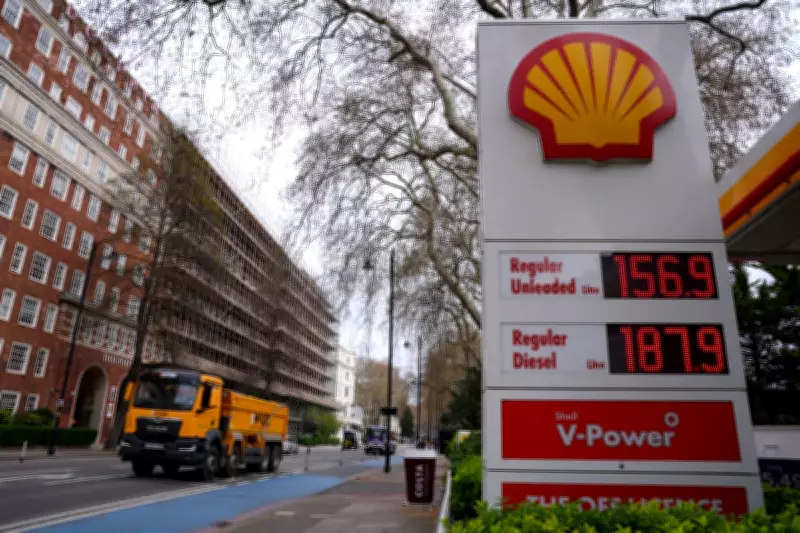
Energy behemoth Shell has significantly downgraded its gas production outlook for the opening quarter of 2026, directly attributing the revision to the ongoing conflict in the Middle East. The company's integrated gas production volumes have been notably affected, with operations in Qatar suffering particular disruption.
Production Guidance Revised Downwards
Shell now anticipates its integrated gas production for the first quarter to range between 880,000 and 920,000 barrels of oil equivalent per day (BOED). This marks a substantial reduction from its previous forecast, issued before the escalation of hostilities, which projected output between 920,000 and 980,000 BOED. The new guidance also represents a decline from the 948,000 BOED recorded in the final quarter of the previous year.
Qatar Operations Bear the Brunt
The conflict's impact has been acutely felt at Shell's facilities in Qatar. Last month, the company's massive Pearl gas-to-liquids (GTL) plant was forced to halt production entirely after being struck during attacks. Furthermore, liquefied natural gas (LNG) facilities in the country, in which Shell holds partial ownership stakes, have also experienced operational disruptions, contributing to the overall volume shortfall.

Oil Trading Sees a Counterbalancing Boost
In a contrasting development, Shell revealed that trading performance within its chemicals and products division, which encompasses its crucial oil trading operations, is projected to be "significantly higher" compared to the preceding quarter. This surge is directly linked to the dramatic jump in global energy prices triggered by the regional instability.
This operational update is Shell's first since the outbreak of conflict between US-Israeli and Iranian forces at the end of February 2026. The hostilities have led to severe supply chain disruptions, including significant interference with the vital Strait of Hormuz shipping corridor, a key artery for global energy exports.
Volatile Energy Markets
The geopolitical turmoil has injected extreme volatility into energy markets. Prices for Brent crude oil, jet fuel, and natural gas all skyrocketed following the initial attacks. Brent crude, a global benchmark, briefly soared to nearly 120 US dollars per barrel. However, prices have since experienced sharp fluctuations; they currently sit at approximately 92.8 dollars a barrel following a notable overnight slump connected to the announcement of a two-week ceasefire.
Shell reported that the average price for Brent crude during the first quarter was around 81 dollars per barrel. This figure represents an increase from the 76-dollar average recorded during the same period one year earlier, underscoring the inflationary pressure on energy costs driven by the conflict.
The dual narrative from Shell highlights the complex and often contradictory effects of geopolitical strife on integrated energy majors. While physical production assets are vulnerable to disruption, leading to output cuts, the resulting market volatility and price spikes can simultaneously turbocharge trading and marketing profits, creating a bifurcated financial impact.