Poland's Coal Heartland Faces an Uncertain Future
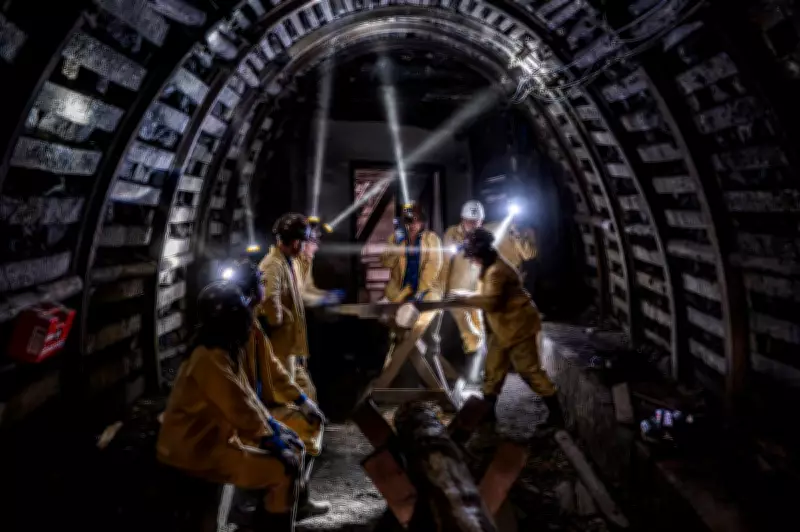
In the Guido coal mine, founded in 1855 by German industrialist Guido Henckel and closed in 1960, visitors now don miner attire to simulate logging 350 metres underground, transforming this historic site into a popular museum. This symbolic shift mirrors a broader national dilemma: Poland, home to the European Union's last fully committed coal-mining workforce, is navigating a complex energy transition while global coal extraction hits record highs.
The Daily Grind of Polish Miners
Coal dust is notoriously fine, seeping into skin pores and leaving indelible marks. For Rafal Dzuman, a 49-year-old team leader at the Murcki-Staszic coalmine in southern Poland, this results in a permanent black outline around his eyes, akin to makeup. Descending daily to 700 metres below ground for over two decades, Dzuman works at a mine opened in the mid-17th century, now owned by Polish giant PGG. Located on Katowice's southern outskirts, it extracts approximately 23,000 tonnes of coal daily, with reserves estimated to last 50 years.
Katowice, once named Stalinogród, is the epicentre of Upper Silesia, Europe's historic coal-mining heartland and the EU's sole district still extracting hard coal. Here, 80,000 people descend underground each day, producing half of Poland's electricity. Yet, this region also serves as a critical laboratory for the EU's energy transition, mandated by Brussels to achieve climate neutrality by 2049, potentially accelerating to 2035.

Economic and Identity Pressures
Today, no new mines may open, and existing operations survive only through substantial state subsidies, as extraction depths exceed 1,000 metres. Meanwhile, cheaper coal from Indonesia, Kazakhstan, and Colombia—formerly Russia—threatens domestic viability. The recent Middle East conflict and rising oil and gas prices have further complicated calculations, prompting questions in Poland: Will billions from the European just transition fund suffice to diversify this mono-industrial economy? Can over 200,000 workers in mines and supply chains be redeployed? Might geopolitical uncertainty slow the inevitable phase-out?
Globally, coal extraction surpassed 9 billion tonnes in 2025, led by China, India, and Indonesia, generating one-third of the world's electricity despite its polluting nature. Poland contributes a mere 85 million tonnes, less than 1% of the total, but abandoning coal represents both an economic and identity trauma for Upper Silesia. "We risk losing centuries-old traditions and stable energy," notes Jacek Nowak, a geologist at the Silesian University of Technology, "while importing coal from countries with lax environmental and labour standards."
Transformation and Tradition
Under the European Green Deal, two-thirds of Polish mines have closed or been repurposed. In Zabrze, former mines like Guido and Queen Luiza now operate as museums, where tourists explore tunnels in miner gear. Elsewhere, the Barbara Experimental mine in Mikołów researches extraction risks, while others have become art galleries, golf courses, or hubs for hi-tech and gaming, such as the planned redevelopment of the Wieczorek mine.
However, union representative Arkadiusz Sienczak warns, "If Brussels imposes too rapid a transition, we cannot offset mining job losses with new employment." Coal has shaped Silesia's landscape and families for generations, with schools like the technical complex in Rybnik still training future miners. Once employing over 140,000, Rybnik now has 6,000 miners, with retirement at 50 after 25 years of service. Despite uncertain prospects, around 20 youths, including 17-year-old Wiktor Dudek, choose this path, citing family tradition and speaking Silesian, not Polish or English, underground.
As Poland balances EU mandates with local realities, the fate of its coal industry remains a poignant symbol of global energy struggles, where history, economy, and environment collide in the depths of Silesian mines.