

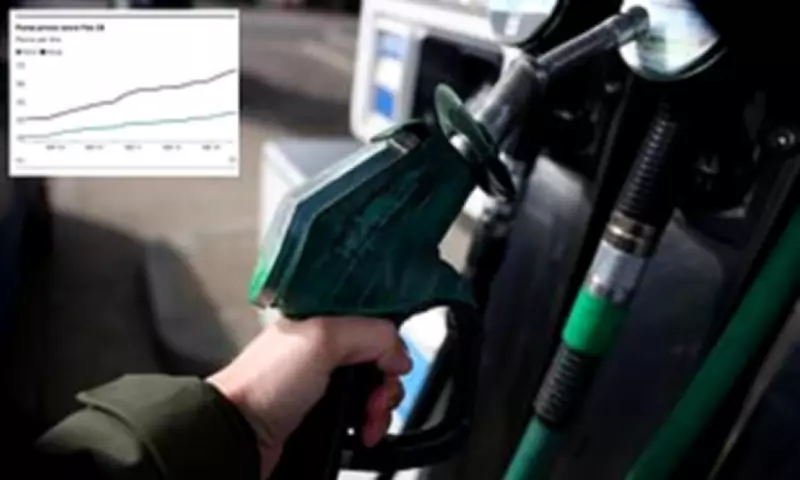
The cost of filling a typical family car with unleaded petrol has surged by £8 since former US President Donald Trump initiated military strikes against Iran alongside Israel at the end of last month. This significant increase is directly linked to retaliatory actions by Tehran, which have effectively shut down the Strait of Hormuz, a critical global shipping route for oil and gas, triggering a sharp spike in fuel prices across the UK.
Sharp Rise in Fuel Costs
According to the latest data from the RAC, the average price of unleaded petrol has climbed more than 14p per litre to 147.19p since late February. This escalation adds approximately £8 to the total cost of refuelling a standard family vehicle, pushing the average fill-up to £81. Petrol prices have not reached this level since early June 2024, highlighting the rapid impact of geopolitical tensions on consumer expenses.
Diesel Drivers Face Even Higher Burdens
The situation is described as 'far worse' for drivers of diesel vehicles. The cost of a litre of diesel has skyrocketed by 29p to 171.17p, marking its highest price since mid-January 2023. Consequently, a full tank of diesel now costs around £94, representing a staggering £16 increase since the onset of the Middle East conflict. This disparity underscores the broader economic strain on households reliant on personal transportation.

Expert Analysis and Forecasts
Simon Williams, head of policy at the RAC, commented on the severity of the situation. He stated, 'Given how many rely on their cars, households are really feeling the effects of the conflict in the Middle East.' With oil barrels trading consistently above $100 for the past three days and expected to remain elevated, drivers are bracing for continued price hikes. Williams warned, 'Drivers are in for a rough ride at the pumps in the run-up to the Easter break with no end to price increases in sight.'
He further predicted that petrol prices could exceed 150p per litre in the coming week, while diesel might approach 180p, potentially making this the most expensive Easter on British roads since the early stages of the Ukraine war in 2022.
Trump's Comments on Potential Deal
Amidst these rising costs, Donald Trump suggested on Monday that oil prices 'will drop like a rock' if a deal is reached with Iran to end the hostilities. Speaking to reporters in Florida before boarding Air Force One, the former president remarked, 'The price of oil will drop like a rock as soon as a deal is done. I guess it already is today.' However, he cautioned that such an agreement is not imminent, adding, 'No, we have a very serious chance of making a deal. That doesn't guarantee anything. I am not guaranteeing anything.'
Trump elaborated that discussions between the US and Iran involve 15 points of agreement, with the Iranian regime abandoning its nuclear weapons programme being the top priorities. He also expressed a desire for joint control over the Strait of Hormuz, involving both himself and Iran's supreme leader, while simultaneously advocating for 'a very serious form of a regime change.'
Broader Implications for Consumers
The closure of the Strait of Hormuz has not only disrupted global oil supplies but also intensified market volatility, leading to higher transportation and living costs for British families. As the conflict persists, experts anticipate further fluctuations in fuel prices, potentially exacerbating financial pressures during the upcoming holiday season. This scenario highlights the interconnectedness of international politics and domestic economic stability, urging policymakers to monitor developments closely.






