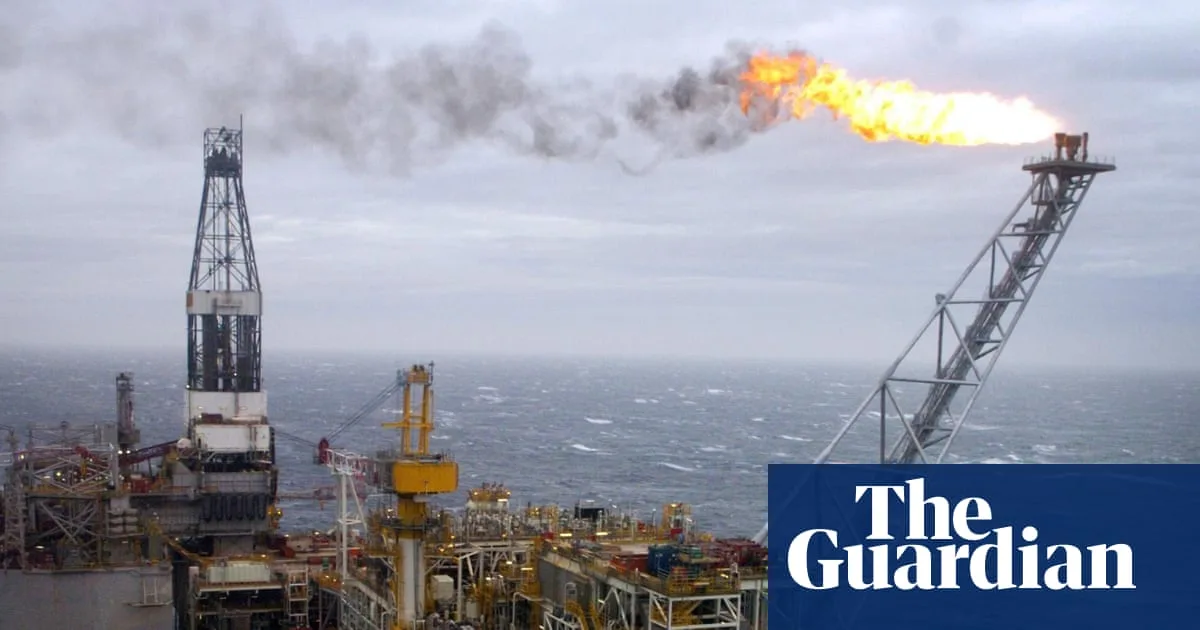
Political Pressure Mounts for North Sea Drilling Amid Global Energy Crisis
Following the US-Israeli strikes on Tehran in late February, approximately twenty percent of global oil and gas supplies have been effectively blockaded by Iran's control of the Strait of Hormuz. This geopolitical development has triggered soaring fuel prices worldwide, creating heated demands from politicians and media outlets for the United Kingdom to intensify extraction of its own fossil fuel reserves from the North Sea.
On Tuesday, former US President Donald Trump, whose decision to attack Iran contributed to oil prices reaching nearly $120 per barrel, publicly criticized the British government, urging them to "DRILL, BABY, DRILL" in the North Sea. Simultaneously, Nigel Farage's Reform UK party declared that if elected, they would pursue extraction of "every last barrel, every last drop" from these waters.
Reform's deputy leader and business and energy spokesman, Richard Tice, pledged this week that a Reform government would immediately approve the controversial Rosebank and Jackdaw projects in the North Sea. This comes after forty-three consecutive days of fuel price increases, with warnings suggesting the average UK household will be almost £500 worse off this year due to the conflict's impact on energy bills.
Experts Dismiss Drilling as Solution to Energy Price Crisis
Despite the political rhetoric, numerous climate and energy experts have told The Independent that drilling the UK's remaining gas and oil reserves will neither lower consumer prices nor enhance national energy security, describing such claims as a "total red herring." There are several fundamental reasons why expanded North Sea extraction cannot deliver the promised benefits.
Global Markets Dictate Prices Regardless of Origin
Oil and gas extracted from the North Sea are sold by energy companies on the open international market, which establishes global pricing structures. The UK receives no discount for locally sourced fossil fuels. Furthermore, the potential production volume is "trivial" according to Bob Ward from the London School of Economics' Grantham Research Institute, meaning it would "make no difference to the global price."
Professor Gavin Bridge, Fellow of the Durham Energy Institute and UK Energy Research Centre Researcher, concurred with this assessment. He explained: "More drilling in the North Sea will not bring energy costs down for British consumers. The UK is not an isolated energy island where new supply decreases prices. The prices we pay for oil and gas are driven by international markets regardless of extraction location."
Dr Anupama Sen from Oxford University's Smith School of Enterprise and the Environment echoed this perspective, stating: "Oil and gas are priced on international markets wherever they're produced – so the idea that more North Sea extraction will bring down bills is misleading."
Diminishing Returns from Depleted North Sea Reserves
North Sea oil and gas production peaked during the 1980s and 1990s, with remaining reserves located in increasingly challenging and expensive areas to drill. Professor Bridge described the North Sea as a "highly mature basin" now in "long-term decline," having been drilled for over half a century.
He emphasized: "Available new supply is now very small relative to overall market demand. Squeezing additional output from the North Sea will have a negligible impact on prices or the UK cost of living."
The two oilfields championed by Reform UK – Rosebank and Jackdaw – are relatively small even by North Sea standards. Robert Gross, professor of energy policy at Imperial College and director of the UK Energy Research Centre, revealed: "Neither field is large in relation to UK demand or historical production. Jackdaw could eventually produce about 6 percent of UK gas production, which represents just 3 percent of total UK gas demand."
According to LSE's Bob Ward, "Rosebank, at peak, will increase by less than 2 percent current daily UK gas output. They're just too small to make any difference to international prices."
Professor Gross further explained that any oversupply of UK-produced gas wouldn't lower domestic prices because it wouldn't be stored locally. Instead, it would flow out through interconnectors as increased North Sea exports. Since the UK maintains minimal gas storage capacity and relies on two-way gas movement with Europe, attempting to retain gas would actually undermine energy security.
Gas Dominance in UK Energy System Exacerbates Price Vulnerability
Gas remains the primary driver of high UK energy prices as the most expensive form of energy, with the nation maintaining substantial dependence on it. Approximately thirty percent of the country's electricity originates from gas-fired power stations – significantly more than Germany's seventeen percent or France's three percent. Furthermore, over seventy percent of British homes rely on gas for heating, with many using it for cooking as well.
High energy bills are partly driven by the UK's "marginal pricing model," which means electricity prices are almost entirely dictated by gas prices. This increasingly controversial system ensures that the costliest power source needed at any moment – nearly always gas – establishes the price for all electricity on the grid, even when cheaper renewables supply the majority of power.
With gas determining market prices around ninety-eight percent of the time, household bills in Britain remain acutely exposed to fluctuations in global gas markets.
Public Support and Economic Arguments Questioned
Professor Bridge noted that while some fossil fuel advocates demand expanded North Sea drilling, this doesn't necessarily reflect broader public sentiment. He observed: "Plenty of people are not calling for this. That loud voices are pushing for more oil and gas says more about the state of British politics than sound energy policy."
The Tony Blair Institute recently faced criticism after suggesting Labour's energy approach should include greater provision of North Sea fossil fuels. In correspondence with The Independent, the organization's energy policy expert, Tone Langengen, acknowledged that "North Sea drilling won't directly reduce household bills" due to global pricing, but argued that "producing more at home reduces exposure to volatile imports while supporting exchequer revenues and strengthening energy security."
However, the Grantham Institute's Bob Ward challenged the economic argument for fossil fuel exploitation, noting: "If you add up tax received from the increased energy profits levy rate of seventy-eight percent, it's still less than half of the £44 billion the government spent in 2022/23 helping consumers with high energy prices. Our dependence on fossil fuels is actually bad for our economy because the costs are so high."
The UK has historically mismanaged fossil fuel revenues. During peak North Sea production in the 1980s and 1990s, the government spent oil tax revenues on day-to-day spending, reducing national borrowing and funding tax cuts rather than establishing long-term savings. Meanwhile, Norway created what has become one of the world's largest sovereign wealth funds – a fund the UK ironically now contributes to through Norwegian gas purchases.
Climate Imperatives Cannot Be Ignored
Beyond economic considerations, experts emphasized the urgent need to leave fossil fuels in the ground as the climate crisis intensifies and clean energy targets become existential priorities.
Professor Bridge stated: "Climate change can't be ignored or willed away. The scientific, economic and moral case for increasing renewables and reducing fossil fuel extraction and burning is clear. That the oil and gas industry leverages geopolitical events and high prices to promote their interests is not surprising. What's disappointing is seeing these claims dressed up as being in the national interest."
Bob Ward reinforced these concerns, arguing that the UK should demonstrate climate leadership by transitioning away from fossil fuel consumption: "The main reason we shouldn't be drilling in the North Sea is that we already have more oil and gas reserves worldwide than can possibly be burned while staying within climate targets. We cannot persuade other countries to leave their fossil fuels in the ground if we're trying to maximize our own extraction, especially since it won't reduce prices or significantly improve security."
Oxford University's Dr Sen concluded: "If we are serious about cutting energy costs, the real gains lie in investing in renewables, storage and electrification, and in fixing a system that continues to expose households to volatile global gas prices."