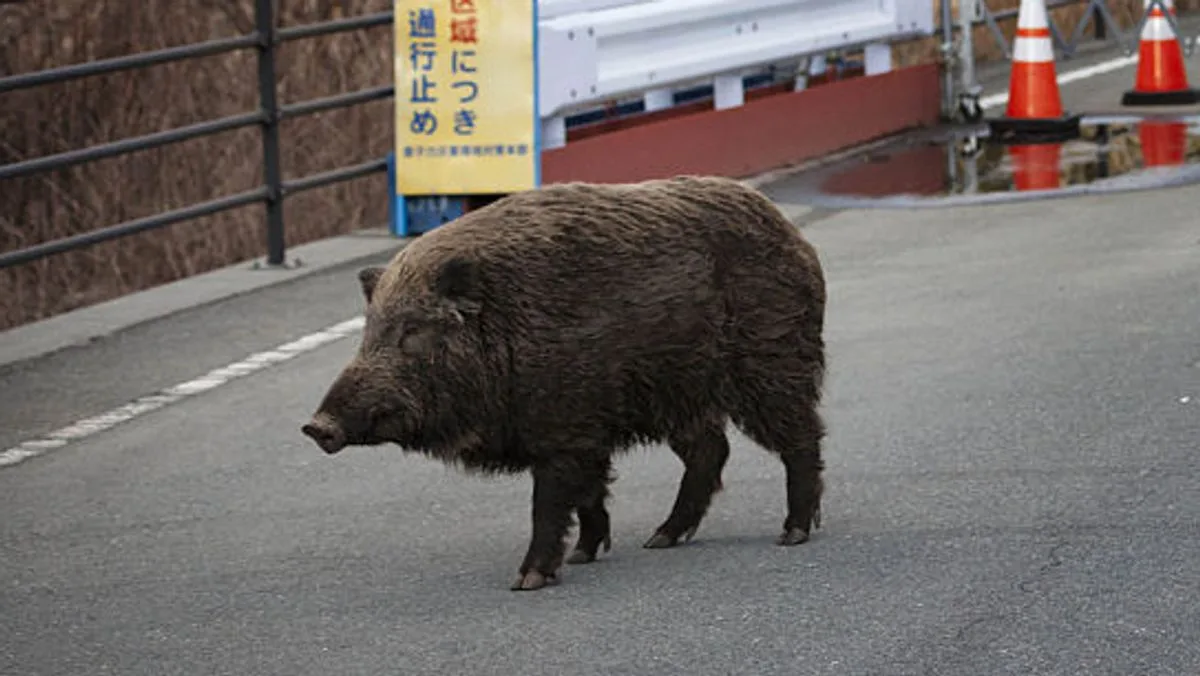
A population of mutant 'super pigs' has spiralled out of control in areas near the Fukushima nuclear fallout zone, according to a new study. The hybrid animals are the result of domesticated pigs that escaped from abandoned farms after the 2011 disaster interbreeding with wild boars.
Researchers from Fukushima and Hirosaki universities found that the hybrid offspring inherited the domestic pig's rapid reproductive cycle, unlike wild boars which reproduce once a year. This has led to a population explosion in the uninhabited ghost towns surrounding the nuclear plant.
Professor Shingo Kaneko of Fukushima University said: 'While it has been previously suggested that hybridisation between rewilded swine and wild boars can contribute to population growth, this study demonstrates — through the analysis of a large-scale hybridisation event following the Fukushima nuclear accident — that the rapid reproductive cycle of domestic swine is inherited through the maternal lineage.'
The hybrid pigs carry the pig maternal lineage and exhibited lower levels of domestic pig DNA than initially expected. Hirosaki University geneticist Donovan Anderson noted: 'We wish to emphasise that this mechanism likely occurs in other regions worldwide where feral pigs and wild boars interbreed.'
Feral boars are a destructive invasive species that can ruin crops, attack livestock and damage ecosystems. The boar population exploded in abandoned areas around Fukushima as they were left untouched by humans. The findings could help conservation and wildlife management teams predict population explosion risks.