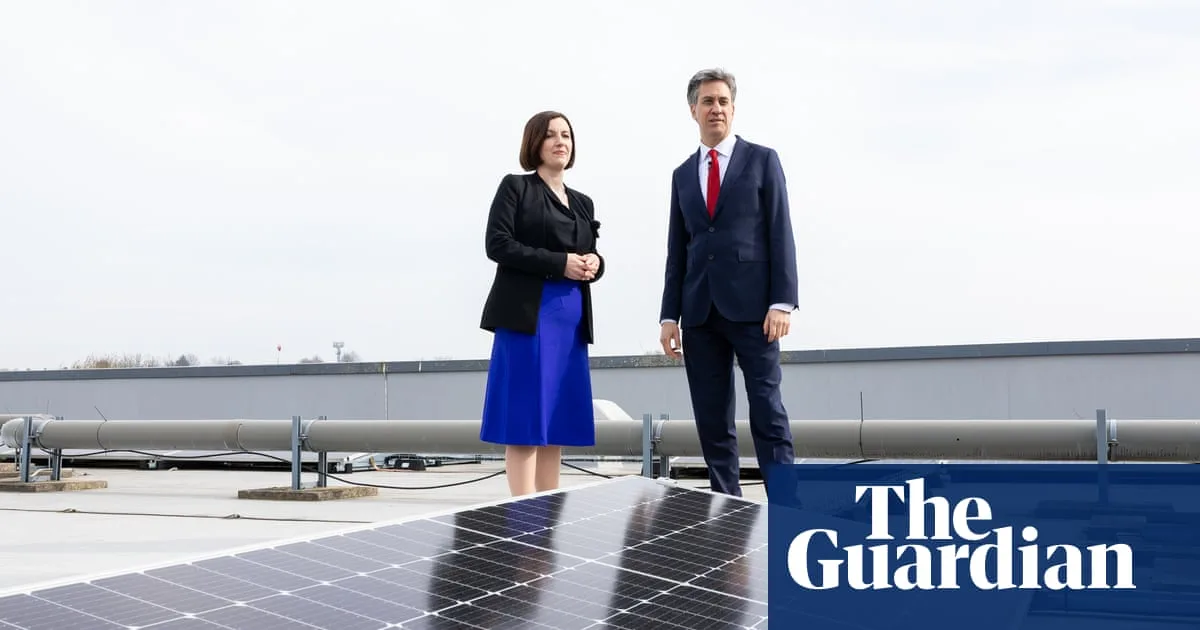
Energy secretary Ed Miliband has bowed to pressure from MPs and campaigners and will ban the UK’s national energy company from investing in projects that use solar panels linked to Chinese slave labour. He will introduce an amendment to the Great British Energy bill forcing the company to ensure there is no slavery or human trafficking in its supply chain.
The decision, first reported by the Times, marks a reversal of Miliband’s earlier position. Last month, the government whipped Labour MPs to vote down a similar amendment from the Lords. A government source said: “We are committed to ensuring Great British Energy is a sector leader in this area, developing resilient, homegrown supply chains free from forced labour.”
The move was welcomed by MPs including Sarah Champion, who said: “This is the only way to make sure our transition to net zero is not carried through on the backs of slavery and exploitation.” However, shadow energy secretary Andrew Bowie called it a “humiliating U-turn”. Fatih Birol, head of the International Energy Agency, told the BBC he welcomed the move, saying green technology should be produced in “a socially and environmentally acceptable way”.
China dominates the green technology market, with 35-40% of polysilicon – the key raw material for solar panels – produced in Xinjiang, where Muslim Uyghurs face forced labour. The change could make Britain’s net zero push more expensive, but officials say Britain can buy panels from other sources, including a small but growing number of domestic suppliers.
The prime minister’s spokesperson said: “Slave labour is abhorrent, there’s no place for it in producing UK goods.” The amendment comes as the government also seeks rapprochement with Beijing for infrastructure investment. Miliband visited China last month and raised the slave labour issue in solar supply chains, sources said.