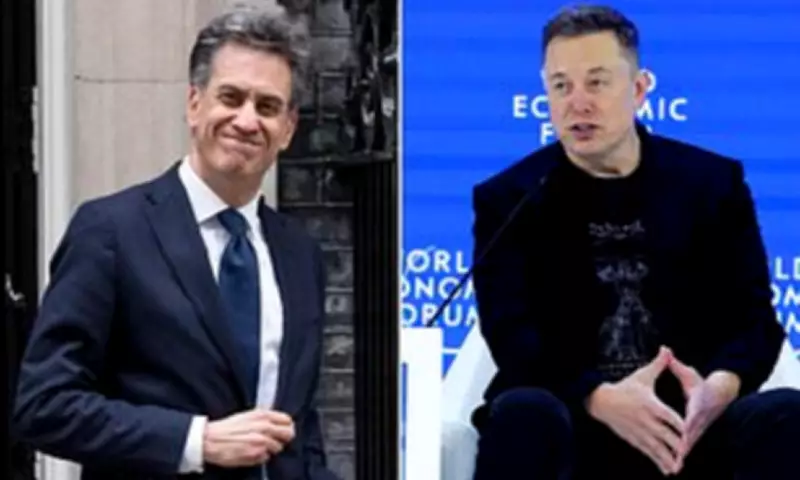
Energy Secretary Ed Miliband is under mounting pressure to prevent Elon Musk's Tesla from supplying electricity to British households and businesses, following the controversial granting of an energy licence to the company's subsidiary, Tesla Energy Ventures. The licence, approved by energy regulator Ofgem, authorises Tesla to provide power to domestic and non-domestic consumers across England, Wales, and Scotland, effective immediately after a seven-month review process.
National Security Concerns Raised
Liberal Democrat leader Sir Ed Davey has branded Elon Musk a "threat to our national security" and declared him "not a fit person to operate in our energy industry." Sir Ed warned, "We cannot afford to have the lights go out because he is having a strop on X," referencing Musk's social media platform. These criticisms stem from Musk's political engagements, including his support for former US President Donald Trump and far-right activist Tommy Robinson, alongside the contentious changes he has implemented at X since acquiring the platform.
Backlash and Public Objections
The licence approval has sparked significant backlash, with campaign group Best for Britain reporting that thousands of people used an online tool to lodge objections with Ofgem last year. Naomi Smith, chief executive of Best for Britain, emphasised public concern, stating, "After more than 18,000 of our supporters wrote to Ofgem highlighting real public concern over Musk's powergrab, we are calling on the Energy Secretary to step in and urgently reverse Ofgem's misguided decision. It is not too late to do the right thing."

Ed Miliband has previously labelled Musk a "dangerous person," accusing him of calling for the overthrow of the government and inciting violence on British streets. However, a spokesman for Miliband's Department for Energy Security and Net Zero clarified, "As the independent regulator, Ofgem has sole legal responsibility for the assessment of supply licence applications." It is understood that while Miliband holds powers to veto certain supply licence applications, this does not extend to the specific licence Tesla obtained.
Regulatory Compliance and Market Presence
With the licence now in effect, Tesla must adhere to Ofgem's stringent rules, which include treating customers fairly, maintaining consumer protections, and ensuring financial responsibility. Failure to comply could result in penalties or licence revocation. Ofgem has stressed that it does not assess or grant licences to individuals, focusing instead on corporate entities.
Tesla, led by the world's richest man Elon Musk, has been involved in the UK energy market since 2020, when it received a licence to operate as an electricity generator. The company also runs an electric car manufacturing business, along with solar energy and battery storage operations. In the United States, Tesla already functions as an electricity supplier in Texas, expanding its global energy footprint.
Political and Industry Implications
The debate over Tesla's entry into the UK energy supply market highlights broader issues of foreign influence and regulatory oversight in critical national infrastructure. Critics argue that Musk's volatile public persona and political allegiances pose risks to energy stability, while proponents may view Tesla's involvement as a step toward innovation and competition in the renewable energy sector.
As the situation unfolds, stakeholders are closely monitoring Miliband's response and potential regulatory actions. The controversy underscores the delicate balance between fostering technological advancement and safeguarding national interests in an increasingly interconnected global economy.