Macron Criticises Spain's Renewable Energy Strategy After Devastating Blackout
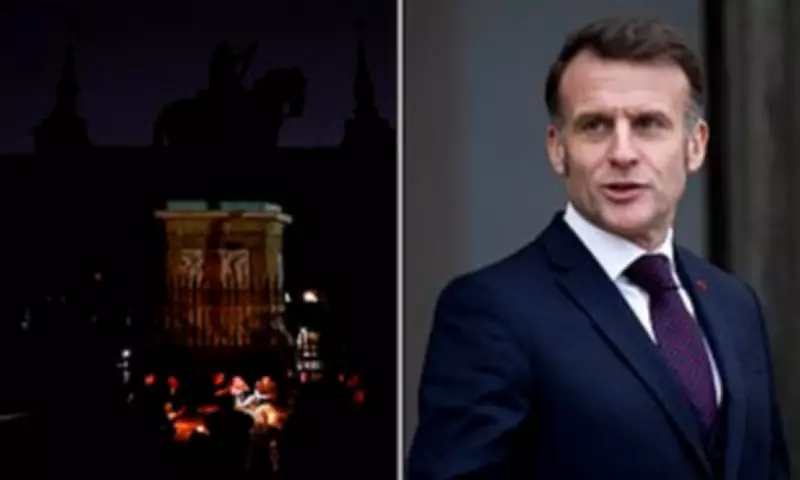
French President Emmanuel Macron has directly attributed Spain's catastrophic mega-blackout to the nation's excessive dependence on renewable energy sources. The enormous power failure, which occurred in April, plunged Spain into darkness, resulting in five fatalities and leaving millions of citizens without electricity for nearly an entire day.
The Widespread Impact of the Power Outage
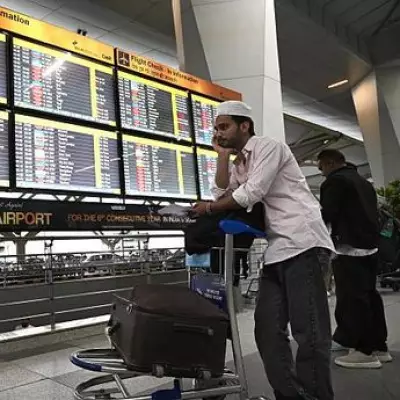
The disruption extended beyond Spain's borders, significantly affecting Portugal and southwestern France. Critical infrastructure collapsed as internet and telephone connections were severed, and transport networks were severely hampered. School pupils and workers were sent home, but many individuals found themselves trapped in lifts or stranded on trains in isolated rural areas, unable to move or communicate.
In the immediate aftermath, Madrid's socialist government refrained from providing a clear explanation, instead urging patience while investigations were conducted. Prime Minister Pedro Sanchez has consistently defended Spain's renewable energy policies, rejecting criticism of the country's substantial investment in green power sources.

Macron's Controversial Remarks on Energy Stability
President Macron has now publicly challenged Spain's energy model, asserting that 'no system can withstand such dependence' on renewables. He dismissed the ongoing debate about Spain's grid as 'a false one', highlighting that the core issue lies in a '100 per cent renewable energy model that its own domestic grid cannot support'.
Macron emphasised that the blackout was unrelated to international interconnections but stemmed from technological limitations. 'Stability in the energy mix is needed, because otherwise, shocks that are too big occur. But it's not just about interconnections. Networks are needed,' he added, advocating for a more balanced and resilient energy infrastructure.
Expert Analysis and Broader Implications
Energy experts have corroborated concerns, noting that Spain's heavy reliance on solar power leaves the grid vulnerable to future failures. Renewable generators operate differently from traditional power plants, creating unique challenges for grid management and stability.
The incident has also sparked warnings regarding the United Kingdom's ambitious net-zero targets. Labour Energy Secretary Ed Miliband aims to achieve 95 per cent clean electricity by 2030, a goal that would see Britain relying almost exclusively on renewable energy. Critics argue that this timeline is too aggressive to ensure grid resilience and prevent similar blackouts.
Investigative Findings and Industry Responses
A report released in October identified the power surge that triggered the blackout as the 'most severe' in Europe over the past two decades and the first of its kind. Damian Cortinas, president of the association of electricity grid operators Entso-e, explained that this was the first known blackout caused by overvoltage, a condition where excessive electrical voltage overwhelms the network.
Spain's electric grid operator, Red Eléctrica de España, attributed the outage to an unprecedented drop in power generation. Meanwhile, the Spanish Association of Electrical Energy Companies (Aelec) clarified that power generators were not at fault; instead, the grid failed to manage the supply and shut down automatically as a safety measure.
Jose Donoso, head of Spain's photovoltaic association, echoed this sentiment, stating, 'It's a matter of logic; the fact that the entire system goes down because of a photovoltaic plant makes no sense.'
Spain's Renewable Energy Landscape and Future Plans
According to Red Eléctrica, Spain generated nearly 57 per cent of its electricity from renewable sources like wind, hydropower, and solar in 2024, with nuclear power contributing about 20 per cent. The government has approved a plan to decommission the country's remaining nuclear reactors between 2027 and 2035, aiming to increase renewable electricity generation to 81 per cent by 2030.

While the blackout affected mainland Spain, regions such as the Canary Islands, Balearic Islands, and the territories of Ceuta and Melilla in Africa remained unaffected. The event has ignited a crucial debate on the balance between renewable energy adoption and grid reliability, with Macron's comments adding significant weight to calls for a more cautious and diversified approach to the green transition.