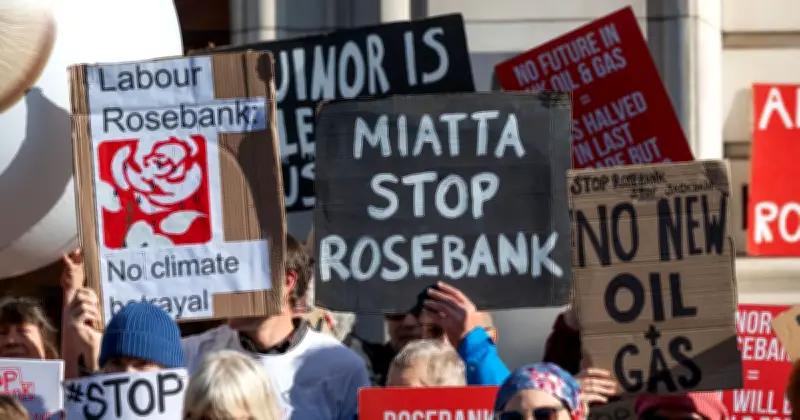
The Government should approve the Rosebank oil and gas field next, according to INEOS Energy chairman Brian Gilvary, who argues that domestic production is essential to protect Britain from geopolitical disruption to global supply.
Writing in an opinion piece, Gilvary said the decision to approve the Jackdaw field should be applauded and that Rosebank should follow. He argued that one-off decisions do not go far enough and that Britain needs a rethink of how it attracts investment in oil and gas.
Flawed roadmap and geopolitical turmoil
Gilvary said the International Energy Agency's (IEA) Net Zero by 2050 roadmap, published in 2021, assumed a 75% decline in oil demand by mid-century and stated that no new oil and gas fields were needed. He said the roadmap was flawed because it failed to consider the impacts of geopolitical turmoil.
In February, Tehran closed the Strait of Hormuz after war broke out, holding roughly a fifth of the world's oil and LNG to ransom. Brent passed $100 within 10 days, Qatar declared force majeure on its gas, and Iraq's southern fields lost 70% of their output, according to Gilvary.
The 2021 roadmap also did not account for the energy demands brought on by the emergence of AI, he said.
Investment falls despite IEA concession
Gilvary noted that the IEA has conceded that demand for oil and gas will continue and that fresh investment is needed. Yet global investment in oil production has fallen for a third year to below $500 billion.
He said the world needs to move beyond fossil fuels in the long term, but that reliance on oil and gas will continue in the meantime. The answer, he said, must come from more basins, in more jurisdictions, along more routes so that no regime or militia can disrupt supply, and it should start at home.
Proven basins like the North Sea already have the infrastructure and skilled workforce in place, offering a quicker boost to supplies than new discoveries, Gilvary said. Developing existing fields rather than leaving them untapped while importing the same resources from overseas also de-risks supply while emitting less carbon.
Energy security crisis warning
In April, the IEA warned that the world is in the midst of "the largest energy security crisis the world has ever faced", a turnaround from the position promoted five years ago, Gilvary said.
He concluded that a flawed scenario became policy, and that policy became vulnerability. "Every barrel imported is a barrel we must ship through someone else's strait. Every barrel we produce at home is one that no regime can hold to ransom," he wrote.