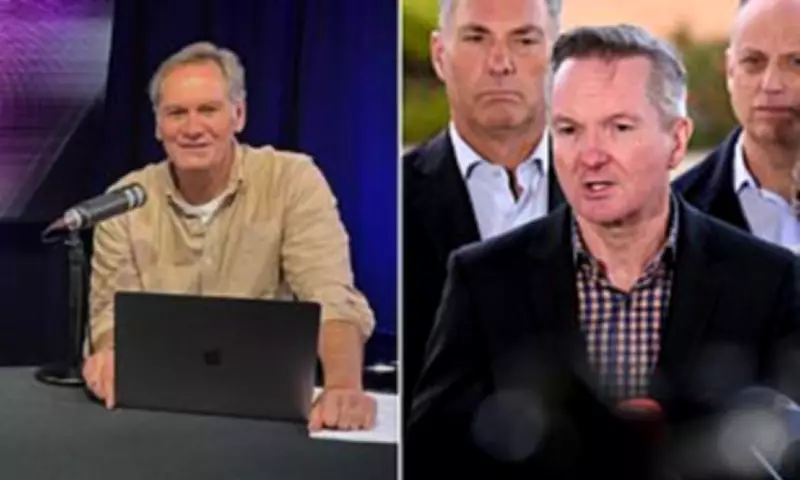
A seasoned journalist has launched a scathing critique against Energy Minister Chris Bowen, alleging that his policies have left Australia vulnerable to fuel shortages and effectively ceded control of the nation's energy infrastructure to China. In a strongly worded opinion piece published on Monday, Seven News Spotlight reporter Liam Bartlett blamed the Albanese government's aggressive renewable energy agenda for what he described as an impending national energy crisis.
A Real-World Lesson in Energy Dependence
Bartlett argued that the conflict involving Iran has served as a stark reminder of the fuels that truly power modern societies and the critical role governments must play in safeguarding supply chains. He posed pointed questions about how a resource-rich nation like Australia, abundant in coal, gas, and oil, could find itself facing stress at petrol stations, directing the blame squarely at Minister Bowen's office.
Zealotry and Strategic Failures
The journalist accused Bowen of pursuing renewable energy with a level of zealotry comparable to religious extremism, suggesting that even the Iranian regime might appear more balanced. Bartlett emphasised China's overwhelming dominance in the minerals essential for renewable technology, contending that Bowen has failed to address the moral and strategic implications of relying on such supply chains.

He highlighted the dire conditions in developing countries like the Democratic Republic of Congo and Zambia, where Chinese mining operations are linked to nonexistent health and safety regulations, frequent workplace fatalities, and the use of child and slave labour. Environmental protections, Bartlett noted, are largely ignored in these contexts.
The Human Cost of Green Ambitions
Bartlett shared insights from Zambian lawyer Mehluli Batakathi, who represents farmers affected by pollution from a Chinese-owned copper mine. Batakathi remarked that while Western nations champion renewable energy and green revolutions, the production side remains far from clean, with local communities bearing the brunt of environmental degradation.
The journalist warned that Australia's net-zero ambitions are perilously dependent on these questionable supply chains, asserting that without Chinese components or minerals extracted from what he termed "Dickensian hell-holes," the country's future energy goals are unattainable.
Heated Exchange at Press Conference
This opinion piece followed a tense public confrontation between Bartlett and Bowen at a Sydney press conference earlier this month, amid growing concerns over fuel supply. The exchange, broadcast live, quickly escalated as Bartlett questioned whether the minister's "obsession with renewables" would lead to another energy crisis, citing the Iran conflict as evidence.
Bartlett accused Bowen of avoiding an exclusive Spotlight interview, demanding to know what the minister was afraid of. He repeatedly attempted to interject during the conference, at one point labelling Bowen a hypocrite, which prompted a sharp rebuttal from the minister.
Bowen responded by reminding Bartlett of press conference etiquette, noting the room was full of journalists and emphasising that everyone should get a chance to ask questions. Bartlett retorted that he had been seeking answers since late January, pressing the minister on his renewable energy priorities. Bowen countered by stating he holds daily press conferences and rejected claims of evading scrutiny.
The clash underscores the deepening tensions over Australia's energy policy, with critics like Bartlett arguing that the rush toward renewables compromises national security and economic stability, while proponents advocate for a transition away from fossil fuels. As debates intensify, the focus remains on how the government balances environmental goals with practical energy needs and supply chain integrity.