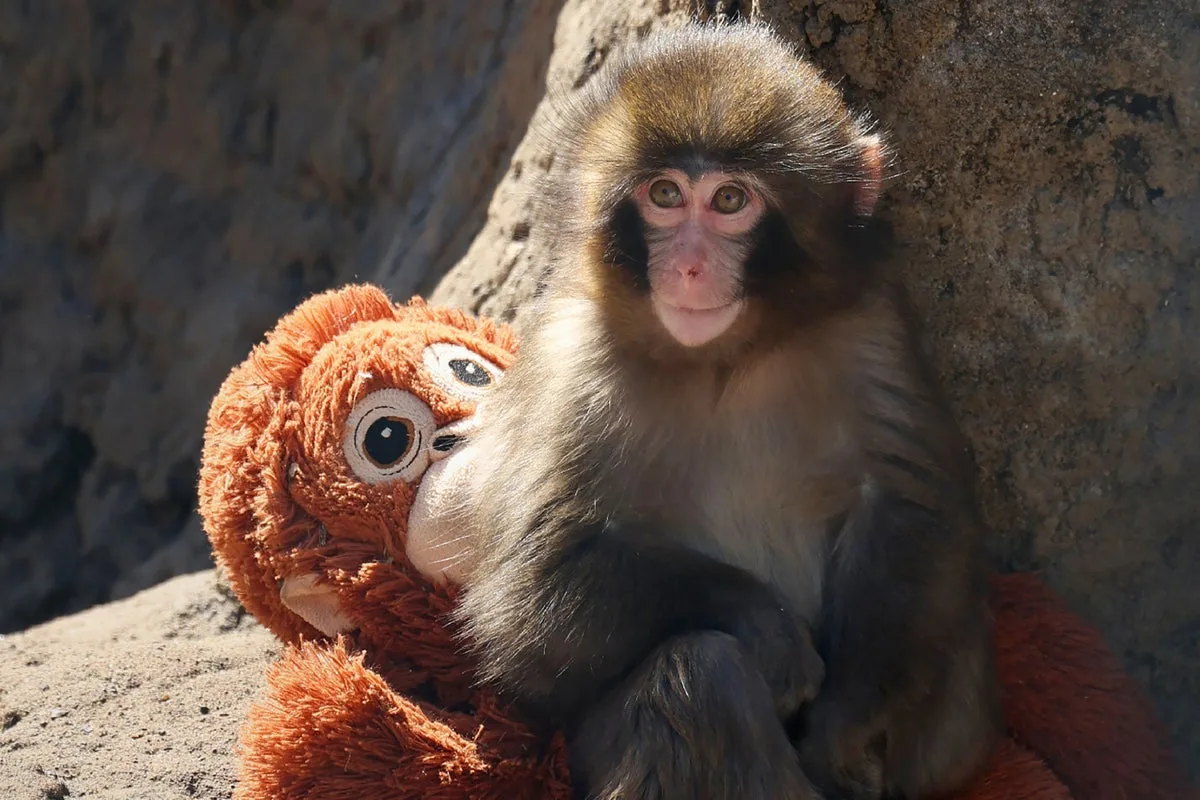
Punch, the baby macaque who became an internet sensation after being abandoned by his mother, is set to receive air conditioning at his Japanese zoo as the country's increasingly severe summers take a toll on captive animals.
The city of Ichikawa has allocated 70 million yen (£370,000) in its supplementary budget for 2026 to improve conditions for Punch and the rest of the macaque troop at the city's zoological and botanical gardens. The upgrades include sunshades, a soil area at Monkey Mountain where Punch lives, and an expansion of the monkeys' resting area. Air conditioning is expected to be installed by this summer.
The improvements have been partly funded by public donations. The city launched a drive in March and had received 43 million yen (£228,000) by late May, prompting an extension through the end of December.
Punch was born on 26 July 2025 during a brutal heatwave. His mother, a first-time parent who had endured a difficult labour in the heat, abandoned him the next day. Zookeepers stepped in to bottle-feed the infant and gave him an oversized stuffed orangutan for warmth, which he clung to. He was named after the late manga artist Monkey Punch, creator of Lupin the Third.
Photos and videos of Punch walking with his toy went viral. In January, zookeepers introduced him to the troop of roughly 60 macaques, but the transition was difficult without a maternal figure. Videos of older macaques pushing him away while he ran back to his stuffed companion circulated online.
Japanese macaques, or snow monkeys, are adapted to cold climates, making brutal summers particularly hard for them in captivity. Zoologists note that extreme heat can stress animals and affect maternal behaviour, especially in first-time parents. Japan's summers have grown more intense, with record temperatures in 2024, and heatwaves are projected to increase in frequency and duration.