Irish Army Mobilised to Remove Vehicles Blocking Fuel Depots Amid Escalating Protests
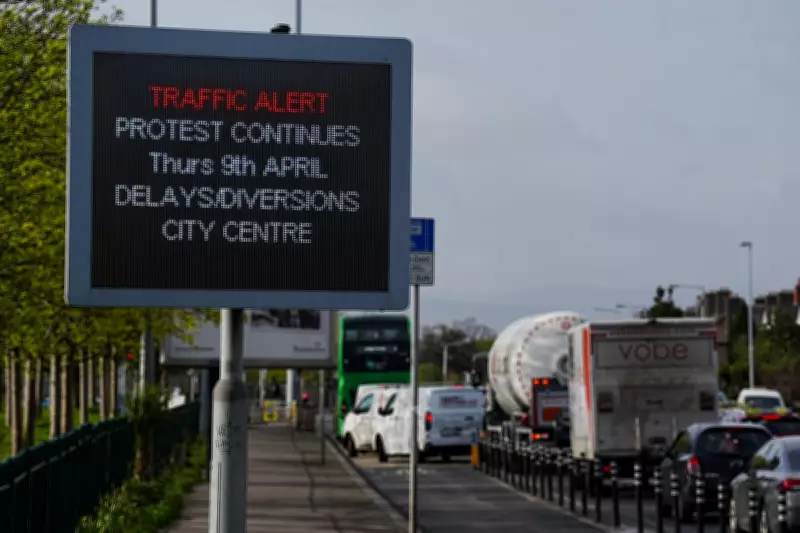
The Irish army has been officially called in to remove heavy vehicles that are obstructing fuel depots, as part of ongoing protests against soaring fuel prices. This dramatic intervention comes as demonstrations entered their third day on Thursday, with tensions rising over the government's response to the crisis.
Government Stands Firm Against Protest Tactics
Justice Minister Jim O'Callaghan confirmed that large vehicles blocking critical infrastructure would be forcibly removed. Agriculture Minister Martin Heydon reinforced this position, stating that while he regards roads as critical infrastructure, operational decisions rest with the Justice Minister. Heydon made it clear that the government would engage with farming and haulier representative groups but would absolutely not meet with protesters who are blocking cities, fuel depots, and the country's only oil refinery.
Protests Escalate Across Ireland
What began on Tuesday as several distinct but coordinated protests has rapidly intensified. Initially involving slow-moving convoys on motorways and major road blockades in Dublin and other urban centres, the demonstrations escalated on Wednesday to include the blockading of fuel depots and the Whitegate oil refinery in County Cork.

Taoiseach Micheal Martin described the refinery blockade as "an act of national sabotage" and criticised protesters for turning Dublin's main thoroughfare, O'Connell Street, into what he called "a car park" with tractors substantially clogging traffic in the capital's centre.
Emergency Services and Supply Chains Disrupted
The protests have had serious practical consequences beyond traffic disruption. Dublin Fire Brigade reported significant delays in responding to emergencies due to the blockades. Meanwhile, Kevin McPartland, chief executive of Fuels for Ireland, warned of imminent risks to petrol forecourt supplies as a direct result of fuel depots being blocked.
Other coalition figures, including Tanaiste and Finance Minister Simon Harris alongside Justice Minister O'Callaghan, emphasised the critical importance of maintaining access to fuel depots and warned of legal consequences for unlawful protest activity.
Root Causes and Government Measures
The protests stem from dramatic increases in fuel costs, with petrol, diesel, and marked gas oil (commonly known as "green diesel") prices soaring due to the ongoing war in the Middle East and resulting impacts on supplies through the Strait of Hormuz.
Just over two weeks ago, Ireland's ruling coalition approved a package of measures designed to reduce fuel costs, including:
- A temporary excise duty reduction for motor fuels
- Expansion of the diesel rebate scheme for hauliers and bus operators
- An extension of the fuel allowance
These measures resulted in effective reductions of 17 cents for petrol, 22 cents for diesel, and five cents for green diesel. However, these savings have been largely eroded as the Middle East conflict continues to rage, driving prices upward once more.
Protesters' Demands and Future Uncertainty
Speaking to the Press Association on Wednesday evening, city centre protest spokesman John Dallon expressed hope that the dispute could be resolved through government commitment to meet with him and two other protest participants. Dallon stated: "These people are not going to lie down. The only way they will go off of the streets here is if we send a message back to them that we have a meeting, then there's a good chance that people will go home. But, I mean, if there's no satisfaction out of the meeting, I'd say it'll all heat up again."
As the army begins its operations to clear blockades, the situation remains volatile, with both sides maintaining firm positions while the nation watches how this critical infrastructure crisis will unfold in the coming days.