Ireland Faces Fuel Crisis as Protests Escalate, Public Urged to Avoid Panic Buying
Ireland Fuel Crisis: Protests Escalate, Public Urged to Avoid Panic

Ireland Confronts Escalating Fuel Crisis Amid Ongoing Protests

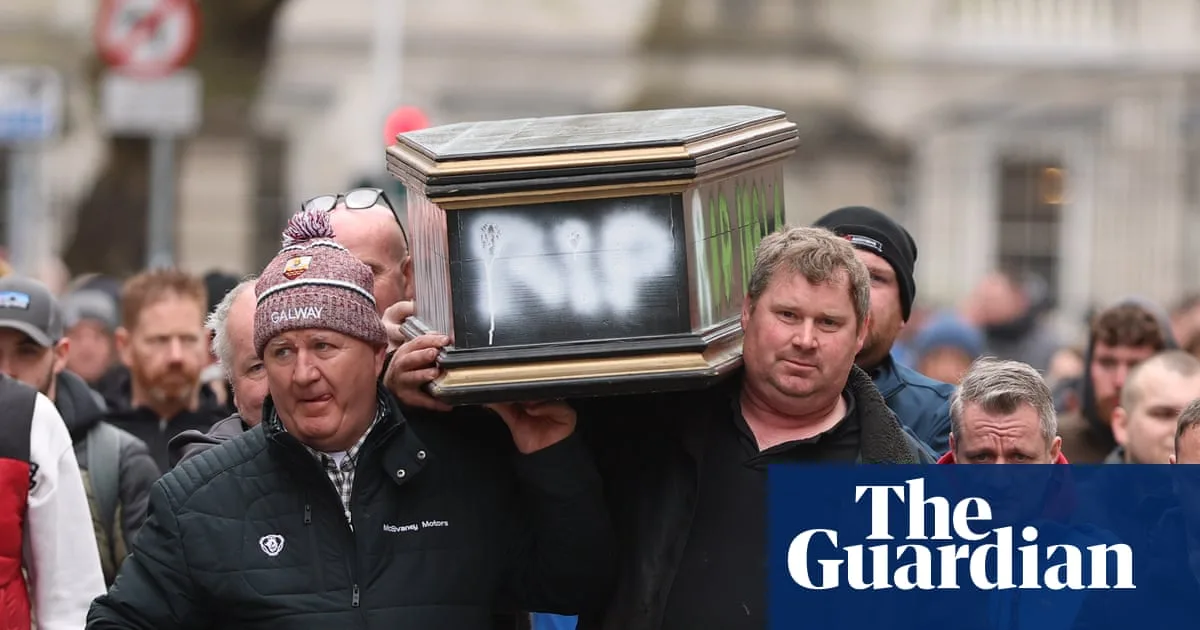
The National Emergency Coordination Group (NECG) has issued a stark warning that the number of fuel stations without supplies in Ireland could surge to 500 by Friday. This alarming projection comes as road blockages and demonstrations at fuel depots continue to disrupt the nation's supply chain. In response, authorities are urgently appealing to the public to purchase only the fuel they immediately require to help alleviate mounting pressures on forecourts.

Emergency Measures and Government Response

An Garda Siochana has internally declared an "exceptional event," a move that enables the police force to deploy additional officers over the weekend to manage the ongoing protests. Gardai were involved in a tense stand-off with demonstrators at the Whitegate oil refinery in County Cork, highlighting the intensity of the situation.

Government ministers held crunch talks with representative bodies from the haulage and farming industries, but these discussions concluded without a resolution. Notably, the protesters themselves were not included in these meetings, which are scheduled to resume on Saturday. Ministers have pledged to develop a "substantial" package of measures for the affected sectors. However, Christopher Duffy, a spokesman for the Dublin protests, emphasized that the action would persist until concrete details on a "serious reduction in our costs" are provided.

Wide Pickt banner — collaborative shopping lists app for Telegram, phone mockup with grocery list

Widespread Disruption and Critical Warnings

The protests, which began on Tuesday with slow-moving convoys on motorways and restricted access to Dublin's busiest streets, have escalated to blockades at fuel depots that supply approximately half the country. Key sites affected include Ireland's oil refinery in Whitegate, as well as depots in Galway City and Foynes, County Limerick.

Taoiseach Micheal Martin has issued a grave warning, stating that Ireland is on the "precipice of turning oil away from the country." He explained that if a tanker off the coast of Galway cannot dock due to the protests, "somebody else will buy" the oil, potentially leaving Ireland without vital supplies. When questioned if the nation risks losing all its oil supply, Mr. Martin responded affirmatively, describing the situation as "unconscionable" and "illogical."

Impact on Emergency Services and Public Safety

The NECG, which comprises various Government departments and state agencies, convened on Friday to address the escalating crisis. The group reported that more than 100 fuel stations are currently out of supply, with the number potentially rising to 500. With approximately 1,500 fuel stations nationwide, this represents a significant portion of the infrastructure.

Of grave concern is the increasing pressure on fuel supplies for emergency response vehicles. The NECG stated that fire services will cease non-essential activities, and there is "serious concern about the impact that fuel supply shortages are having on the National Ambulance Service." Additionally, international shipping companies are growing anxious about their ability to offload stock at Irish ports, further complicating the supply chain.

The public is strongly warned against storing fuel at home or in unsafe locations due to significant safety risks. The NECG reiterated its plea for citizens to only buy the fuel they need to help ease local supply issues.

Government Efforts and Political Tensions

Transport Minister Darragh O'Brien expressed being "extremely concerned" about the dispersal of fuel supplies across the country. He highlighted receiving messages about the curtailment of fire and emergency services, stating, "No-one can stand over that." Minister O'Brien urged for de-escalation to avoid heavy-handed interventions.

Enterprise Minister Peter Burke indicated that the Government is working on a package of measures to combat inflation, potentially to be announced on Friday. He believes this intervention could reduce the price of groceries for consumers and vulnerable individuals.

Pickt after-article banner — collaborative shopping lists app with family illustration

Meanwhile, protesters, including spokesman John Dallon, were refused entry to a meeting at the Department of Agriculture. Mr. Dallon expressed frustration, noting that they had been told by TDs that he would be permitted to attend. He stated that the protests would continue "until we get a result," emphasizing their desire to "step down the protest" through dialogue.

Fine Gael TD Peter Roche voiced his frustration after attempting to facilitate a meeting between protesters and ministers. He believed, based on conversations with senior Government figures, that protest spokespeople would be allowed to attend, but was informed it would contravene Dail and department guidelines.

Brokering Dialogue and Controversial Figures

Ger Hyland, president of the Irish Road Haulage Association (IRHA), has offered to act as an "honest broker" between protesters and the Government. He has been in contact with the protesters through intermediaries and is available to convey their concerns to officials.

In a separate development, media reports revealed that another spokesman for the Dublin protests, James Geoghegan, has convictions for animal cruelty and approximately 500,000 euro in Revenue judgments in recent years. Addressing these reports on Newstalk radio, Mr. Geoghegan provided explanations, stating the animal cruelty convictions related to his name being on a herd number while he was not "working at home much." He denied currently owing money to Revenue, claiming many figures were based on incorrect estimates. Mr. Geoghegan also mentioned he would consider running for election.

As the protests stretch into a fourth day, with the Irish army on standby to assist gardai in removing blockades at critical infrastructure, the nation remains gripped by a fuel crisis that threatens emergency services, animal welfare, and daily life. Government leaders have condemned the protests as "wrong" and accused the blockades of holding the country to "ransom," while Minister of State Niall Collins asserted that inflation-tackling measures would only be implemented "once the blockade of our ports ends."