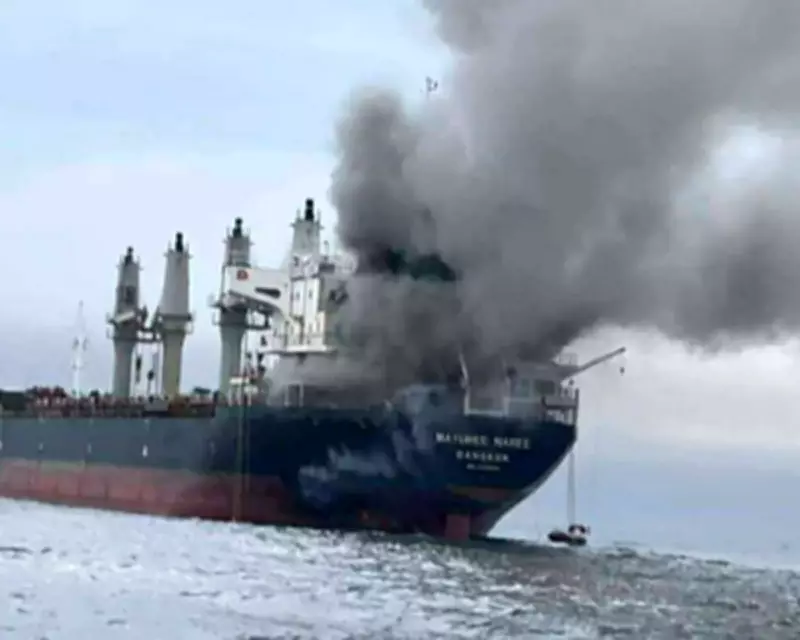
Iranian Missiles Strike Thai-Flagged Vessel in Strait of Hormuz
A Thai-flagged commercial vessel was struck by Iranian missiles in the strategically vital Strait of Hormuz on Wednesday, according to photographic evidence released by the Royal Thai Navy. This attack represents a significant escalation in the ongoing Middle East conflict, which is now creating what experts describe as the "largest supply disruption in the history of oil markets."
Historic Supply Shock Rattles Global Energy Markets
The International Energy Agency (IEA) has issued a stark warning that the current crisis represents a deeper supply shock than both the Yom Kippur war of 1973 and the 2022 outbreak of war in Ukraine. Iran's effective blockade of the Strait of Hormuz – through which approximately one-fifth of the world's oil passes – is preventing tankers from producing and shipping millions of barrels of crude each day.
The situation worsened dramatically when Iran's new supreme leader, Mojtaba Khamenei, issued a statement calling for the vital trade artery to "remain closed." This declaration dashed hopes for a swift resolution to the crisis and sent global oil prices soaring past $100 per barrel on Thursday.

Emergency Reserve Release Fails to Calm Markets
In an unprecedented attempt to stabilize markets, the IEA coordinated the largest release of government oil reserves in its history. All 32 member countries unanimously agreed to release 400 million barrels of emergency crude on Wednesday. The United States contributed an additional 172 million barrels from its strategic petroleum reserve in what represents the Biden administration's boldest attempt yet to bring down soaring oil prices.
Despite this massive intervention, the price of Brent crude continued its volatile trajectory, initially rising past $100 overnight before easing to $97, then rallying again to $101 following Khamenei's comments. This marks only the fifth coordinated release of strategic supplies since the IEA's founding in 1974, underscoring the extraordinary nature of the current crisis.
Previous Emergency Releases Provide Context
Historical precedents for such emergency actions include:
- 1991: After Operation Desert Storm against Iraq
- 2005: When Hurricane Katrina devastated Gulf of Mexico production
- 2011: During NATO intervention in the Libyan civil war
- 2022: Following Russia's full-scale invasion of Ukraine
Yet none of these previous crises have matched the current supply disruption in scale or potential economic impact.
Regional Conflict Escalates with Economic Consequences
The conflict has expanded beyond military engagements to target critical economic infrastructure across the Middle East. Iran's military command openly taunted the United States, warning: "Get ready for oil to be $200 a barrel, because the oil price depends on regional security, which you have destabilised."
Several merchant ships have been struck in and around the Strait of Hormuz, while Iraq halted all operations at its oil ports following attacks on nearby tankers. Bahrain advised residents to stay home after Iranian attacks on fuel tanks, and Oman reportedly moved vessels from its main oil export terminal at Mina Al Fahal following drone strikes.
Projected Production Cuts and Market Volatility
The IEA projects that the war with Iran will reduce the region's oil and gas production by at least 10 million barrels per day. This sharp decline in Middle East output could lead to a global oil production slump of 8 million barrels daily this year – even with increased production from other nations including Russia.
Market reactions have been severe across global financial centers. Wall Street opened lower with the Dow down 1.1% and the S&P 500 falling nearly 1%. European markets followed suit with the FTSE 100 and Stoxx 600 both declining approximately 1%. In Asia, Japan's Nikkei 225 and Australia's S&P ASX 200 indices fell by 1.3%.

Long-Term Economic Implications
The global energy watchdog has already revised its forecasts downward, cutting 1 million barrels per day from global oil demand projections for this year due to reduced refining capacity and air travel in the Middle East. Soaring energy costs are expected to further suppress global economic growth, potentially creating a feedback loop of reduced demand.
Oil prices broke the $100 mark for the first time in four years on Monday, briefly soaring as high as $119 – nearly double the $60 per barrel price at the start of the year. The market continues to experience extreme volatility as the conflict unfolds with no clear resolution in sight.