

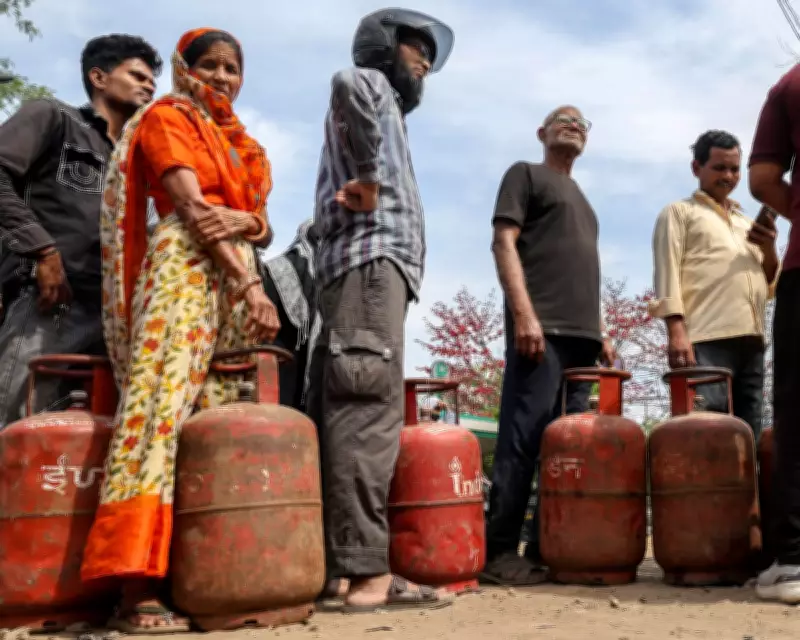
India's LPG Supply Chain Faces Major Disruption Amid Iran Conflict
India's liquefied petroleum gas (LPG) supply chain is currently grappling with severe disruption as escalating conflict in Iran threatens critical import routes and fuel availability. This situation poses significant challenges for both household consumers and industrial sectors reliant on this essential energy source.
Impact on Household and Industrial Fuel Supplies
The disruption has led to immediate concerns about potential shortages across India, where LPG serves as a primary cooking fuel for millions of households and powers various industrial processes. Authorities are monitoring the situation closely as supply chain vulnerabilities become increasingly apparent.
Supply chain experts warn that prolonged disruption could strain India's energy infrastructure, potentially leading to price volatility and distribution challenges. The conflict's timing exacerbates existing pressures on global energy markets, creating a perfect storm for import-dependent nations.

Geopolitical Tensions and Energy Security
Iran's strategic position along key shipping lanes makes it a crucial transit point for LPG shipments to India. The current conflict has disrupted maritime routes and raised security concerns for fuel transport vessels, forcing alternative arrangements that may increase costs and delivery times.
Energy analysts emphasize that this situation highlights India's vulnerability to geopolitical instability in energy-rich regions. The country's dependence on imported LPG—particularly from Middle Eastern sources—has become a focal point for discussions about diversifying supply chains and enhancing domestic production capabilities.
Government Response and Contingency Planning
Indian authorities have initiated emergency measures to mitigate the disruption, including exploring alternative supply sources and optimizing existing stockpiles. However, the scale of the challenge requires coordinated international efforts to stabilize regional energy flows.
- Activation of strategic petroleum reserves to buffer against supply shocks
- Diplomatic engagement with other LPG-exporting nations to secure additional shipments
- Enhanced monitoring of distribution networks to prevent hoarding and ensure equitable access
- Assessment of long-term energy security strategies to reduce import dependency
The disruption serves as a stark reminder of how regional conflicts can ripple through global energy markets, affecting consumers thousands of miles away. As India navigates this challenge, the episode may accelerate discussions about renewable energy adoption and more resilient supply chain architectures.






