

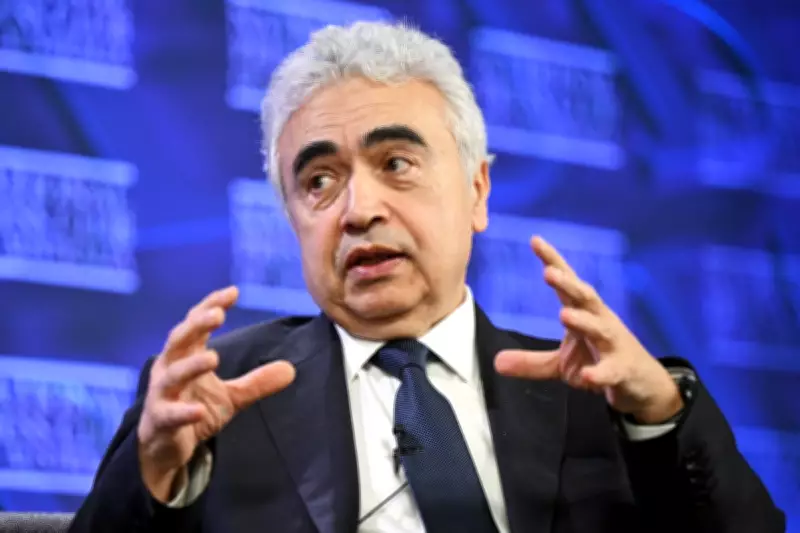
IEA Chief Warns Global Energy Shock Exceeds 1970s Crises and Ukraine War Combined
The head of the International Energy Agency has issued a stark warning that the current energy supply shock triggered by the war in Iran is more severe than the combined impact of the two 1970s oil crises and the conflict in Ukraine. Speaking in Canberra on Monday, IEA Executive Director Fatih Birol emphasised that world leaders are underestimating the profound consequences this Middle Eastern war will have on energy prices and global economic stability.
Unprecedented Supply Disruptions
Mr Birol detailed the scale of the crisis, noting that while the 1973 and 1979 oil crises each saw a loss of 5 million barrels per day, and the 2022 Russian invasion of Ukraine removed 75 billion cubic metres of natural gas from markets, the current Gulf conflict has cut oil output by approximately 11 million barrels daily and removed 140 billion cubic metres from circulation. "This crisis, as things stand now, is two oil crises and one gas crisis put all together," Birol stated, highlighting the unprecedented nature of the disruption.
He attributed the severity to interruptions in "vital arteries of the global economy," including fertilisers, petrochemicals, and sulphur supplies, which could exacerbate the situation further. The full impact of the US and Israel's attack on Iran, followed by Tehran's closure of the Strait of Hormuz, was not initially grasped by policymakers, according to Birol.

Critical Chokepoint and Damaged Infrastructure
The Strait of Hormuz, through which a fifth of the world's oil passes, has become a critical flashpoint. Since the war began on 28 February 2026, Iran has restricted tanker traffic to a trickle and targeted ships in the strait. Birol stressed that "the single most important solution to this problem is opening up the Hormuz strait," but noted that even if the conflict ends, restoring energy supplies will take time due to severe damage to at least 40 energy assets in the Gulf.
In response to the crisis, the IEA last week advocated for demand-side measures to alleviate upward pressure on oil prices, such as:
- Increasing remote work arrangements
- Temporarily lowering motorway speed limits
- Reducing non-essential air travel
Emergency Measures and Geopolitical Tensions
On 11 March, Birol authorised the release of 400 million barrels of oil from strategic reserves, marking the largest emergency energy measure ever undertaken. He revealed that this initial transfer represents only 20% of reserve stocks, and he is in discussions with leaders across Asia, Europe, and North America about further releases. "Our stock release will help to comfort the markets, but this is not the solution. It will only have to reduce the pain on the economy," Birol cautioned.
Geopolitical tensions escalated over the weekend when US President Donald Trump issued Iran a 48-hour ultimatum to reopen the strait, threatening to "obliterate" Iranian energy facilities, starting with the largest. Iran retaliated by striking energy and desalination infrastructure it claimed belonged to the US and regional allies.
Despite a surplus in global oil markets at the start of 2026, the conflict has rapidly reversed this situation, creating what Birol describes as a crisis that surpasses all modern energy emergencies in scale and complexity.






