

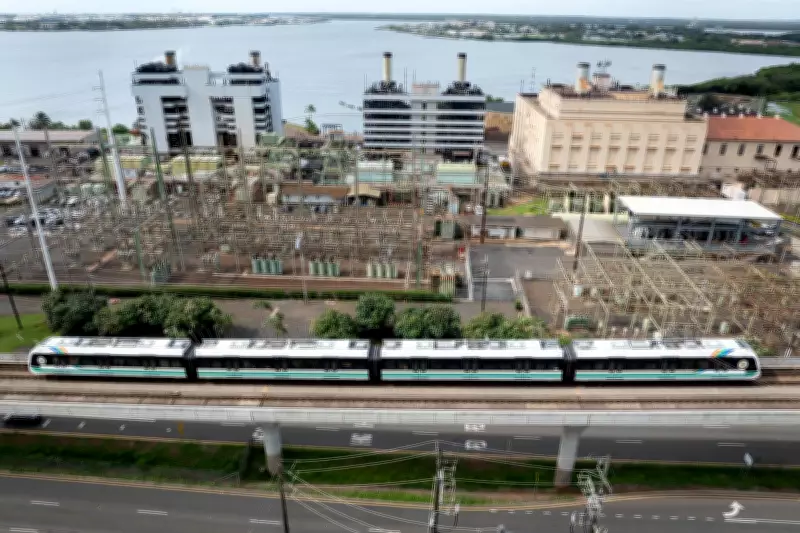
Hawaiian Electric's $1 Billion Power Project Confronts Flood Zone Designation
Hawaiian Electric Co.'s ambitious $1.15 billion upgrade to its Waiau power plant in Pearl City has encountered a significant new obstacle. The utility's plans, which initially seemed to hinge only on customer charge approvals, now face scrutiny due to the site's recent classification as a 100-year flood zone by the Federal Emergency Management Agency (FEMA).
Flood Zone Revelation Emerges From Anonymous Public Comment
The flood zone issue came to light through a highly unusual public comment filed by an entity calling itself Concerned Ratepayers of Oʻahu. This shadowy group, which appears to have no official registration with Hawaiʻi's Department of Consumer Affairs or presence in public records, submitted a detailed 71-page memo highlighting that the Waiau power plant sits in a newly designated flood zone.
When HECO first announced the project in December 2023, the site was not in a flood zone. However, FEMA's preliminary maps released in July 2024 placed the location in a 100-year flood zone, with these designations becoming effective in June. The public comment specifically questions whether HECO disclosed this pending flood zone designation in its loan application to the U.S. Department of Energy.

HECO's Response and Regulatory Implications
Jim Kelly, HECO's vice president of government and community relations, defended the project by noting the plant has operated on a slope above Pearl Harbor since 1938 without flooding incidents. He emphasized that the new flood maps show only the footprint of potential flooding, not depth, and questioned the motives behind the anonymous submission.
"To anonymously express concerns about the project after its approval by the PUC raises questions about the real motivations of those behind the letter," Kelly stated, suggesting the authors might not be genuine "concerned ratepayers."
Despite knowing about the preliminary flood zone designation during FEMA's 90-day public comment period in 2025, HECO did not object because company officials believed the new equipment would be built several stories above ground on existing infrastructure. The utility also didn't alert the state Public Utilities Commission when filing an updated project application in October, as the designation was still preliminary at that time.
Potential Impact on Permits and Federal Funding
The flood zone designation could significantly impact HECO's ability to obtain building permits and secure crucial federal funding. Scott Humber, communications director for Honolulu Mayor Rick Blangiardi, confirmed that sections of the Waiau project will transition to "flood zone A," meaning there's a 1% chance of annual flooding.
"The change in flood zone means that changes to powerplant structures and equipment may require meeting stricter Federal and City flood resilience standards," Humber wrote in a statement.
Henry Curtis, executive director of Life of the Land, noted that HECO's own guidelines for new power projects prohibit locations in "A" flood zones—exactly the type of zone where the Waiau project now sits. "It raises too many substantive issues for the PUC simply to ignore it," Curtis said. "I think HECO may be screwed on this one."
Federal Loan Application Under Scrutiny
The flood zone issue poses particular challenges for HECO's application for a loan from the U.S. Office of Energy Dominance Financing, which provides loans for power grid strengthening projects. While federal law doesn't strictly prohibit funding projects in flood zones, Executive Order 11988 requires agencies to avoid supporting floodplain development where alternatives exist.
Federal regulations prescribe an eight-step process agencies must follow before funding projects in flood zones, including identifying alternatives, notifying the public, and allowing comments. The new designation would subject HECO's loan application to additional scrutiny at minimum.
Kelly maintained that "the executive order and regulations don't prohibit construction in a flood zone for federal funding. It requires mitigation. Brownfield industrial projects using the existing footprint have less environmental impact than greenfield projects."

Financial Pressures Mount for Hawaiian Electric
The timing is particularly challenging for HECO's parent company, Hawaiian Electric Industries, which must pay Maui wildfire victims $1.99 billion over four years to settle legal claims related to fires the company was found to have started in 2023. This settlement represents a significant financial burden for a company with diminished credit.
The PUC has already approved the Waiau project but limited what HECO could charge ratepayers to $847 million plus inflation adjustments—far short of the $1.15 billion the utility seeks. This would leave HECO responsible for over $300 million of the project's cost. The utility has asked the PUC to reconsider and allow passing the full cost to customers.
Regulatory Process and Future Implications
David Richmond, the utility commission's government affairs officer, explained that while the commission typically considers only filings by formal parties as evidence, substantive public comments—even from anonymous sources—could prompt information requests to HECO. The responses would then become formal evidence in the proceeding.
Curtis predicted the flood zone issue would need to be addressed as part of the proceeding and would likely increase HECO's costs further. The controversy adds to existing tensions in the Waiau proceeding, which recently saw Hawaiʻi's Chief Energy Officer Mark Glick requesting postponement due to cost concerns and alternative power plant proposals.
As the flood zone designation takes effect in June, HECO faces mounting challenges to its billion-dollar power plant upgrade, with potential implications for ratepayers, regulatory approvals, and the utility's financial stability.





