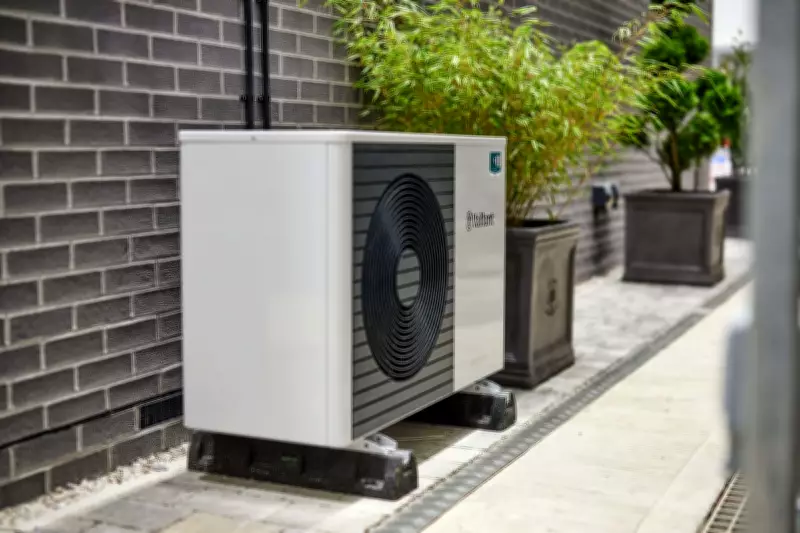
An official fact check has revealed that no reliable data exists to directly compare the incomes of households receiving heat pump grants with national income figures. This comes after Reform UK Treasury spokesman Robert Jenrick claimed that "more than half of the grants are going to households that earn more than £52,000-a-year" on Tuesday, suggesting lower earners are subsidising better-off households.
The Government Report Behind the Claims
Mr Jenrick's figures originate from a 2024 government evaluation of the Boiler Upgrade Scheme (BUS), which supports households installing heat pumps or biomass boilers. The interim report stated that "over half (57%) had an annual household income of more than £52,000, which is high compared to the median national household income of £32,300."
Survey Methodology and Limitations
The government survey asked BUS beneficiaries to place their household income into one of eight categories. The data revealed that 47% of respondents reported household incomes of £52,000 or above, while 36% reported incomes below that threshold. A significant 17% declined to answer the question.

When excluding non-respondents, this produced the 57% figure cited by Mr Jenrick. However, this calculation method and the voluntary nature of the survey introduce limitations to the data's reliability for direct comparisons.
The Problem with Income Comparisons
The government report compared the £52,000 figure from its survey to what it called "median national household income of £32,300." This comparison is fundamentally flawed because it compares two different types of income measurement.
The survey asked households for their "approximate total income before tax and any other deductions," while the £32,300 figure represents median household disposable income after taxes. The Office for National Statistics (ONS) confirmed to the Press Association that these are "two very different figures" that cannot be directly compared.
Alternative Comparisons and Their Limitations
The ONS suggested mean gross household income as a potentially better comparison point, which stood at £63,500 in the year ending March 2022. For homeowners specifically, this figure was even higher at £73,842.
However, mean figures can be heavily skewed by a small number of very high earners, making them imperfect for comparison purposes. The ONS does not publish median figures for gross household income, nor does it provide gross household income ranges that would allow for more accurate comparisons.
Government Justification and Historical Context
When questioned by the Press Association, the Department for Energy Security and Net Zero defended its use of the disposable income figure because it represented a median measurement, unlike the gross income mean figures. The department also noted that pre-tax income was used to maintain consistency with evaluations of the scheme's predecessor, the Renewable Heat Incentive.
This historical continuity in measurement approaches further complicates attempts to draw definitive conclusions about the income distribution of grant recipients compared to the general population.
The Broader Context of Energy Efficiency Support
The debate over heat pump grants occurs within the wider context of government efforts to promote energy efficiency through various measures including solar panels, insulation, electric vehicles, and battery storage. These initiatives collectively aim to save households thousands of pounds while reducing carbon emissions.
However, the current controversy highlights the challenges in assessing whether such schemes effectively reach lower-income households or disproportionately benefit those already better off.
Conclusion: A Data Gap Remains
The fundamental issue identified by this fact check is the absence of directly comparable official data. While the government report provides valuable information about BUS recipients, its income figures cannot be reliably compared to national statistics due to methodological differences in measurement.
This data gap means that claims about the relative affluence of heat pump grant recipients compared to the general population should be treated with caution, as no statistically valid comparison currently exists.