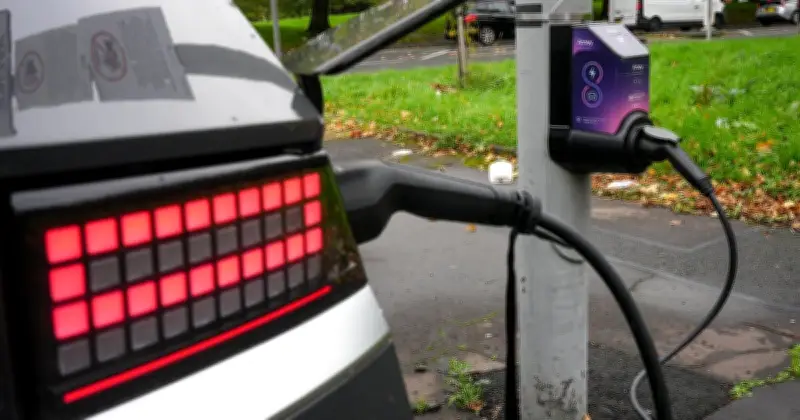
Be.EV, a major EV public charging network provider, has warned that upcoming legal changes imposing new charges on electric vehicle drivers could put people off switching from petrol and diesel cars. The group says now is an "important" moment in the transition to electric cars.
A spokesperson for Be.EV cautioned that the "cumulative cost of policies" could deter motorists just as the transition is starting to gather pace.
New charges coming in
From the start of April 2028, a new pay per mile charge will be introduced. This will include a 3p per mile charge for battery electric vehicles and hydrogen fuel cell electric vehicles (HFCEVs), along with a 1.5p per mile charge for plug-in hybrid electric vehicles.
The Government has said the rate will be uprated in 2029 to 2030 and in future years, in line with Consumer Prices Inflation (CPI), to ensure that the tax maintains its real-terms value. This follows extra costs imposed on EV drivers from April 2025, when EVs were made no longer exempt from road tax.
Cumulative impact
The team at Be.EV said of these extra costs for motorists: "We recognise that as more people switch to electric vehicles, the government needs to think about how it replaces the revenue currently generated through fuel duty.
"That's a reasonable conversation to have. But we also need to be careful about the timing and the cumulative impact on drivers. We're approaching a really important point in the EV transition.
"The next wave of customers aren't necessarily enthusiasts who are prepared to make the switch at any cost. They're ordinary motorists making practical decisions about what car to buy, how much it costs to run and whether it fits their lifestyle. Price is going to play a huge part in that decision."
New 'charging pass'
To help EV drivers manage their costs, Be.EV has introduced the UK's first EV charging pass. This allows drivers to pay a fixed monthly fee for a charging allowance that they can use across its UK network.
This makes life easier as you don't need to track the various peak, off-peak or per-kWh rates. This brings the UK provision closer to European standards, where subscription and allowance-based pricing is common.
You can currently get two passes:
- Go Pass - £49 a month - 120kWh allowance, enough for around 400 miles
- Go Further Pass - £89 a month - 250kWh allowance, sufficient for roughly 800 miles.
Be.EV was asked what improvements are needed for the EV charging network. The group said there can be challenges in setting up new charging points.
Challenges in growing the network
The spokesperson said: "We've encountered locations where sufficient grid capacity exists, but the connection point is a considerable distance from the site. Bringing that power to the chargers can require extensive civil engineering works, adding significant cost and complexity.
"In a couple of cases, those costs have been enough to make otherwise promising sites commercially unviable." One of the biggest challenges is how widely the costs can vary for a new location.
Be.EV explained: "Some sites, such as busy motorway service stations or major retail destinations, are naturally attractive to operators. There's strong demand, high footfall and a clear commercial case for investment.
"Other locations are much harder to make work. They might be further from a suitable grid connection, making installation significantly more expensive, or in areas where there simply aren't enough EV drivers yet to generate a commercial return. That's particularly challenging in rural and remote communities, but it can happen in towns and cities too."