

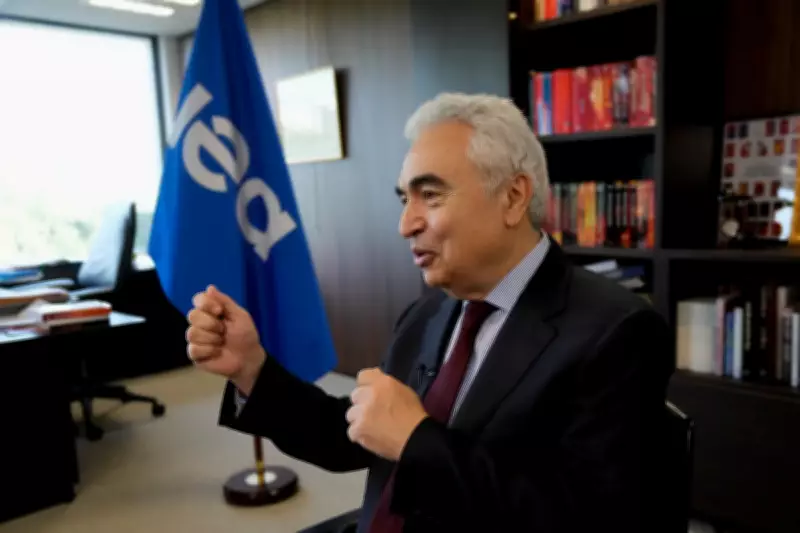
The head of the International Energy Agency has issued a stark warning that Europe may have just six weeks of jet fuel remaining, with potential flight cancellations looming if oil supplies remain disrupted by the Iran war. In a comprehensive interview with The Associated Press on Thursday, IEA Executive Director Fatih Birol described the situation as "the largest energy crisis we have ever faced," stemming from the blockade of vital supplies through the Strait of Hormuz.
Global Repercussions of the Energy Crisis
Birol painted a sobering picture of the worldwide impact, emphasizing that the prolonged closure of the Strait of Hormuz will have major implications for the global economy. "In the past there was a group called 'Dire Straits.' It's a dire strait now, and it is going to have major implications for the global economy. And the longer it goes, the worse it will be for economic growth and inflation around the world," he stated from his Paris office overlooking the Eiffel Tower.
Immediate Effects on Fuel and Energy Prices
The IEA chief highlighted that consumers should brace for higher costs across multiple energy sectors. "The impact will be higher petrol (gasoline) prices, higher gas prices, high electricity prices," Birol told AP, noting that some regions will be "hit worse than others." He identified Asian countries—including Japan, Korea, India, China, Pakistan, and Bangladesh—as the "front line" due to their heavy reliance on Middle Eastern energy exports.

Europe and the Americas Next in Line
Birol warned that the crisis will soon spread to Europe and the Americas if the Strait of Hormuz remains closed. For Europe specifically, he predicted imminent disruptions: "I can tell you soon we will hear the news that some of the flights from city A to city B might be canceled as a result of lack of jet fuel." This dire forecast underscores the urgency of resolving the supply blockade to prevent widespread travel chaos and economic strain.
The interview, conducted on Thursday, 16 April 2026, reveals a critical juncture in global energy security, with Birol's comments serving as a clarion call for international action to mitigate the escalating crisis.






