

The International Energy Agency has issued a stark warning that Europe could be left with just six weeks of jet fuel supplies, triggering widespread alarm and urgent discussions about necessary countermeasures. This critical shortage stems directly from the effective closure of the Strait of Hormuz, a vital maritime chokepoint that normally supplies 40 per cent of the continent's aviation fuel, following the escalation of conflict in the Middle East.
Charity Demands Immediate Government Action
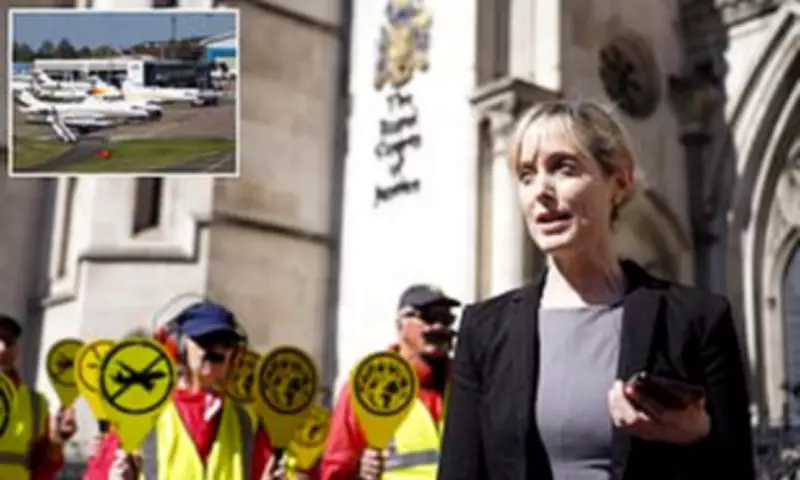
In response to this escalating crisis, the climate-focused charity Possible has launched a forceful appeal to the British government. The organisation is calling for an immediate prohibition on private jets, which it characterises as a wasteful misuse of precious remaining fuel resources. Officials are being urged to act swiftly to safeguard fuel availability for ordinary families planning summer holidays abroad.
'Protect Ordinary People's Holidays'
Alethea Warrington, who leads the aviation campaign at Possible, delivered a pointed statement. 'As disruption and instability from the oil industry continues, the government needs to take swift action to ensure that ordinary people's summer holidays are protected,' she asserted. 'Before accepting the cancellation of commercial flights, we need to ban private jets, luxury class flying, and curb ultra frequent flying.'

Warrington elaborated on the charity's position, describing it as 'unacceptable' to allow a scenario where private jet travellers continue unimpeded while standard families face cancelled plans. 'The alternative of allowing private jet users to keep flying in luxury when families can't take their annual break is unacceptable,' she added.
Looking beyond the immediate crisis, Warrington proposed a longer-term strategic shift. 'In the longer term, the only way to ensure international transport from the UK is protected from oil shocks is to make better use of our international rail link to Europe.' She also highlighted that several nations are already enacting protective measures for their citizens and questioned when the UK would follow suit.
Global Energy Crisis Painted by IEA Chief
The urgency of the situation was underscored by Fatih Birol, the Executive Director of the International Energy Agency. In a recent interview, he portrayed a grim outlook for the global repercussions of what he termed 'the largest energy crisis we have ever faced'. This crisis originates from the severe constriction of oil, gas, and other essential supplies passing through the Strait of Hormuz.
'In the past there was a group called "Dire Straits." It's a dire strait now, and it is going to have major implications for the global economy,' Birol stated. 'And the longer it goes, the worse it will be for the economic growth and inflation around the world.'
Widespread Economic Impact Forecast
Birol detailed the expected consequences, which include:
- Higher petrol (gasoline) prices
- Increased gas prices
- Elevated electricity costs
He noted that the impact would be unevenly distributed, with some global regions 'hit worse than the others'. The initial front line, according to Birol, comprises Asian nations heavily dependent on Middle Eastern energy, specifically naming:
- Japan
- Korea
- India
- China
- Pakistan
- Bangladesh
'Then it will come to Europe and the Americas,' he concluded from his Paris office. The Department for Energy Security and Net Zero was approached by the Daily Mail for comment on these developments, highlighting the growing political pressure surrounding the fuel emergency.






