

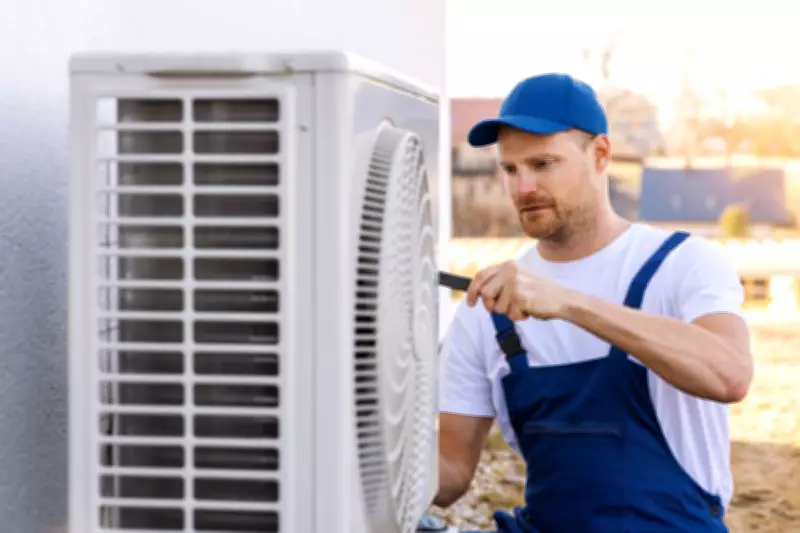
Eco-Conscious Homeowner Rejects Heat Pump Installation
Even for households deeply committed to environmental sustainability, the financial and practical hurdles associated with heat pumps are proving too significant to overcome. James Moore, a self-professed "greenie" who drives an electric car and has solar panels on his roof, remains unconvinced about adopting this renewable heating technology.
High Energy Costs and Global Factors
The United Kingdom already contends with some of the highest energy prices in the developed world, a situation exacerbated by recent geopolitical events. The conflict in Iran and the closure of the Strait of Hormuz have triggered another spike in costs. Ofgem's upcoming price cap, set to take effect in July, is anticipated to be even less favourable than the current annual ceiling of £1,758.
Given these escalating expenses, one might assume that transitioning to a heat pump—a system that extracts heat from outside air or ground and circulates it indoors via fans—would be an obvious choice. In summer, it can reverse to function like an air-conditioning unit.

Government Initiatives and Newbuild Standards
As part of the broader net zero strategy, heat pumps will soon become standard in new constructions. Starting in 2028, all newbuild homes will be equipped with heat pumps and solar panels covering 40% of the floor area, eliminating the need for connection to the gas network. For existing properties, homeowners are being encouraged to retrofit these renewable heating solutions.
Although installation costs are estimated around £10,000, with government grants of up to £7,500 available, the potential reduction in energy bills during a global fuel crisis should make them appealing. However, for many, the benefits are not clear-cut.
Practical and Aesthetic Concerns
The Home Builders Federation highlights that heat pumps are often impracticable for many homes. They require significant space, typically as a metre-square box on an external wall with ground-source loops extending up to two metres deep. For older properties like Victorian terraces or draughty country houses, finding suitable placement can be challenging.
Operational issues also pose barriers. Heat pumps may struggle to heat water to the same temperatures as gas boilers, necessitating underfloor heating or oversized radiators for effective warmth. They perform best in well-insulated homes with large radiators; without high-efficiency operation, running costs can exceed those of gas boilers, often surpassing £1,000 annually in an average UK home.
Personal Decision and Future Considerations
For James Moore, the prospect of eliminating gas dependency is enticing, especially given methane's role as a potent greenhouse gas. However, the upfront investment and need for extensive home modifications to ensure performance comparable to his existing combi boiler are deterrents. He concludes that most households will likely continue using gas for heating until costs decrease or technology improves, at which point reconsideration may occur.






