

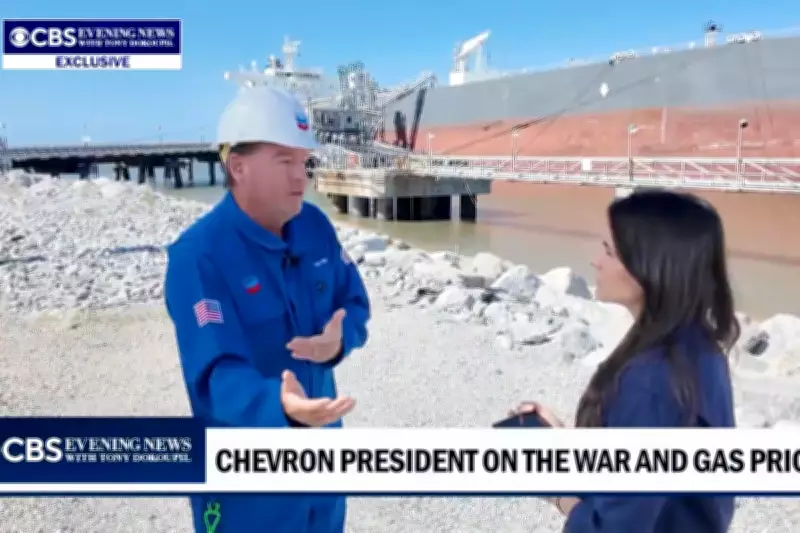
A Chevron executive has delivered blunt advice to Americans grappling with steep gas prices resulting from the Iran war: drive less and conserve energy. Andy Walz, president of downstream, midstream and chemicals at Chevron, emphasized there is no quick fix to lower U.S. prices while global markets are strained, warning that costs might increase if the conflict persists.
Executive's Direct Message on Energy Use
In an interview with CBS News, Walz stated, "People should try to drive less. They should try to conserve energy. We should be doing that all the time. Energy's essential for people's lives, but we should conserve it." He acknowledged that this advice might not resonate with millions who depend on cars for daily tasks like commuting, school runs, and grocery shopping.
Impact of the Iran War on Oil Markets
Since the U.S. and Israel initiated the war in February, oil prices have surged dramatically. This spike is largely due to Iran's effective blockade of the Strait of Hormuz, a critical trade route handling approximately 20 percent of global oil supply. On Wednesday, U.S. crude prices were around $95 per barrel, with the average gasoline cost at $4.10 a gallon, over a dollar higher than pre-war levels, according to AAA.

Political and Economic Context
The Trump administration has indicated that high prices could linger, as peace negotiations have not yet produced breakthroughs. Over the weekend, former President Trump noted on Fox News that gas prices might remain elevated during the midterm elections, still seven months away. Energy Secretary Chris Wright conceded on Wednesday that prices could stay high into the summer.
Consumer Struggles and Corporate Responses
During the interview at Chevron's Pascagoula Refinery in Mississippi, Walz was asked about guidance for consumers facing financial strain at the pump. CBS News reporter Lilia Luciano highlighted that some parents are even debating whether to drive their children to school. Walz responded, "I would encourage everybody to...hang in there and hopefully prices will be coming down soon. I think this is a reinforcement of the importance of energy. It needs to be affordable and it has to be reliable."
Global Market Dependencies
Walz explained that although the U.S. is a net oil exporter, domestic prices are still linked to volatile global markets. He noted, "America is more reliant on local production, but there's countries in Asia and other parts of the world that rely heavily on Middle East crude. They can't get it. They can't refine it. They can't make the products people need, and they're starting to run out. And that is a real problem. We're worried about price here." He added that if the situation continues, it could become even more challenging.
Chevron's Efforts to Mitigate Prices
Chevron, one of the world's largest oil companies with a market capitalization of $370 billion, is attempting to ease domestic prices by utilizing Venezuelan crude. The Pascagoula Refinery is now processing about 100,000 barrels of Venezuelan oil daily. This follows a deal announced by President Donald Trump after the U.S. military operation captured then-Venezuelan President Nicolás Maduro, allowing tens of millions of barrels to be sent directly to the U.S. Walz remarked, "We have access to a new supply point that we didn’t have previously."
When asked if Americans would pay significantly more without this Venezuelan oil influx, Walz said, "I’m not going to say a lot more, but we would be paying more." This underscores the ongoing efforts to stabilize prices amid global uncertainties.






