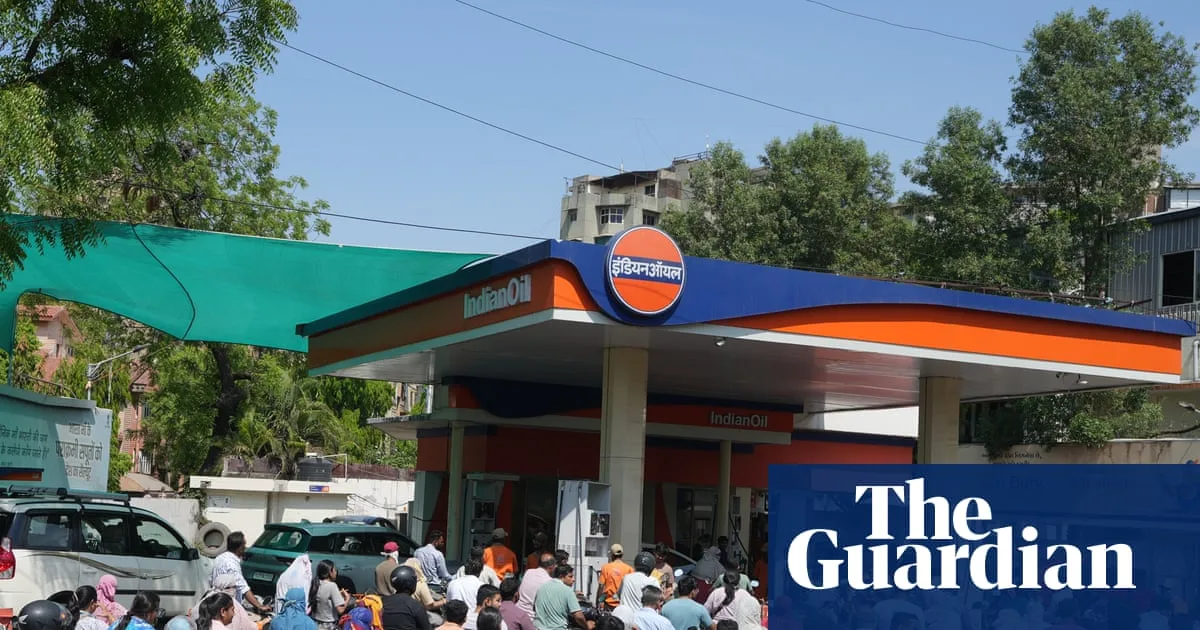
Rising fuel prices and shortages are forcing people worldwide to ration their usage, from a shop owner in India to a community worker in New South Wales. The near-impassability of the Strait of Hormuz, through which one-fifth of the world's oil travels, has pushed oil prices to about $100 a barrel, with knock-on effects for petrol and other goods.
Alagesan, 35, who runs a roadside drink and snack shop in Coimbatore, India, relies on liquefied petroleum gas (LPG) but fears his business may fold. "I am far away from the Middle East, but my life is affected," he said. "The gas cylinder is not available because of the war. I don't know what to do." In Kerala, Gangesh, 57, reported that India imports about 60% of its LPG, 90% of which is routed through the Strait of Hormuz, and the closure has led to long waits for cylinders.
The International Energy Agency (IEA) has issued recommendations including working from home, reducing highway speed limits, using public transport and carpooling, switching to electric cooking where possible, and avoiding air travel. IEA executive director Fatih Birol described the situation as "a major energy crisis, including the largest supply disruption in the history of the global oil market."
Readers responding to an online callout described cutting back on driving, cycling, and using public transport. In the UK, Sue, 73, a semi-retired teacher from Macclesfield, has banned her car except for hospital trips for her husband, using a bike and tricycle instead. Katie, 71, from Massachusetts, who supports her disabled son, said she is "already dealing with rising health costs and choosing between food and gasoline," with medical appointments requiring round trips of 100 miles or more.
Some in cooler climates have limited heating oil use, heating just one room or burning wood, while others have cancelled holidays. However, many said they had no choice but to use their cars due to a lack of public transport. In Northern Ireland, where heating oil is the primary source for almost two-thirds of households, David from Londonderry said people are worried about the additional increases, particularly those with respiratory problems. Meanwhile, some with electric vehicles and solar panels expressed relief at having some control over their fuel sources.