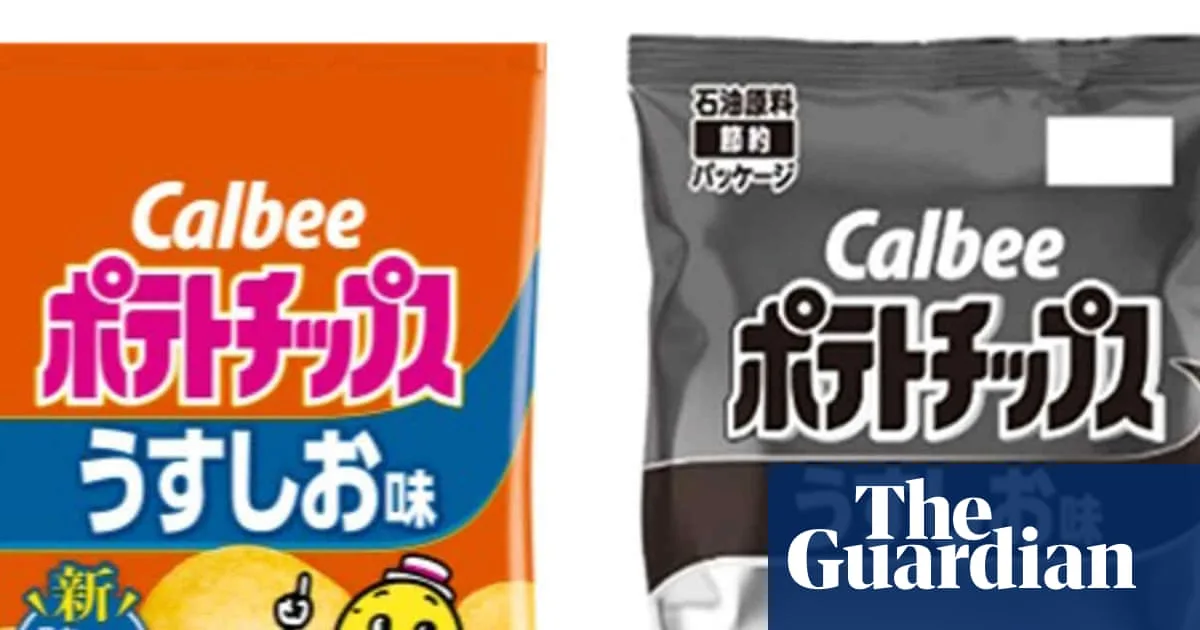
Japan's biggest crisp-maker is stripping the colour from its famous packets as the US-Israeli war on Iran disrupts supplies of petroleum-derived printing materials.
Calbee's Move to Monochrome Packaging
Calbee announced on Tuesday that 14 of its products, including flagship potato chips, Kappa Ebisen prawn crackers, and Frugra cereal, will temporarily adopt monochrome packaging starting 25 May. The company cited "supply instability affecting certain raw materials amid ongoing tensions in the Middle East."
The move aims to "help maintain a stable supply of products" and will not affect food quality or safety. However, the visual change is striking: vivid reds, yellows, and greens long associated with Calbee's crisp packets will be replaced by grayscale designs, making some of Japan's most recognisable supermarket products look almost unfinished.
Background on Calbee
Calbee was founded in 1949 in Hiroshima as the city recovered from the atomic bombing by the US. The company, which acquired Yorkshire manufacturer Seabrook Crisps in 2018 as part of its European expansion, recorded sales of £1.5bn in 2025, according to The Guardian.
Regular buyers in Japan often identify flavours by colour alone: lightly salted crisps come in red packets, while seaweed-flavoured varieties are sold in yellow bags with green labels. In the new grayscale packaging, the familiar cartoon mascot surrounded by crisps is barely visible, replaced by simplified text-heavy designs.
Supply Chain Disruptions
This is a consequence of disruptions to supplies of naphtha, a petroleum byproduct used in making solvents and resins for commercial printing inks, plastics, and adhesives. According to Reuters, Japan imported about 40 per cent of its naphtha from the Middle East before the war began in February.
The US and Israeli strikes on Iran triggered a closure of the Strait of Hormuz, a critical waterway carrying a fifth of the world's oil supply, causing a shortage of petrochemical products. Reuters reported in March that Asia's naphtha refining margin jumped from about £80 a tonne over Brent crude before the conflict to more than £295 as supply disruptions intensified.
Industry and Government Response
Shinichi Takei, managing director of the Japan Printing Ink Makers Association, told Bloomberg the shortage was "acute in the early days of the Iran conflict" but had eased somewhat. "We believe Calbee's decision to limit its packaging to two colours reflects an effort to conserve resources in anticipation of future conditions," he said.
As concern spread through Japanese manufacturing and retail sectors, the government moved to calm fears. Speaking at a briefing on Tuesday, Deputy Chief Cabinet Secretary Kei Sato said officials had "not received any reports of immediate supply disruption for printing ink or naphtha."
"Adequate supplies of the naphtha ink ingredient have been secured for important functions in Japan," he said. "We are working with major corporations to ensure naphtha is imported by routes other than through the Strait of Hormuz."
Mr Sato noted that naphtha imports from outside the Middle East tripled in May compared to pre-war levels, and Japan continues refining stockpiled crude oil. Japan's strategic oil reserves once covered 254 days of domestic demand but had fallen to 205 days by 8 May and were estimated to cover only about three weeks of demand, according to The Straits Times.
Broader Impact on Japanese Manufacturers
Calbee is unlikely to be the last company forced into aesthetic austerity. Processed-meat manufacturer Itoham Yonekyu said earlier this month it could simplify packaging designs or switch to black-and-white printing in future. A beverage manufacturer decided to remove some printing from the packaging of 15 probiotic drink products starting in late May.
Toilet manufacturer Toto temporarily suspended orders for prefabricated modular bathrooms made using naphtha-derived plastics in April, before resuming them with government and supplier support. Food manufacturer Mizkan suspended sales of four natto products and raised prices on others earlier this month because of a shortage of polystyrene packaging containers. The dumpling chain Gyoza no Manshu stopped selling frozen take-home dumplings as it could no longer source plastic trays.