Blair's Think-Tank Demands North Sea Production Ramp-Up to Secure UK Energy
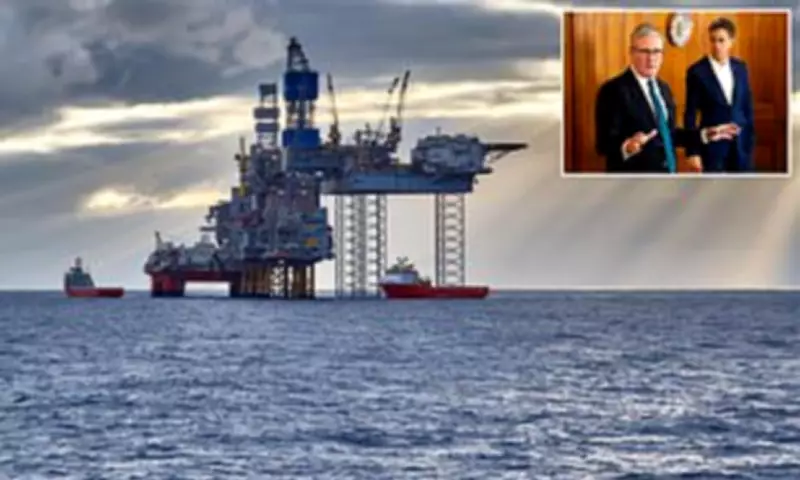
Britain must urgently escalate North Sea oil and gas production and cease 'outsourcing' the nation's energy security, Tony Blair's think-tank insisted today. The Tony Blair Institute's energy policy expert, Tone Langengen, declared that the ongoing Middle East crisis underscores the critical need to minimise the country's reliance on volatile imports.
Global Turmoil Sparks Price Surge and Inflation Fears
This intervention, detailed in an article for the Daily Mail, arrives as ministers scramble to manage the fallout from the US-Israeli conflict against Iran. Oil prices have surged beyond $100 per barrel, while natural gas costs are also soaring dramatically. The repercussions are already evident at UK fuel pumps, with mounting concerns over an impending inflation spike affecting a broad range of essential goods and services.
Chancellor Rachel Reeves has faced calls to alleviate pressure on North Sea operators by reducing taxes and permitting new drilling licences to enhance domestic energy production. Last week, following criticism for inaction during the Spring Statement, she reaffirmed a commitment to abolish the so-called 'windfall tax' on oil and gas firms by 2027 during a meeting with industry leaders.

Windfall Tax and Exploration Ban Under Scrutiny
The levy, implemented in 2022 in response to record profits after Russia's invasion of Ukraine, remains contentious. However, government sources have cautioned about the 'real-time consequences' of Middle East chaos on oil and gas prices, asserting it is 'right that we respond to this'.
In her article, Ms Langengen wrote: 'When missiles fly in the Middle East, energy prices spike. That's the harsh reality of the world we now live in.' She highlighted the ongoing turmoil, which has effectively closed the critical Strait of Hormuz, warning: 'If this continues, it won't just be numbers on a trading screen. It will mean higher bills, more pressure on businesses and another hammer blow to economic growth.'
She emphasised: 'Britain cannot escape global energy markets. We cannot control global prices. But we can decide how much of the energy we rely on is produced at home.' Ms Langengen stated the 'lesson staring us in the face' is that 'energy isn't just about climate targets'. 'It's about national power,' she added.
Rising Import Dependency and Strategic Concerns
Ms Langengen elaborated: 'Right now, Britain already imports about half the oil and gas we use. Without new investment in the North Sea, that could rise to 80 per cent by 2030.' She cautioned: 'And let's be clear: shutting down production here doesn't reduce demand overnight. It just means we buy more from somewhere else. That is not a long-term strategy. It's outsourcing.'
The North Sea should be treated as the strategic national asset it is. Instead, it has been trapped in uncertainty. The energy expert argued that ending the Windfall Tax would 'send a clear signal' that Britain backs 'long-term investment, competitiveness and energy resilience'.
Balancing Net Zero Commitments with Energy Security
The government has prohibited new exploration licences in the North Sea, citing a desire to lead global climate crisis efforts and pointing to 'declining oil and gas reserves'. However, Ms Langengen contended this restriction should be abandoned. 'Managed responsibly, new projects can protect jobs and strengthen security while we build the clean energy system of the future,' she said.
She clarified: 'None of this means abandoning Net Zero by 2050. Britain should stay committed to cutting emissions. But rather there is a realistic and pragmatic way to do it.' Ms Langengen concluded: 'We can move towards cleaner energy while recognising that oil and gas remain part of our system - and will for years to come. The choice is not between Net Zero and the North Sea. It is between managing the transition sensibly or making ourselves more dependent on imports.'