

Big Oil's $30m Hourly War Windfall from Consumers Exposed
Exclusive analysis reveals that the world's top 100 oil and gas companies banked more than $30 million every hour in unearned profit during the first month of the US-Israeli war in Iran. According to data from intelligence provider Rystad Energy, analysed by Global Witness, these firms are set to make an additional $234 billion by the end of 2026 if oil prices continue to average $100 per barrel.
Key Beneficiaries of the Conflict Bonanza
Saudi Aramco, Gazprom, and ExxonMobil are among the biggest beneficiaries of this windfall, meaning key opponents of climate action continue to prosper. The conflict pushed oil prices to an average of $100 (£74) a barrel in March, leading to estimated war profits of $23 billion for the month alone. Oil and gas supplies are expected to take months to return to pre-war levels, sustaining these extraordinary gains.
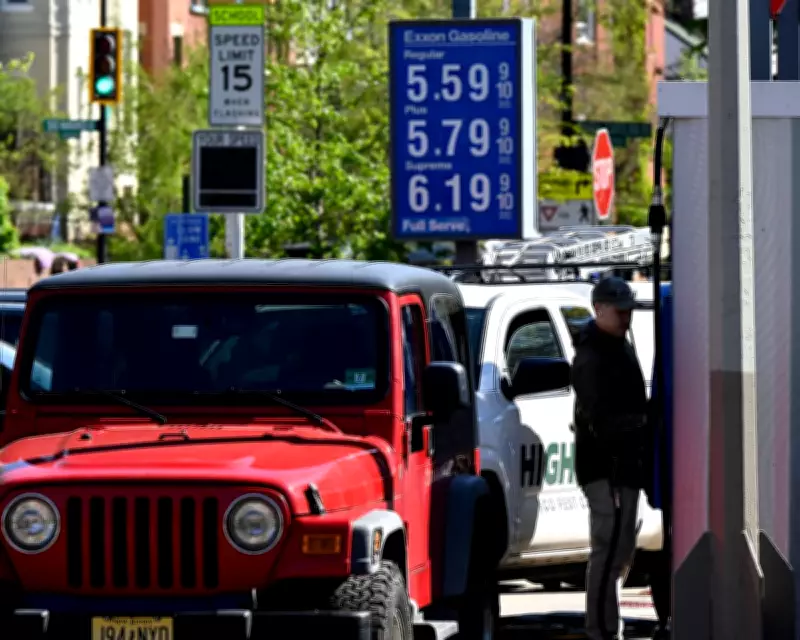
The excess profits come directly from the pockets of ordinary people, who face high prices at petrol pumps and for home energy, as well as businesses grappling with soaring energy bills. Dozens of countries, including Australia, South Africa, Italy, Brazil, and Zambia, have cut fuel taxes to assist struggling consumers, reducing public service funding in the process.

Pressure Mounts for Windfall Taxes
Pressure is growing for windfall taxes on these war profits, with the European Commission considering a request from finance ministers of Germany, Spain, Italy, Portugal, and Austria. They argue that those profiting from war consequences must help ease the public burden. The EU's fossil fuel bill has surged by €22 billion since the Iran war began.
Aramco is the biggest winner, estimated to make $25.5 billion in war profit by 2026 if oil averages $100, on top of its habitual $250 million daily profits from 2016 to 2023. Saudi Arabia has long led efforts to block international climate action.
Russian and Western Firms Also Profit
Three Russian companies – Gazprom, Rosneft, and Lukoil – are set to make an estimated $23.9 billion in Iran-related war profits by year-end, bolstering Vladimir Putin's war chest for Ukraine. ExxonMobil, with a history of climate change denial, will take in $11 billion in unearned war profits by 2026, while Shell gains $6.8 billion. Both companies' values have risen significantly post-conflict, with ExxonMobil worth $118 billion more and Shell $34 billion more.
Chevron is on track for $9.2 billion in windfall profits, with its CEO Mike Wirth selling $104 million in shares between January and March. The conflict has been described by the International Energy Agency's Fatih Birol as the biggest shock ever to the global energy market.
Climate and Energy Security Warnings
UN climate chief Simon Stiell warned that fossil fuel dependency undermines national security and sovereignty, advocating for renewable energy to insulate against price hikes. The oil and gas sector has averaged $1 trillion in annual profit over the last half-century, with explicit subsidies totalling $1.3 trillion in 2022.
Patrick Galey of Global Witness stated, "Moments of global crisis continue to translate into bumper profits for oil majors while ordinary people pay the price." Jess Ralston of the Energy and Climate Intelligence Unit emphasised that investing in net-zero technologies is crucial for energy security and climate balance.
Renewables Offer Some Protection
Countries increasing renewable energy capacity, like the UK, are partially shielded from price rises. Wind and solar power in the UK avoided £1 billion in gas imports in March, with wind power saving consumers an estimated £100 billion from 2010-2025. However, as long as economies remain tied to oil and gas, exposure to global price shocks persists.
A UK government spokesperson affirmed commitments to clean energy and fair pricing. Most major oil firms, including Saudi Aramco, Shell, and ExxonMobil, declined or did not respond to requests for comment on these findings.






