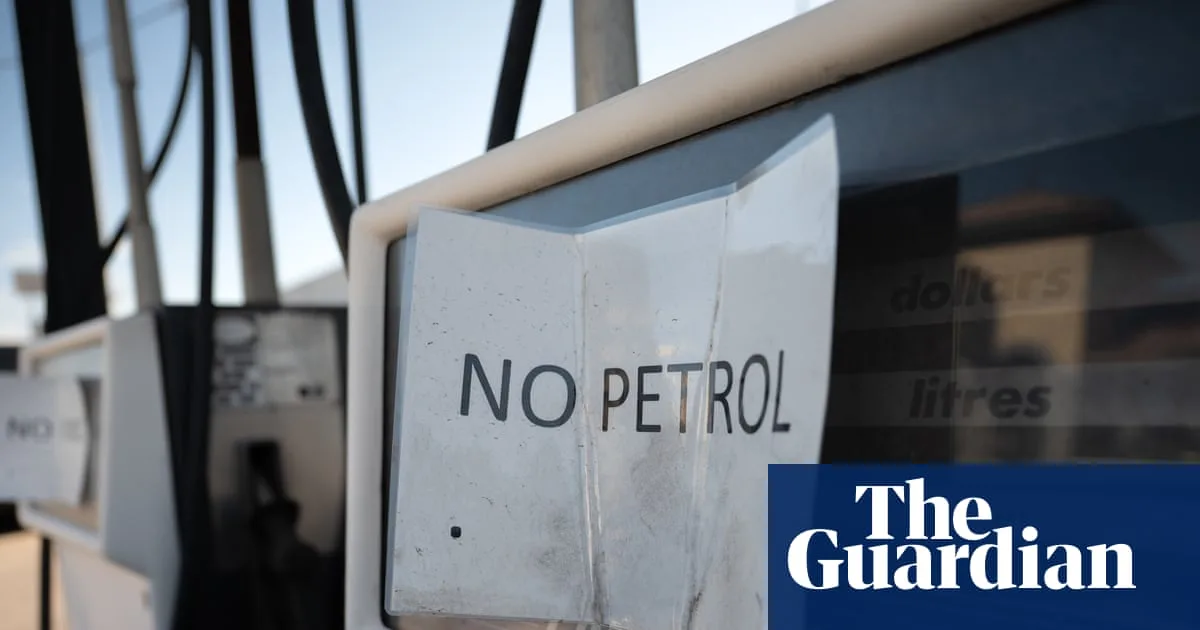
Dozens of petrol stations across Australia have run out of fuel as panic-buying continues amid the Middle East conflict, with the NRMA warning that record-high prices may be permanent in major cities.
The New South Wales government reported 32 out of 3,000 service stations were out of at least one fuel type on Monday. Premier Chris Minns said the state had sufficient fuel but faced distribution challenges as motorists stockpiled. The Victorian Farmers Federation said entire towns, including Wedderburn, Bonnie Doon and Robinvale, had run dry.
In Western Australia, two stations in Manjimup ran out on Friday, and industrial fuel suppliers limited sales to 10,000 litres per customer. Regional and independent stations struggled to access fuel as major suppliers prioritised regular customers, cutting off smaller groups on the spot market.
The federal government allowed fuel companies to temporarily sell lower-quality petrol and release about a fifth of their mandatory stockpile, prioritising regional Australia, but ruled out rationing. The NRMA's Peter Khoury said retail prices in Sydney, Melbourne and Brisbane were at a 'permanent high' after stations raised prices early in the conflict, and regulators missed the chance to intervene.
Unleaded petrol surpassed 230 cents a litre in Darwin and Melbourne, with shortages also hitting urban retailers, including a 7-Eleven in Canberra. The NSW government held crisis talks with suppliers on Monday, agreeing to share information to direct fuel where needed most.
Farmers warned food production was at risk as diesel shortages affected harvesters. The Victorian Farmers Federation called for rationing to be considered, though enforcement would be difficult.