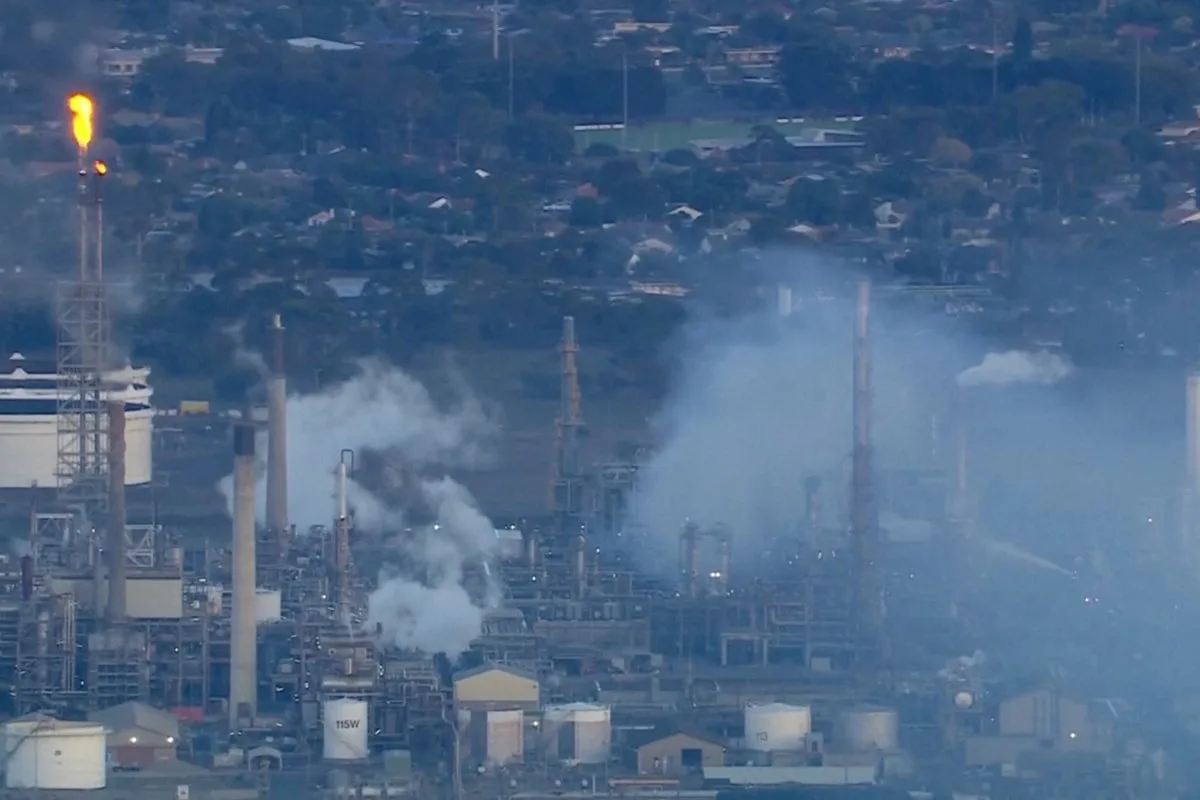
A fire at one of Australia’s two remaining oil refineries burned for 13 hours before being extinguished, threatening petrol supplies in a country already grappling with the fallout from the US-Iran conflict. The blaze broke out just after 11pm at Viva Energy’s Corio facility in Geelong, about 75km south-west of Melbourne, after multiple calls to emergency services reported explosions and flames.
Fire Rescue Victoria said the blaze was contained to the Mogas section, where motor gasoline is produced, covering an area of roughly 30m by 30m. Deputy commissioner Michelle Cowling said the cause appeared to be equipment failure, likely a leak or valve malfunction. No one was injured. The refinery supplies around half of Victoria’s fuel and 10 per cent of the nation’s total, processing about 120,000 barrels of oil per day.
Viva Energy chief executive Scott Wyatt said petrol products had been affected and production would not resume until it was safe. Federal energy minister Chris Bowen said production of diesel and jet fuel was continuing at reduced levels as a precaution, but petrol production “may be impacted for some time”. He described the timing as “not great” given concerns about fuel security, but said prime minister Anthony Albanese was making progress in sourcing additional supplies from overseas.
Experts warned the fire added pressure to an already stretched system. In recent weeks, more than 500 service stations reported dry tanks due to panic buying and distribution issues. Professor Hussein Dia of Swinburne University said: “Any disruption to domestic refining capacity adds pressure to an already tight and globally exposed fuel supply. This doesn’t mean people will run out of fuel tomorrow, but it does narrow the buffer we have to absorb shocks.”
Professor Sajid Anwar of the University of the Sunshine Coast said: “Coupled with the cancellation of six oil tankers scheduled for April delivery to Australia, this fire at a processing facility represents a critical stress test for Australia’s energy resilience.” He warned the combined shock was likely to keep interest rates higher for longer, with Treasury modelling suggesting sustained energy costs could push headline inflation towards five per cent by mid-year.
Residents near the site were advised to shelter indoors during the blaze, with a watch-and-act alert issued at 1am local time before being downgraded by 5.30am. Authorities said hazardous materials teams detected no contaminants in air or water testing. Premier of Victoria Jacinta Allan said it was “too soon” to know the full impact, while Geelong’s mayor described the fire as “unprecedented” in scale.