Australian Motorists Face Soaring Fuel Costs Amid Middle East Tensions
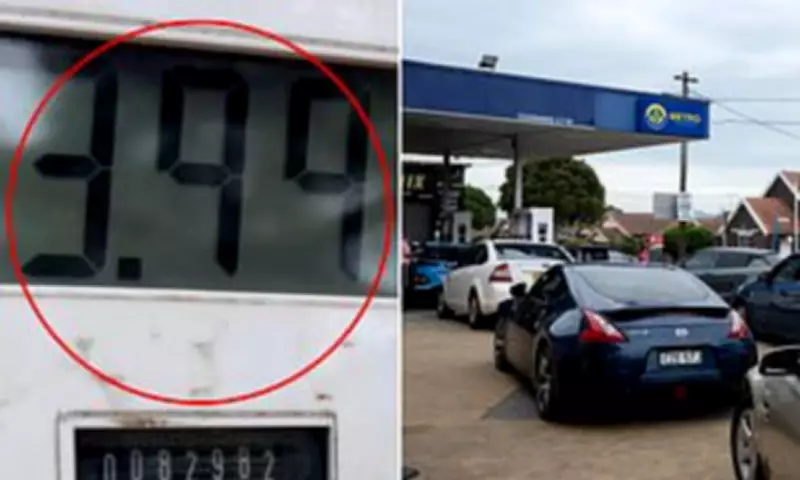
Australian drivers are being hit with fuel prices approaching $4 per litre in some remote regions, as service stations capitalise on the escalating crisis in Iran, according to the nation's largest motoring organisation. The conflict has driven crude oil prices higher, with experts noting that the impact typically takes about seven days to reach Australian petrol pumps.
Remote Communities Bear the Brunt of Price Surges
In the Northern Territory's isolated regions, diesel has already reached $3.99 per litre, including at Ramingining in Arnhem Land, approximately 560 kilometres east of Darwin. Another Arnhem Land community, Milingimbi, is currently paying $3.95 per litre for diesel.
Meanwhile, in major urban centres, regular unleaded petrol was selling for 219.9 cents per litre at half of Melbourne's service stations and at least 217.9 cents per litre at half of Sydney's stations on Wednesday afternoon, as reported by the NRMA. Brisbane's average price of 210.2 cents per litre also significantly exceeded the expected peak of its price cycle.

NRMA spokesman Peter Khoury stated unequivocally: 'Oil companies are using the Middle East crisis as an excuse to jack up margins. This must stop immediately.'
Strait of Hormuz Closure Threatens Global Oil Supply
The core of the crisis lies in Iran's effective shutdown of the Strait of Hormuz, a narrow shipping corridor that carries approximately 20% of global oil trade. Since Saturday, Iran has employed drone strikes and explicit military threats to deter commercial traffic, despite sustained US strikes targeting its naval assets.
Maritime data from Lloyd's List Intelligence reveals that seaborne traffic through this critical chokepoint plummeted by roughly 80% on Sunday. At least four oil tankers have reportedly been struck, while major maritime insurers have withdrawn coverage for vessels operating in the area, further discouraging passage.
Brigadier General Ebrahim Jabbari, a senior adviser to Iran's Revolutionary Guards commander-in-chief, issued a stark warning: 'We will attack and set ablaze any ship attempting to cross.' This threat has prompted at least 150 tankers to drop anchor as shipping companies refuse to navigate the 160-kilometre passage, which narrows to just 38 kilometres at its tightest point.
Westpac Modelling Predicts Severe Price Escalation
Modelling from Westpac suggests that Australians could soon be paying up to $3 per litre at the pump if the conflict persists. If disruption is confined to Iranian production—representing around 4% of global supply—oil prices could increase by another US$25 per barrel to approximately US$100.
However, the real danger emerges if the Strait of Hormuz remains closed. Westpac warns that a one-month disruption could push Brent crude oil prices to US$113 per barrel, while a severe scenario of three months or more could see prices surge to US$185 per barrel.
Westpac analysts cautioned: 'The longer and more intense the disruption, the greater the real economy cost and hit to sentiment.' This could translate to petrol prices in Australia rising by between 25 cents and $1 per litre, depending on fluctuations in the Australian dollar and refinery margins. At the upper end of this range, fuel prices in many cities could potentially exceed $3 per litre.
Historical Parallels and Economic Implications
Helima Croft, global head of commodity strategy at RBC Capital Markets, drew a sobering comparison: 'We're now facing what looks like the biggest energy crisis since the oil embargo in the 1970s. All Iran had to do was several drone strikes in the vicinity of the Strait of Hormuz, and all of a sudden, insurers and shipping companies decided that it was unsafe to traverse that very narrow S-curve of that waterway.'

Oil prices continued their upward trajectory yesterday, with Brent crude rising more than 15%. eToro market analyst Josh Gilbert highlighted the potential for broader economic consequences: 'When Russia invaded Ukraine, oil prices surged, inflation spiked globally, and the Fed responded by hiking rates aggressively. The risk now is that history repeats, with the Iran conflict pushing energy prices high enough to force central banks into a more hawkish stance than markets currently expect.'
Rate markets are currently pricing a one-in-three chance of a hike at the Reserve Bank's March meeting, with an increase expected by May at the latest, reflecting growing concerns about inflationary pressures stemming from the energy crisis.