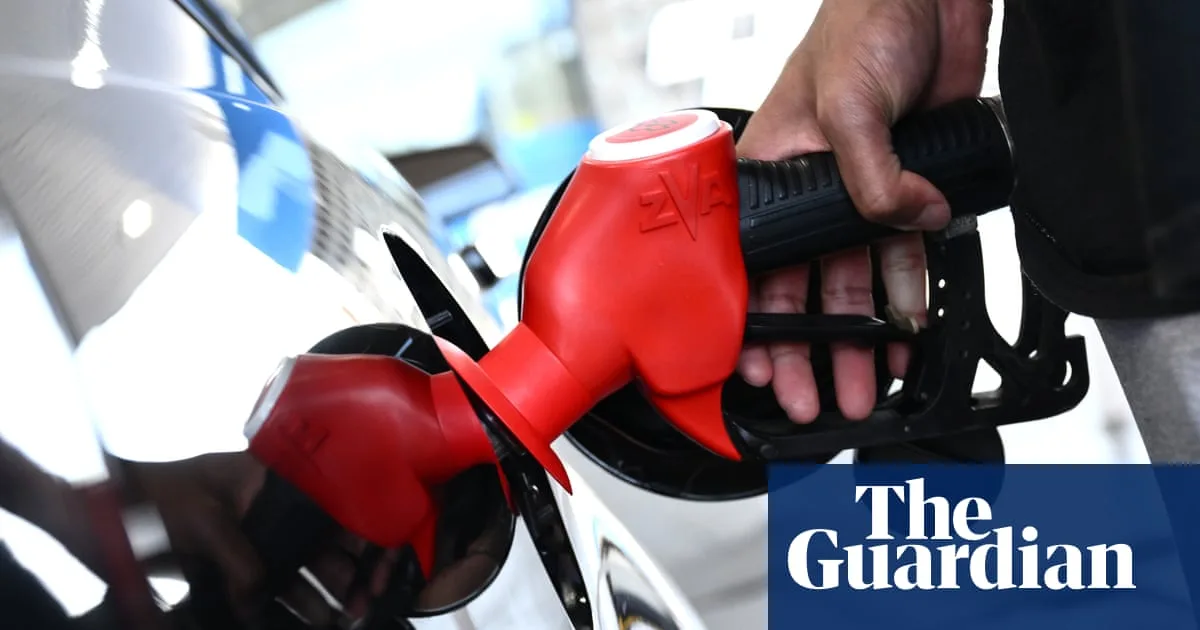
The Australian federal government considered plans for retail fuel rationing during the early stages of the fuel crisis, according to documents obtained by Guardian Australia under freedom of information laws. The plans included a “maximum transaction value per vehicle per day” to limit how much fuel a single vehicle could purchase at a service station over 24 hours.
The documents, from the Department of Climate Change, Energy, the Environment and Water (DCCEEW), cover the period from 21 February to 17 March, coinciding with the start of the Iran war following US-Israel strikes on 28 February. The International Energy Agency (IEA) warned on Friday that oil markets would enter the “red zone” by August as stocks dwindle amid Middle East export shortages.
Under the Liquid Fuels Emergency Act, Energy Minister Chris Bowen can declare a liquid fuel emergency (LFE), granting powers including directing fuel supply and rationing. However, Bowen and Prime Minister Anthony Albanese publicly ruled out the need for rationing, with Bowen describing the plan as “just a guide” on 26 March.
Notes from a 13 March meeting of the National Oil Supply Emergency Committee (Nosec) show Victorian representatives raised interest in “thinking in future about what will rationing look like”. The meeting resolved that DCCEEW would consider how rationing under an LFE declaration would work in a worst-case scenario. By 17 March, Nosec was advancing discussions, planning to begin conversations on rationing while noting “hesitations around signalling and tempering public panic”.
The government has since secured additional fuel supplies, including 600 million litres of diesel and 100 million litres of jet fuel from Singapore, China, Brunei and other nations, and announced a $10 billion fuel security package in the budget. Rationing has not been implemented, and the government does not expect it to be required.