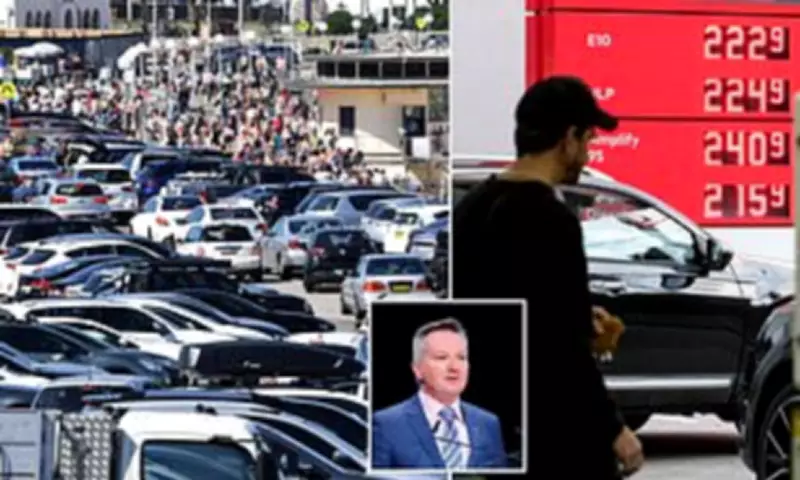
Trans-Tasman Fuel Crisis Deepens as Governments Consider Drastic Measures
Governments across Australasia are confronting a severe fuel supply crisis, with New Zealand actively considering the revival of nearly five-decade-old legislation that could impose mandatory car-less days on motorists. Across the Tasman Sea, Australian officials are implementing emergency measures to address mounting shortages, though they remain non-committal about following New Zealand's potential lead on vehicle restrictions.
New Zealand's Historical Solution Revisited
The New Zealand government's Ministerial Economic Security and Supply Chains Group convened this week to examine legislation originally introduced during the Robert Muldoon administration in the early 1980s. This legislation, first implemented following the Iranian Revolution in 1979 when global oil markets experienced severe disruption, empowered authorities to enforce car-less days, limit petrol sales, and distribute fuel coupons for rationed access.
Under the historical policy, which operated from July 1979 to May 1980, Kiwi motorists were required to nominate one specific day each week when they would refrain from using their vehicles entirely. Those caught violating the restrictions faced substantial financial penalties. The Petroleum Demand Restraint Act continues to provide New Zealand ministers with these extraordinary powers today.

New Zealand Finance Minister Nicola Willis emphasized that such drastic measures would only be implemented if petrol supplies became critically depleted. "Those steps would only be necessary if we were seeing genuine disruption to our ability to get fuel beyond the 50 days of storage that we currently have," Willis stated definitively.
Associate Energy Minister Shane Jones confirmed that policy development work has commenced to prepare contingency plans should the Middle East conflict persist. "Those will only kick in, in the event that this situation deteriorates further. We do have up to 50 days worth of fuel either on the water or here in country," Jones explained regarding potential activation of car-less days.
Australia's Emergency Response Measures
While Australian authorities have not yet commented on whether they will explore car-less day initiatives similar to New Zealand's considerations, they have implemented several emergency measures to address the escalating crisis. Energy Minister Chris Bowen announced on Friday that national fuel quality standards would be temporarily relaxed for sixty days, enabling approximately 100 million litres of petrol monthly to be redirected from export markets into shortage-stricken regional areas.
This regulatory adjustment permits higher-sulphur petrol originally destined for international markets to be blended into Australia's domestic supply instead. During a particularly heated parliamentary Question Time session, Bowen elaborated: "This will allow around 100 million litres a month of new petrol supply that would otherwise have been exported to be blended into Australian domestic supply."
The minister confirmed that Ampol Australia has committed to prioritizing this redirected supply specifically for regions experiencing shortages and for the wholesale spot market that supports independent distributors and agricultural harvesters.
Stockpile Requirements Reduced
In a further significant development, Minister Bowen announced emergency modifications to national fuel stockpile requirements just hours after the quality standards adjustment. Under these temporary changes, mandatory diesel stockpiles will be reduced from 2.7 billion litres to 2.2 billion litres, while petrol reserve requirements will decrease from 1 billion litres to 700 million litres.
Bowen explained that these adjustments would provide fuel companies with greater flexibility to manage their supply chains and direct available stock toward regional areas experiencing the most severe shortages. "The minimum stock obligation, which was introduced by the Albanese government in 2023 for this purpose, for, if you like, the rainy day, is now necessary," Bowen stated.

The minister emphasized that this fuel would not be released immediately but would instead enable more responsive supply chain management. "I will be having conversations, and have had conversations over the last 24 hours, and we'll have more with the fuel companies about ensuring that this flows to regional Australia," Bowen added.
Geopolitical Roots of the Crisis
The current fuel crisis has been dramatically exacerbated by escalating conflict in the Middle East, where the strategic Strait of Hormuz has become a focal point of tension. This crucial maritime passage transports approximately one-fifth of the world's crude oil supply, making it indispensable to global energy markets.
Recent developments have seen Iranian boats reportedly striking two fuel tankers in the Strait of Hormuz, setting the vessels ablaze and resulting in at least one crew member fatality. These incidents occurred amid declarations from Iran's new Supreme Leader, Mojtaba Khamenei, who stated unequivocally on Thursday: "The lever of blocking the Strait of Hormuz must continue to be used."
Khamenei further warned that Iran would not permit "one litre of oil" to be shipped from the Middle East if United States and Israeli attacks persist. These geopolitical tensions have caused Brent crude oil prices to surge beyond $100 per barrel, with reports indicating Iran has laid mines in the critical waterway.
Regional Impacts and Consumer Behavior
Across Australia, the fuel crisis has manifested in increasingly visible ways. Some regional service stations have completely exhausted their petrol supplies, while others have implemented strict rationing measures, limiting drivers to just $20 worth of fuel per transaction to ensure local residents can access emergency supplies.
Minister Bowen attributed regional shortages primarily to surging demand rather than an absolute lack of overall supply, with panic buying placing extreme pressure on distribution networks. "I ask Australians, buy as much fuel as you need: no more, no less," Bowen appealed to the public.
The minister revealed that some bulk customers have been purchasing up to four times their usual fuel volumes, while concerning reports have emerged of individuals purchasing jerry cans from hardware stores, filling them with fuel, and reselling the petrol on online marketplaces at inflated prices.
"I've seen people on Facebook marketplace filling up jerry cans, Bunnings running out of jerry cans ... going on Facebook marketplace, selling fuel at inflated prices - that is un-Australian," Bowen stated. "It's dangerous. It shouldn't be done."
Bowen confirmed that the current rush to purchase fuel has reached unprecedented levels, surpassing even the demand surge witnessed at the outbreak of the Russia-Ukraine war in 2022.
Future Uncertainties and Government Preparedness
When questioned about potential fuel rationing measures, Minister Bowen acknowledged that the Fuel Emergency Act provides him with various powers but clarified that rationing was not currently under active consideration. "Will there be further threats to fuel supply if the international circumstances continue to worsen? Of course, that is a realistic thing, which governments should prepare for," Bowen conceded regarding potential future developments.
The minister confirmed that the National Coordination Mechanism has been convened specifically to address "supply chain issues and bottlenecks" arising from the crisis. This interagency coordination body will work to mitigate disruptions and ensure essential fuel supplies reach critical sectors and regions.
As both New Zealand and Australian governments monitor the volatile situation in the Middle East and its cascading effects on global energy markets, consumers across Australasia face continued uncertainty about fuel availability and pricing. With petrol prices having surged past $3 per litre in many locations and regional shortages intensifying, the prospect of more drastic measures—including potential vehicle restrictions—remains a distinct possibility should the crisis deepen further.