

Australia Faces Critical Fuel Shortage Within Weeks as Iran Conflict Escalates
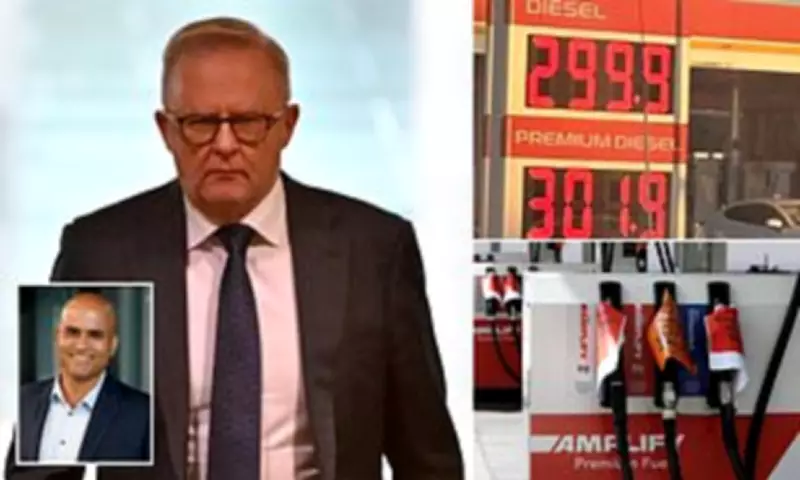
A leading Australian fuel security expert has issued a stark warning that escalating conflict in Iran could leave the nation facing severe fuel shortages within just three weeks. Dr Lurion De Mello, senior lecturer in applied finance at Macquarie University, revealed to Daily Mail that with petrol prices already soaring, diesel could rise even higher than the current $3 per litre seen at some service stations in major cities.
Strait of Hormuz Closure Threatens Supply Chains
With the Strait of Hormuz effectively closed due to skyrocketing insurance costs and growing fear among tanker operators, Dr De Mello expects fuel supplies to Australia to dwindle significantly by April 13. "The Iranians are giving mixed messages, saying the Strait of Hormuz is not closed, but it's mostly the insurers who are not providing coverage, so tankers are too scared to go through it," Dr De Mello explained.
While some ships, including a few Japanese tankers, have been allowed passage, threats against vessels linked to the United States, Europe, or involved parties have created massive uncertainty. A recent attack on a Thai ship has only amplified the risks, creating what Dr De Mello describes as a "perfect storm" for Australia's fuel security.

Government "Asleep at the Wheel" on Fuel Security
Dr De Mello said the Australian government had been "asleep at the wheel" when it came to securing adequate fuel reserves. "The penetration with electric vehicles is so small and people haven't realised that we need to have fuel and this has been warned about," he stated.
He pointed to a 2008 report submitted to the government that warned Australia needed greater fuel storage capacity if refineries were to be closed down. "There was a report done in 2008 that was submitted to the government where it was warned that we have to have a greater amount of fuel storage if you're going to close down all the refineries."
Geopolitical Tensions Reach Boiling Point
Iran has vowed to "completely close" the Strait of Hormuz if Donald Trump follows through on his threats to strike the regime's power plants. On Saturday night, Trump posted on social media: "If Iran doesn't FULLY OPEN, WITHOUT THREAT, the Strait of Hormuz, within 48 HOURS from this exact point in time, the United States of America will hit and obliterate their various POWER PLANTS, STARTING WITH THE BIGGEST ONE FIRST!"
Iran has now hit back, with the Iranian Revolutionary Guard Corps claiming they will keep the strait completely shut if the US targets Iranian energy infrastructure. For Australia, which relies heavily on imported refined fuels rather than direct crude from the Middle East, the crunch is coming fast.
Australia's Vulnerable Fuel Position
"Short term, we'll be okay. There's a bit of fuel coming in until about mid-April," Dr De Mello said. "But after that, there's too many uncertainties. Tankers are being diverted, and Australia doesn't own any of its own tankers. We purely rely on overseas ones."
The nation's two remaining refineries can only meet about 20 per cent of fuel needs, with the rest coming from Asian refineries in Singapore, South Korea, Malaysia, India, and Taiwan - all of which depend on Middle Eastern crude transiting the Strait of Hormuz.
Dr De Mello warned that even alternative sources, such as US crude, face delays of a month or more to reach Australia and be refined. Worse still, Australia's fuel reserves are far below international standards. Unlike true strategic reserves which are government-owned and held for crises, Australia only has commercial stockpiles for normal operations.
Inadequate Fuel Reserves Expose Vulnerability
"We never had a strategic reserve," Dr De Mello revealed. "We used to have oil stored in America - about 150 million barrels - but the Labor government sold it off in 2022 when prices were high. By the time you ship it here and refine it, it takes almost two months anyway."
Current government figures show around 36 days of petrol, 32 days of diesel, and 29 days of jet fuel, but Dr De Mello stressed these are not crisis buffers and could deplete rapidly if disruptions persist.

Immediate Price Impacts Already Being Felt
The immediate pain is already hitting bowser prices hard, with prices in Perth breaching $3 per litre for premium diesel last week. Nationwide, 91 octane unleaded petrol is selling for between $2.40 and $2.50 per litre, while diesel is edging closer to topping the $3.00 mark.
Dr De Mello said prices could climb much higher, drawing parallels to the Russia-Ukraine invasion when petrol hit $2.45 to $2.50. "I'm surprised it's not even closer to $3 yet ... it'll definitely keep creeping up," he predicted.
Diesel Shortages Threaten National Infrastructure
Diesel is the biggest worry, Dr De Mello emphasized, as it's intrinsic to the nation's infrastructure and vital for trucks, farming, fishing, mining, and even backup generators for renewables. "It's an industrial fuel," he explained. "Seafood prices will go up, freight costs will rise - everything gets passed on."
Panic buying and hoarding are worsening the situation, Dr De Mello warned. Independent stations are running dry first as major distributors prioritise their own networks. "Normally independents are cheaper, but now company-owned ones are holding back fuel," he said. "It's flipped."
Aviation Sector Faces Significant Risks
Aviation faces risks too, with potential flight cancellations and questions over jet fuel for new airports like Western Sydney. While the government insists supplies are secure and has released emergency stocks, Dr De Mello urged greater transparency.
He pointed to his recent LinkedIn analysis using shipping data, which shows incoming diesel but escalating risks. In a worst-case full closure scenario, he predicted catastrophic impacts including rerouting via longer shipping routes, soaring tanker costs passed to consumers, and shortages hitting remote areas hardest during Easter holidays.
Market Forces, Not Price Gouging
Dr De Mello dismissed claims from within the community that petrol stations were price-gouging customers. "The cost of tankers has gone through the roof. It has to be passed down. It's not gouging; it's the market," he explained.
He compared the crisis to past shocks like the Gulf War or Houthi attacks, calling it far more severe due to Australia's vulnerability at the end of the global supply chain and years of neglect on fuel security.
Long-Term Solutions and Immediate Concerns
"We've pumped money into renewables but we've kind of missed the plot because for the next 15-20 years we're heavily dependent on fuel," Dr De Mello said. "Electric vehicle uptake is tiny."
In the long term, Dr De Mello expects negotiations to prevail but warned the next few weeks, and especially beyond mid-April, will test Australia's preparedness. "If this drags onto Christmas, we'll be in a genuine World War III. I'm not expecting that. I expect some sort of dialogue or some negotiation will prevail," he said.
"It's all going to be clearer over the next 48 hours I think. If America goes ahead with its threat, there might be some retaliation and they'll go 'bang, bang, bang' at each other and then stop. But it's going to be catastrophic and I don't think the Americans are silly enough to hold the whole world hostage by letting this drag on to June or July."
Some Relief in Transit
Two large ultra-low-sulphur diesel cargoes from India have been confirmed and are en route to Australia, Dr De Mello noted. Multiple diesel shipments from Malaysia, Singapore, and South Korea show continued strength in supply.
"One US diesel cargo is currently tracking for arrival on April 14 - a reminder of the month-long voyage required for trans-Pacific barrels," he said. Several petrol shipments covering 91/95/98 RON and unspecified grades are also already in transit.
Multiple jet fuel/kerosene cargoes from South Korea and China are scheduled for early-to-mid April arrival. "This should keep Australia's aviation sector well-supported despite tight Asia-Pacific refining margins," Dr De Mello said, though he noted supply from Japan could be of concern.
Dr De Mello concluded that Australia's short-term fuel outlook remained solid, with diesel, petrol, and jet fuel all supported by strong regional inflows, but emphasized that "monitoring will continue as Middle East disruptions evolve."





