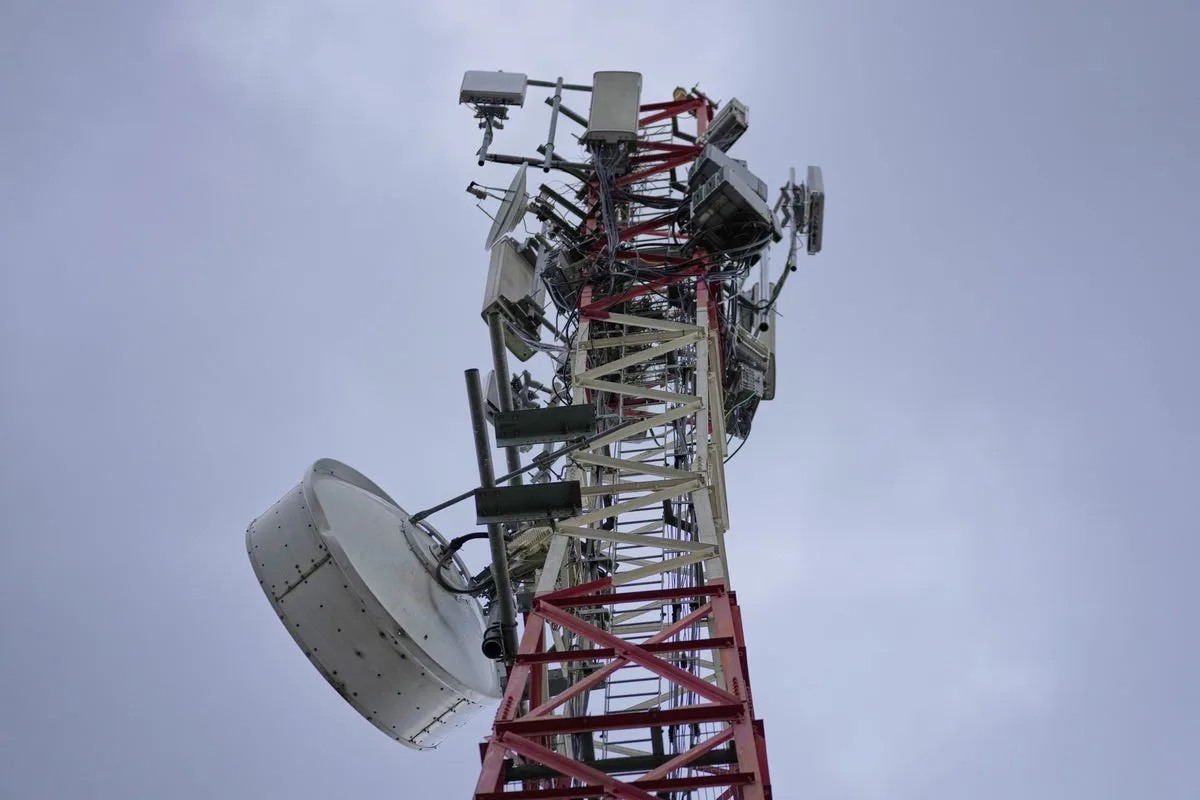
Rising diesel prices linked to the Iran war are adding urgency to a shift already underway across Africa to move cellphone towers off fossil fuels and onto solar power.
Diesel, which powers the majority of Africa’s roughly 500,000 telecommunications towers, has become more expensive and sometimes harder to secure in recent weeks as global fuel markets tightened following the conflict. Several African countries that rely heavily on imported fuel have reported price spikes and supply disruptions, prompting governments and companies to reassess energy strategies.
The transition to cleaner power for the towers that provide cellphone service predates the latest price shocks, driven by cost pressures and climate goals. But the war in the Middle East has accelerated the push.
“Diesel has always been a major cost, but recent global events have made it even more volatile,” said Lande Abudu, senior energy specialist for Africa at GSMA, a global industry organisation representing mobile operators. “That strengthens the case for solar and hybrid solutions.”
Across the continent, mobile network operators are increasingly adopting hybrid systems that combine solar panels, battery storage and limited diesel backup. Some are aiming for fully solar-powered sites over time, particularly in rural and off-grid areas where extending electricity grids is costly.
Cellphone towers in Africa have traditionally been powered by diesel generators, often large industrial units that require operators to manually refuel them. In contrast, solar-powered towers rely on sunlight, using solar panels to generate electricity and battery systems to store energy for continuous operation.