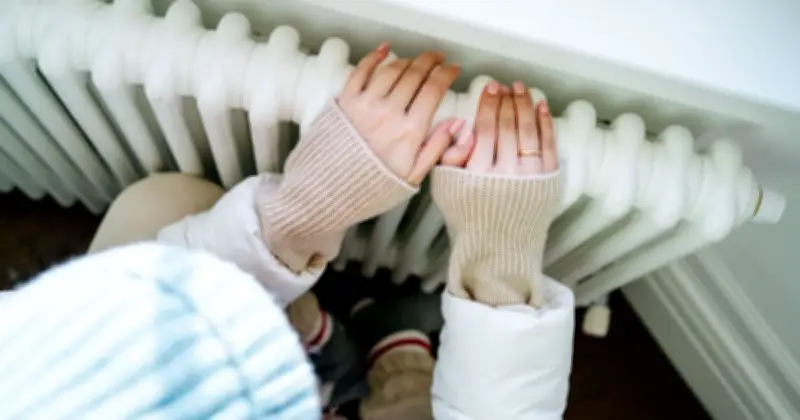
With temperatures dropping across the country, households are relying on their radiators to stay warm, but many worry about rising energy bills. Experts have shared six simple and cheap methods to boost radiator heat, ensuring homes stay toasty without overspending.
Clear Space Around Radiators
Max Wilson, co-founder of storage company Pocket Storage, advised moving large furniture and heavy curtains away from radiators. He said: "It's easy to overlook how much furniture and everyday clutter can affect how effectively heat circulates in a room. In smaller homes and flats, people often push sofas, beds, chests of drawers or storage boxes up against walls to make more floor space, without realising they could be blocking the heat from their radiators."
Wilson recommends leaving at least six inches of space and keeping the area directly in front clear, as well as ensuring curtains don't hang over the radiator or trap warm air behind them. This simple, free adjustment can help households make better use of the heat they are already paying for.
Invest in a Radiator Booster Fan
James Roberts, director at Sanctuary Bathrooms and a qualified plumber, suggested using a radiator booster fan, which sits on top of or mounts underneath radiators to accelerate warm air circulation. He said: "A small, purpose-made radiator fan, typically costing around £40, can help take the chill off a slow-to-warm room. It moves air across the hot radiator, helping heat reach the room more quickly – a useful boost on cold winter mornings."
Roberts noted that choosing a compatible model that switches on automatically when the radiator warms up is key. He added: "It's a simple addition that doesn't involve changing the pipework, and uses very little electricity. The main benefit is quicker warmth; any savings on your bills will depend on how you use and control your heating."
Install Radiator Reflector Panels
John Collett, director of Quantum Renewables, a UK renewables company, highlighted radiator reflector panels as one of the simplest and most cost-effective solutions. He said: "The simplest and most cost-effective way to get more from your radiators is to fit reflector panels behind them. They are foil-faced boards that you can buy cheaply at DIY shops and online, and they stick to the wall behind the radiator."
Collett explained that without a panel, a lot of heat from the back of the radiator goes straight into the wall, especially an external wall, and is lost outside. A reflector panel bounces that heat back into the room, providing more warmth without turning the temperature up. He added: "It is better than the tin foil hack because the panels are thicker, they stay in place and they have a layer of insulation behind the foil, so they work for longer and look tidier. They make the biggest difference on uninsulated external walls and will do very little on internal walls."
Give Radiator Valves Room to Breathe and Keep Them Clean
James Roberts also advised giving thermostatic radiator valves breathing space by moving curtains, furniture, or anything else blocking them. He said: "The valve senses the air temperature around it to determine how much hot water flows into the radiator, so if it's hidden behind a curtain or boxed in by furniture, the trapped warmth can fool it into turning the radiator down while the rest of the room still feels chilly."
Simon Bones, founder and CEO of Genous, a premium home retrofit company, recommended keeping radiators clean to ensure they work to their fullest potential. He said: "Radiators can get full of fluff and dust. Keeping them dust-free will ensure that they work to their fullest potential. Use a hair dryer on a cool setting along the top of the radiator to blow any dust down and out the bottom. You can also use a radiator brush to dust down between the vents."
Stephen Hankinson, heating expert at Electric Radiators Direct, suggested building a shelf above and in line with the radiator to redirect warm air forward into the room. He advised leaving at least 10-15cm between the radiator and the bottommost shelf, and using heat-resistant materials like solid wood to avoid heat damage or warping.