

Millions of workers across the United States are scheduled to receive a pay rise at the start of 2026, but financial analysts caution that the increased income may be eroded by persistent inflation and a shifting economic landscape.
The State-by-State Pay Rise Landscape
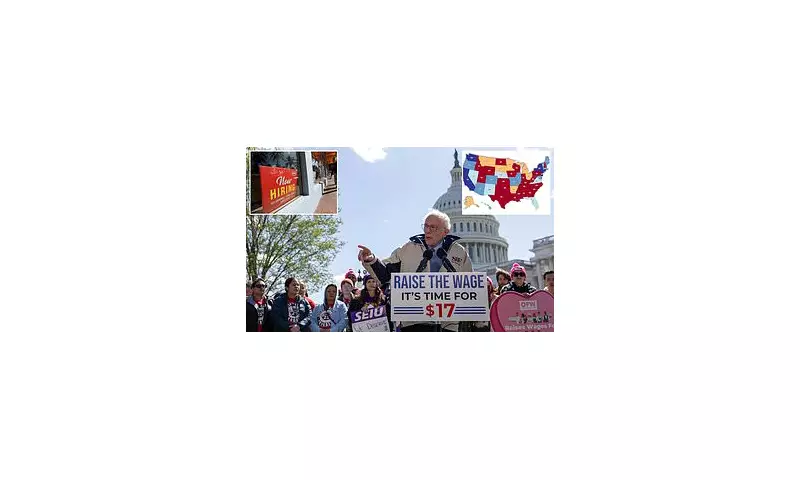
On 1 January 2026, residents in 22 states will benefit from legislated increases to their minimum wage. The rises vary significantly, with some regions adding as much as $1.50 more per hour. For an employee working a standard 40-hour week, this equates to an extra $3,128 annually before tax deductions.
This state-level action highlights a stark national divide. For the 16th consecutive year, the federal minimum wage will remain frozen at $7.25 per hour, a rate unchanged since 2009. Consequently, the gap between states is vast. Workers in Washington state will earn $17.13 an hour, while those in Georgia and Wyoming, where state minimums are below the federal benchmark, will continue to rely on the outdated national rate.

Economic Headwinds and Political Debate
The wage increases arrive at a complex juncture for American households. Inflation has crept back to approximately 3%, wage growth has slowed from its post-pandemic peak, and layoffs are rising in several middle-income sectors. Meanwhile, the Federal Reserve is not expected to introduce another interest rate cut in late January, keeping borrowing costs elevated.
Some commentators argue the surge in state-level hikes is driven more by political symbolism than economic strategy. Grant Cardone, a real estate investor and head of Cardone Capital, told the Daily Mail that raising wages does not solve inflation but merely chases it. "Big corporations can absorb higher labour costs or automate," Cardone said. "But mom-and-pop shops? They're cutting hours, raising prices, or shutting down." He contends America's core issue is a productivity problem requiring more entrepreneurs, not higher minimums.
Business leaders like David Heacock, CEO of Alabama-based HVAC manufacturer Filterbuy, note that while his company pays above minimum wage everywhere, the broader conversation is significant. He told the Daily Mail that the more impactful wage pressure began during the Covid pandemic, a trend that has since cooled in 2025.
The 2026 Minimum Wage Increases: A Full List
According to ADP data, the following 19 states will raise their minimum wages on 1 January 2026:
- Arizona: $15.15
- California: $16.90
- Colorado: $15.16
- Connecticut: $16.94
- Hawaii: $16.00
- Maine: $15.10
- Michigan: $13.73
- Minnesota: $11.41
- Missouri: $15.00
- Montana: $10.85
- Nebraska: $15.00
- New Jersey: $15.92 (six or more employees) / $15.23 (smaller employers)
- New York: $17.00 (NYC, Long Island, Westchester) / $16.00 (rest of state)
- Ohio: $11.00
- Rhode Island: $16.00
- South Dakota: $11.85
- Vermont: $14.42
- Virginia: $12.77
- Washington: $17.13
Florida will implement its increase later in the year, moving to $15 an hour on 30 September 2026.
The coming wage rises offer a financial lifeline to millions, yet they also underscore a fragmented national policy and the ongoing challenge of making real-terms gains in an uncertain economy.






