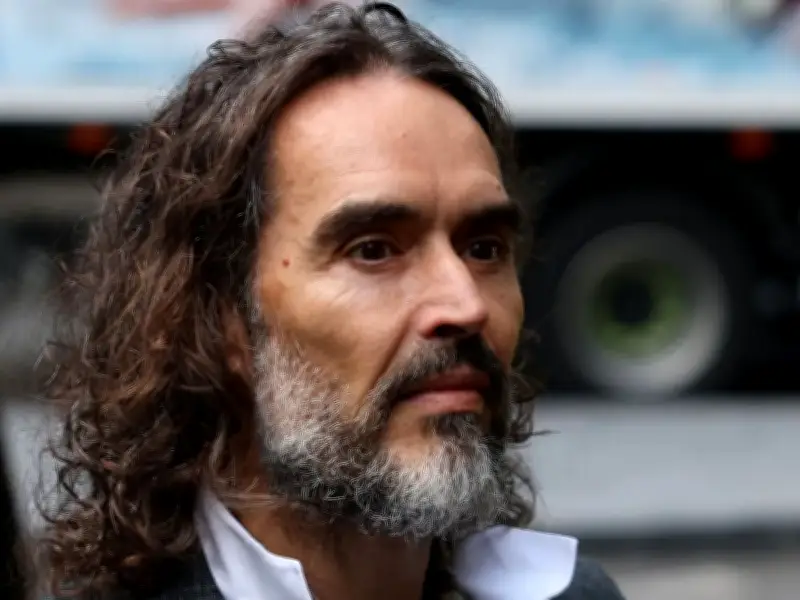
The TUC General Secretary has warned that even in 2026 too many workplaces still have cultures and systems that allow abuse to flourish and fail women when they report it, following the sentencing of Russell Brand and allegations against David Walliams.
Writing exclusively for this publication, Paul Nowak said this week has been a grim reminder of the scale of violence against women and girls in society. On Monday Russell Brand was sentenced to more than ten years in prison for rape and sexual assault. There have also been allegations that David Walliams, who denies wrongdoing, used his fame and power to prey on teenage girls and young women for sex.
Nowak said thoughts are with those who came forward and with all survivors who have experienced sexual violence, including those who may never feel able to speak publicly about what happened to them.
Warning signs ignored for too long
The headlines have shone a spotlight on individual men, but Nowak said they should also force a wider question: what was known, what was suspected, and why were the warning signs ignored for so long?
Even people who say they knew nothing of Brand's crimes have described his behaviour towards women as an "open secret". In 2004 Jonathan Ross joked about Walliams "going home with a 15-year-old" in front of a packed audience at the British Comedy Awards.
Those details matter because sexual predators rarely operate in complete secrecy. Too often there are rumours, concerns, warning signs and witnesses, and too often people look the other way, he said.
Men must step up
Nowak said this should be a moment for women, for every woman reading these stories and recognising something of her own experiences in the headlines. But it cannot be a fight for women alone.
It is a moment for men to step up too, he said, and to think honestly about the times they have laughed off sexist "banter", witnessed inappropriate behaviour and said nothing, or chosen comfort over challenge when faced with misogyny.
As General Secretary of the TUC, Nowak said the trade union movement has its own responsibility to confront these issues, with a duty to tackle sexism where it exists and to help make workplaces safer for everyone, because workplace culture is at the heart of many of these stories.
New workplace protections
The uncomfortable truth, he said, is that half of women say they have experienced sexual harassment at work. The risks are even higher for Black women, disabled women, younger women and LGBT+ women. In most cases the perpetrator is a male colleague, and nearly one in five women say the harassment came from their direct manager or another person with power over them.
That is why new workplace protections introduced by the government last month are so important. For the first time employers have a legal duty to take all reasonable steps to prevent sexual harassment, including harassment by customers, clients and other third parties.
The burden should never have been on women to protect themselves, Nowak said. The responsibility belongs to employers to create workplaces where harassment is prevented, challenged and dealt with. But passing a law is only the start, and the government has promised to set out clearly what employers must do to meet their new responsibilities. Ministers now need to get on with it so every employer understands exactly what is expected of them.
Sexual predators exist in television studios, offices, warehouses, hospitals, shops, and in the trade union movement too, he said. They thrive in cultures where complaints are dismissed, rumours are ignored and too many people stay silent. Changing that culture is the challenge before us, and if this week's events teach anything it is that silence protects perpetrators while speaking up protects women.