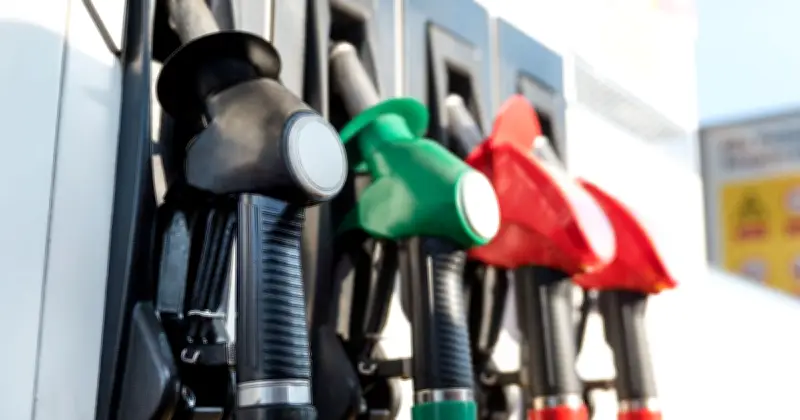
Drivers across the UK are being urged to fill up their tanks before Friday as the Met Office issues a new amber weather warning for extreme heat, which could significantly impact fuel economy and leave unsuspecting motorists stranded.
Heatwave Forecast and Fuel Economy Impact
The Met Office has issued a serious amber weather alert for extreme heat from midnight on Friday until 11:59pm that evening, covering a stretch of England from London and Brighton in the south up to Birmingham and Peterborough in the Midlands, and Stoke, Manchester, and Nottingham in the north. On Friday, Leeds will experience its hottest day of the week with temperatures hitting 35°C, while London will see the mercury shoot up to 37°C.
According to the US Department of Energy, hot weather can increase fuel economy as the engine warms up to an efficient temperature faster, summer grades of gasoline can have slightly more energy, and warm air causes less aerodynamic drag. However, keeping comfortable by rolling down windows or using air conditioning can reduce fuel economy. Under very hot conditions, A/C use can reduce a conventional vehicle's fuel economy by more than 25%, particularly on short trips. The effect on hybrids, plug-in hybrids, and electric vehicles can be even larger on a percentage basis.
Fuel Prices and Driver Behaviour
Fuel prices have surged in recent months due to the conflict in Iran, and despite a slight cooling at the forecourts, remain significantly higher than before. Currently, petrol averages 154.72p per litre, and diesel 174.30p, according to the RAC. Drivers will not want to waste any fuel, especially as hot weather causes cars to use more fuel both directly and through driver behaviour. The fuel gauge may become inaccurate and not give a proper indication of how much petrol or diesel is left.
Experts at PassMeFast.co.uk explain: “When it comes to topping up the petrol in your car, there are two kinds of people: those who refill as soon as the fuel tank gets to around a quarter full, and those who are happy to drive around with the fuel warning light on. The thing is, when the weather's nice and warm, your car's fuel levels drop a lot quicker than usual. This means you can't rely on your normal estimations of how much time you have left before needing to fill up. To avoid getting stuck in the middle of nowhere, or at the centre of a traffic jam on a hot day (both nightmare scenarios), make sure you head to the petrol station in good time. Playing it close to the line is just not worth it if the sun's out!”
Myth of Explosion Risk Debunked
Drivers have been told not to fill up during hot conditions due to a risk of the vehicle ‘exploding’ in the sun. However, this is a myth. RAC spokesperson Rod Dennis said: “There is no truth in this. All fuel systems on passenger vehicles are designed to cope with any expansion of fuel, or vapour coming from the fuel. There is no risk of explosion from filling up a fuel tank fully and drivers should have no concerns in doing so.”
Optimal Temperature for Fuel Economy
Experts note that 20°C provides better fuel economy than very cold temperatures, but as temperatures rise, gains start to be lost. Fuel Finder UK explains: “According to official fuel economy tests, your car's efficiency drops by around 10% at -5°C compared to 20°C. For short trips under four miles, that penalty can reach 20% or more.” The 'sweet spot' for fuel economy is between 15°C and 20°C, but once temperatures hit 32°C, engine efficiency is reduced and there is a risk of overheating.