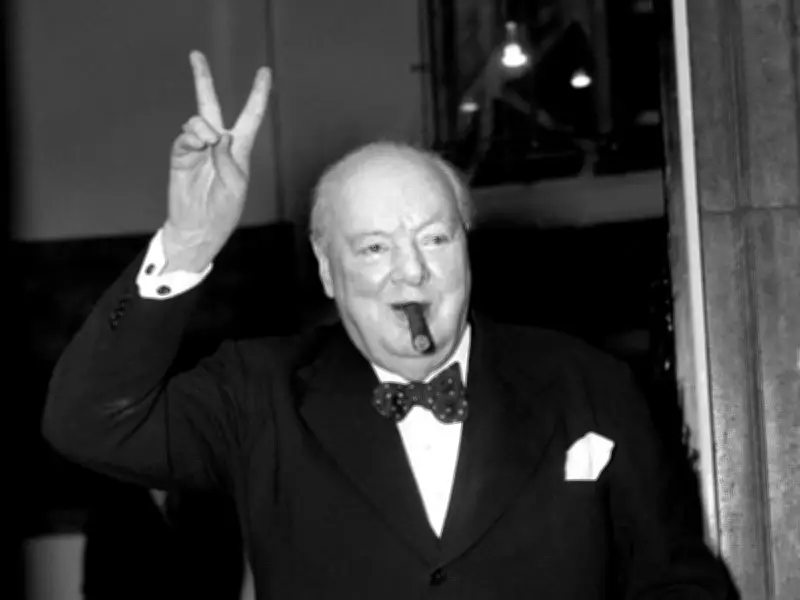
Winston Churchill's long-forgotten Land Value Tax could be the key to solving Britain's housing crisis, cost of living pressures, and low productivity, according to wealth manager Henry Fudge. The 30-year-old British economist, based in Switzerland, warns that the housing crisis has created a 'black hole' at the heart of the UK economy, draining capital from productive investments into rising house prices.
Housing Crisis as a Black Hole
Fudge, a money expert, described the situation starkly: 'There is a black hole sitting at the heart of the British economy and it’s been sitting there for 30 years. Every year it pulls in more of the capital that should have filled out our infrastructure, our factories, our production, our innovation and simply converts it to rising house prices instead.' He added that this black hole has begun to 'wrap' other parts of the economy around it, as entrepreneurs pour money into property rather than productive enterprise. 'The only way to make it is to buy property. If that was off the table, how many more entrepreneurs would we see in productive enterprise?' he asked.
Cost of Living and Political Anger
Fudge believes the cost of living crisis is driven by housing problems, and the resulting political anger across the UK stems from frustration with these issues. He told the Daily Star: 'A man who fundamentally has more money in his pocket at the end of the month is a less angry man and that presents itself in the politics as well. The simple difficulty is that we're protecting property values and protecting land values more than focusing on the national imperative to build proper infrastructure to upgrade our communities and to obviously then invest in our energy.'
Planning Restrictions Hamper Infrastructure
Fudge also criticised the UK's planning restrictions, which he says hinder housing and infrastructure development, citing the HS2 rail project as an example. 'The planning restrictions hit every part of our infrastructure. It's the same situation with HS2 as well. We didn't suddenly learn, you know, forget how to build trains,' he remarked.
Churchill's 1909 Land Value Tax
To address these issues, Fudge points to a Land Value Tax proposed by Winston Churchill in 1909. 'Winston Churchill, before he went into being a conservative peer, had a massive backing for and promoted a deal in 1909 strictly for a land value tax – pushing it very aggressively,' Fudge explained. The motion passed in the House of Commons but was struck down by the House of Lords in 1911. Despite this historical defeat, Fudge is convinced that Churchill's tax reform is exactly what Britain needs to tackle the cost of living and housing crises.