An electrician left with permanent brain damage after a giant metal bar smashed onto his head at work now survives on just £1,300 a month in benefits with his wife, who became his full-time carer.
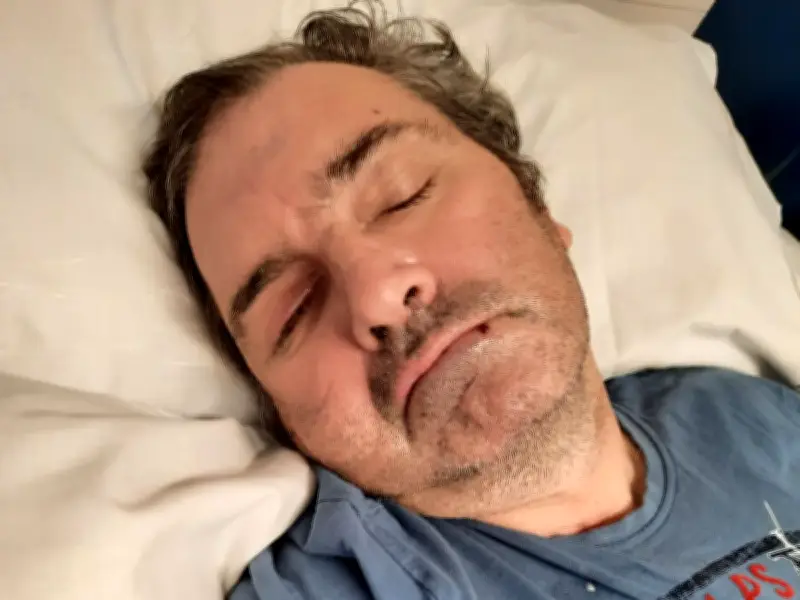
Mark Ludlow, 63, was assisting a colleague on a broken lift at a factory when a metal rod dropped from the shaft and struck his face. He was knocked unconscious, placed in a coma, and suffered diffuse axonal injuries and two subarachnoid haemorrhages. His right eye was too damaged to save and had to be removed. Surgeons reconstructed his face from bone fragments and metal plates.
From £4,000 to £1,300 Monthly Income
Before the accident on November 17, 2021, the couple from Cannock, Staffordshire, had a combined income of £4,000. Now they rely on Personal Independence Payments (PIP), Employment and Support Allowance (ESA), and carer's allowance totalling £1,300 a month. Rachel, 56, a former medical secretary, gave up her job to care for Mark full-time.
Rachel said: "The accident turned our world upside down in an instant. I still remember getting the call where I was told Mark had been in an accident and was 'alive but critical'."
Life After Traumatic Brain Injury
Mark is unable to speak properly, walk, or use the toilet unaided. He can take a few steps alone, use an electric wheelchair, and say short sentences but struggles to communicate and regulate emotions. Rachel described caring for him as "like having a young child."
"He's learnt to talk gradually, like to say he needs a drink, but finds expressing himself difficult. He says things that aren't always appropriate," she said. "He has lost all sense of sensitivity, everything now is just factual. He can't show emotions and we can't have normal conversations."
Major Home Adaptations
The couple converted their garage into a downstairs wet room and turned their dining room into a bedroom with a hospital bed. Mark requires full-time care from Rachel, external care visits, physiotherapy, and medical appointments.
Rachel recalls the moment she was told about the accident: "We jumped in the car with the blue lights on and went straight to Mark, who was being stabilised in resus in the trauma centre of Queen Elizabeth Hospital in Birmingham."
Raising Awareness
Rachel hopes to highlight the impact of traumatic brain injuries. "Mark is a different person to the one I met, I have lost the husband I married," she said. "The week before the accident, we'd be saying Mark might semi-retire. We have been together for 17 years, and one day our world was turned upside down in an instant. All we can do is take it one step at a time, and we live in hope that maybe one day things will get better."