

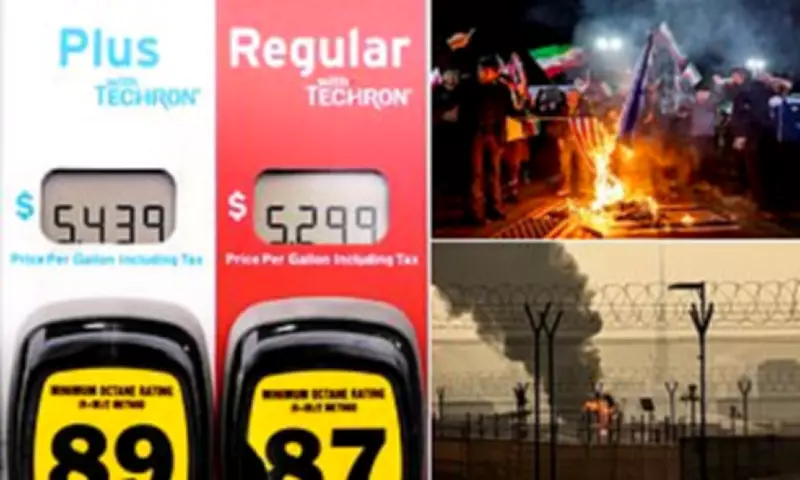
Wall Street Economists Ring Alarm Bells Over Iran War's Oil Price Impact
America's economy is currently demonstrating resilience in the face of surging oil prices triggered by the ongoing conflict involving Iran, but significant warning signals are now flashing on Wall Street. The closure of a critical oil export route by Iran has severely disrupted global crude supplies, leading to sharp increases in costs for a wide range of goods and services, from gasoline to airline fares.
Survey Reveals Precarious Oil Price Threshold for Recession
A recent survey of economists has explored the potential economic fallout, suggesting the war's impact may remain contained provided oil prices do not remain excessively elevated for an extended duration. The Wall Street Journal conducted a poll to determine the specific price level and duration required to push the United States economy toward a recession.
The consensus indicates that oil would need to sustain a price of approximately $138 per barrel for about three months to significantly increase the risk of a US recession. To date, the conflict has persisted for nearly three weeks, with US oil prices fluctuating around $95 per barrel, a substantial rise from February's average of $65.

Tim Rezvan, Managing Director of Oil & Gas Equity Research at KeyBanc Capital Markets, emphasized the gravity of the situation in comments to the Daily Mail. 'I think that if oil were to hold above $100 for the next three months, we’d likely see very challenging economic conditions in the US,' Rezvan stated. He further cautioned that even a swift resolution to the war might not prevent lasting economic damage from higher oil prices, posing long-term challenges for the nation.
Economists Detail Varied Estimates on Price and Duration
The Wall Street Journal survey, conducted from March 16 to 18, gathered responses from 50 economists regarding recession risks linked to oil prices. Their estimates varied widely:
- The duration oil prices must stay elevated to nudge the US toward recession ranged from four weeks to 55 weeks, with an average estimate of 14 weeks.
- The price threshold needed to elevate recession probability spanned from $90 to $200 per barrel, averaging $138.
Oil market expert Dan Doyle, founder of Reliance Well Services and Arena Resources, expressed skepticism that domestic US oil production could offset the crisis. 'The longer the war goes on, the greater the recessionary risk,' Doyle told the Daily Mail. Economist Robert Fry specified that oil would need to reach $125 per barrel for eight weeks to set the economy on a path toward recession, contingent on the Strait of Hormuz reopening to tanker traffic by mid-April. 'If it isn’t, oil prices will go much higher, and I will put a recession in my forecast,' Fry informed the Wall Street Journal.
Escalating Conflict and Economic Probability Shifts
The economists surveyed now place the probability of a US recession occurring within the next 12 months at 32 percent, a modest increase from the 27 percent probability recorded in January. As the Iran war enters its third week, the strategic Strait of Hormuz remains effectively closed, with maritime traffic plummeting by roughly 95 percent compared to pre-war levels. Even with potential US naval escorts for crude oil tankers, only a limited resumption of traffic would be feasible.
Recent escalations include Israel's bombing of Iran's South Pars gas field and Iran's retaliatory damage to a key natural gas export facility in Qatar. However, some analysts suggest these aggressive actions may have momentarily prompted all parties to reconsider the war's destructive potential, potentially leading to a de-escalation. The broader economic implications continue to hinge critically on the trajectory of oil prices and the conflict's duration, with Wall Street maintaining a vigilant watch.






