American consumers faced higher grocery bills in April, with food-at-home prices climbing 2.9% compared to the same month last year, marking the steepest year-over-year increase since August 2023, according to government data released Tuesday. The rise was driven not only by soaring gasoline prices linked to the Iran war but also by trade policies and extreme weather.
Fuel Costs Drive Up Food Prices
The Labor Department's consumer price index revealed that overall food prices, including restaurant and fast-food meals, increased 3.2% over the past year. Fuel costs have skyrocketed as the Iran war disrupts shipping through the Strait of Hormuz, a critical corridor for global oil supplies. Diesel fuel, essential for fishing boats, tractors, and trucks that transport 83% of U.S. agricultural products, saw average prices jump 61% from a year ago, according to AAA.
Raymond Campise, owner of Sparrow Market, a small independent grocer in Ann Arbor, Michigan, reported that all his meat, produce, and dry goods vendors have added fuel surcharges in recent weeks. Wholesale prices for these items have also risen. "For independent markets operating on narrow margins, even small increases can have a major impact," Campise said.

Delayed Impact on Retail Shelves
Purdue University economists Ken Foster and Bernhard Dalheimer noted that the full effect of rising energy costs on food prices may take three to six months to appear at retail stores. "Most of what we’re seeing now in the food price chain probably predates the conflict," said Foster, a professor of agricultural economics. "We’re cautiously waiting to see what the June numbers and the May numbers might show."
The consumer price index tracks changes in prices paid by urban consumers for grocery staples like meat, bread, milk, and produce. Over the past 20 years, grocery prices have increased an average of 2.6% annually, according to the U.S. Department of Agriculture.
Perishables Hit Hardest
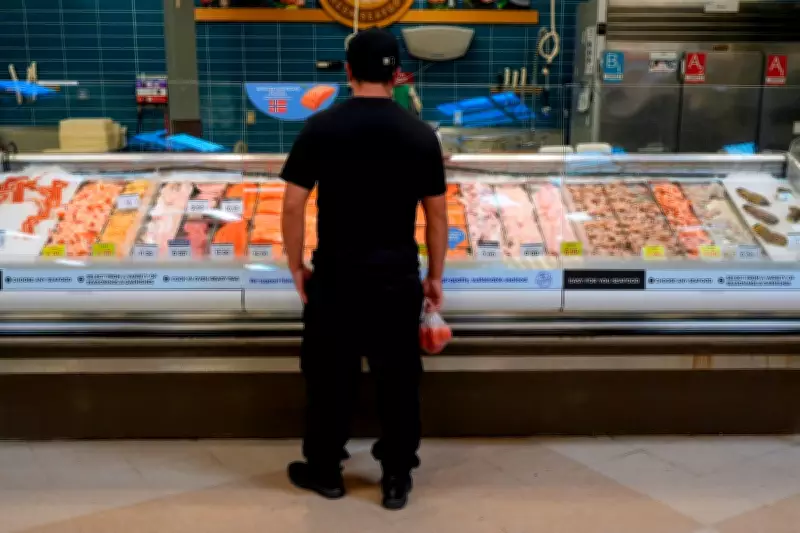
Prices for perishable and refrigerated products tend to rise faster than packaged goods when energy costs spike. In April, fresh fruit and vegetable prices surged 6.5% year-over-year, while meat prices climbed 8.8%. However, trade policies and weather also played roles. In July 2025, the Trump administration imposed a 17% duty on fresh tomatoes from Mexico, leading to a 40% price increase over the following 12 months. Dry weather in the western U.S. pushed beef prices up 15% year-over-year, and coffee prices rose 18.5% due to global drought conditions.
"Today's CPI showed that food prices have been rising 3.2 percent in the past year, but the story behind that number is more complicated than just an energy shock," said Dalheimer, an assistant professor of macroeconomics and trade at Purdue.
Some Foods See Price Drops
Not all food prices increased. Milk and chicken prices dipped slightly, butter cost 5.8% less than a year ago, and egg prices plummeted 39% as farmers recovered flocks from a bird flu outbreak.
Political and Economic Implications
Food inflation is expected to be a key issue in November's midterm elections. During his 2024 campaign, President Donald Trump frequently cited grocery prices as a reason for voters to return him to office. However, some food producers now struggle with higher fuel costs. The Southern Shrimp Alliance reported that some boats have remained docked this spring because diesel costs outweigh shrimp catches. Fuel accounts for 30% to 50% of shrimping costs, but U.S. shrimpers supply only 6% of domestic consumption, limiting their ability to raise prices.
Higher fuel prices may also affect nonalcoholic beverages, which saw a 5% annual increase in April. Foster suggested that petroleum derivatives used in plastic bottles could be contributing to that rise. "It’s possible some of that’s starting to seep down the supply chain and get into those prices," he said.

Future Outlook
Looking ahead, fertilizer costs pose another threat. About 30% of the world's fertilizer transits the Strait of Hormuz. While U.S. farmers had supplies in place before the war, prolonged conflict could impact planting decisions. "I expect the Iran conflict to impact the coming years’ food prices through a couple of channels: energy costs, transportation handling, and packaging costs," Foster said. "If the conflict were to last longer, then we might see more coming online as fertilizer prices start to impact longer-term planting decisions."