Foreclosure filings across the United States have surged 18 percent compared to the previous year, marking a troubling sign that mounting financial pressure is beginning to impact homeowners. This development echoes the foreclosure spike that preceded the 2008 Great Recession, indicating that financial strain is intensifying for thousands of families.
Foreclosures occur when homeowners can no longer afford their mortgage payments, leading banks to repossess the properties, which often sit vacant and deteriorate over time. New data from real estate analytics firm ATTOM reveals that 42,430 properties nationwide received foreclosure filings in April 2026, including default notices, scheduled auctions, and bank repossessions.
Although filings dipped slightly from March, experts caution that the sharp year-over-year increase points to growing stress in the housing market as Americans grapple with persistently high borrowing costs and affordability issues. Rob Barber, CEO of ATTOM, commented: 'Foreclosure activity continued its gradual trend higher in April. The year-over-year increases suggest lenders may be working through distressed inventory as higher borrowing costs and affordability challenges impact some homeowners.'

The figures represent a continuation of a year-long upward trend in foreclosure activity, fueling concerns that cracks may be emerging in the broader economy after years of elevated mortgage rates. Foreclosure starts—the initial stage of the process—rose 12 percent from a year earlier to 28,414 properties. Meanwhile, completed foreclosures, where lenders repossess homes after payment failures, skyrocketed 42 percent annually to 5,098 properties.
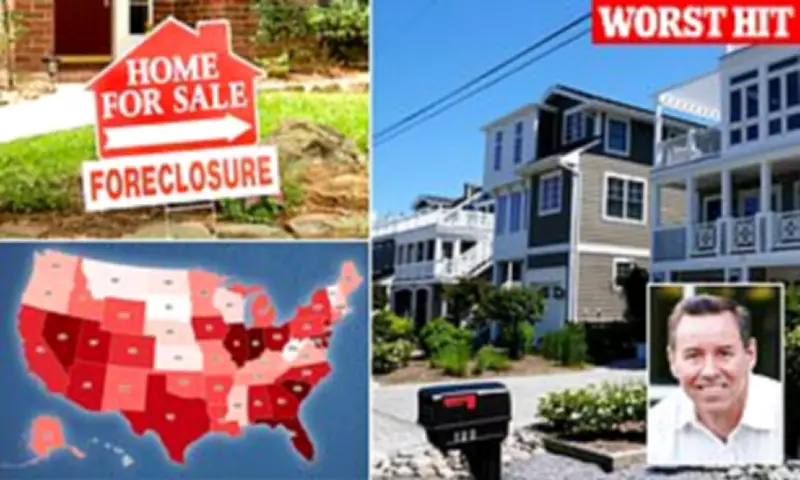
Despite these increases, foreclosure activity remains below pre-pandemic levels, according to ATTOM. Delaware recorded the highest foreclosure rate in the nation, with one in every 1,739 housing units receiving a filing in April. South Carolina followed closely at one in every 1,745 housing units, while Florida ranked third with one filing for every 2,092 homes. Indiana and Illinois rounded out the top five states with the worst foreclosure rates.
Among major metropolitan areas, Lakeland, Florida, posted the most severe foreclosure rate, with one filing for every 1,221 housing units. Columbia and Charleston in South Carolina also ranked among the hardest-hit metro areas, alongside Bakersfield, California, and Cape Coral, Florida. Florida led the nation in foreclosure starts with 3,505 new filings, followed by Texas with 3,154 and California with 2,786.
Several cities experienced dramatic increases in foreclosure starts compared to last year. Pittsburgh recorded one of the biggest spikes, jumping from 82 starts in April 2025 to 215 this year. Austin, Texas, saw a steep rise, more than doubling from 158 to 396 filings. Raleigh, North Carolina; Lakeland, Florida; and Akron, Ohio, also experienced sharp increases. The rise in bank repossessions may further alarm economists watching for signs that consumers are becoming increasingly stretched after years of inflation and elevated housing costs. Texas recorded the highest number of completed foreclosures in April with 640 repossessions, followed by California with 515 and Florida with 381.
Housing affordability remains under intense pressure as mortgage rates continue hovering near multi-year highs, locking many Americans into expensive monthly payments while home prices stay elevated across much of the country.